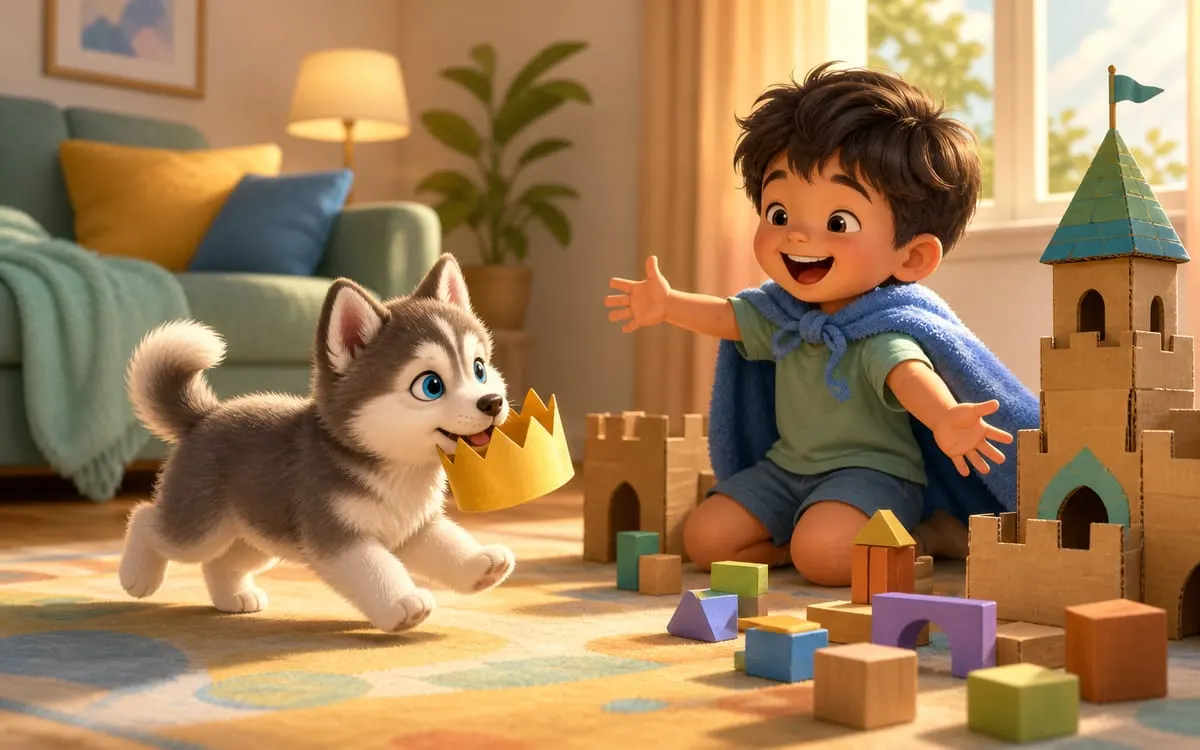
After the game, discover the story together.
Pigúiça also has an illustrated adventure to read together. Explore real pages, read the beginning free and check the complete edition if you would like to continue.
The best games for 4 year olds are short, simple and packed with either movement or imagination. At this age, and on through 5, kids can follow basic rules, love copying grown-ups and are just starting to learn how winning and losing feel. Below are 25 ideas sorted by type, each with what it helps develop, so you can pick one in seconds based on the weather, your space and your child's energy.
Looking for calmer projects like cutting, gluing and painting? Check our list of activities for 4 year olds. This post is all about playing and games.
Active games
- 1. Freeze dance: play music and when it stops, everyone freezes in place. Builds: body control, attention and listening.
- 2. Up and down: call “sit” and kids squat, call “stand” and they jump up. Builds: self-control and quick reactions.
- 3. Follow the leader: one person does a silly move and everyone copies. Take turns being the leader. Builds: imitation, coordination and confidence.
- 4. Jump the river: two strips of tape on the floor are the riverbanks. Move them a little farther apart each round. Builds: leg strength and balance.
- 5. Animal race: cross the room hopping like a frog, lumbering like a bear, scuttling like a crab or waddling like a penguin. Builds: gross motor skills and plenty of giggles.
Pretend play games
- 6. Grocery store: empty boxes become products and paper scraps become money. One child runs the checkout, the other shops. Builds: numbers, vocabulary and turn taking.
- 7. Vet clinic: stuffed animals are the patients. Builds: empathy, language and fewer fears about checkups.
- 8. Pretend kitchen: toy pots, play dough and spoons to cook up “recipes” and serve the family. Builds: following steps and creativity.
- 9. Blanket fort: chairs and a sheet turn into a cave, a castle or a spaceship. Builds: imagination, planning and playing with others.
- 10. Puppet show: an old sock with drawn eyes is already a character. Ask your child to retell a story they know well. Builds: storytelling, memory and expressing emotions.
Simple board and table games
First rule games should be quick, with rounds that last just a few minutes. Losing still stings at this age, so praise effort, not only winning.
- 11. Memory match: start with 6 to 8 pairs and add more over time. Builds: memory and focus.
- 12. Picture dominoes: colors or animals instead of dots. Builds: matching and the art of waiting your turn.
- 13. Animal bingo: draw simple cards with animals and have the grown-up call each one by making its sound. Builds: visual recognition and attention.
- 14. Dice path game: draw a winding path on a big sheet, roll a die and move bottle caps as pieces. Builds: counting to 6 and understanding rules.
- 15. What's missing?: put 4 or 5 objects on a tray, cover them with a cloth and remove one. Your child guesses which is gone. Builds: visual memory and vocabulary.
Indoor games for rainy days
Rain outside doesn't have to mean boredom. Move furniture with sharp corners and clear some floor space.
- 16. Picture clue treasure hunt: each clue is a drawing of the next hiding spot, like the fridge or the bed. A small surprise waits at the end. Builds: reasoning and spatial awareness.
- 17. Bottle bowling: six plastic bottles with a little water inside and a soft ball. Count the fallen pins together. Builds: aim, controlled strength and counting.
- 18. Pillow obstacle course: crawl under the table, hop over cushions, roll on a mat and race back. Builds: coordination and motor planning.
- 19. Cooperative islands: scattered cushions are islands. When the music stops, everyone climbs onto one. Remove a cushion each round, but nobody is out: the group has to squeeze together. Builds: teamwork and problem solving.
- 20. Side by side screen time: a few minutes of a gentle game with you sitting right there, like the free Pigúiça game, which runs in the browser with no sign-up and no ads. Agree on the time limit first. Builds: hand and eye coordination and chatting about what's happening.
Outdoor and party games
- 21. Tag with a safe base: the base is a spot where nobody can be tagged. Builds: speed, stamina and respecting rules.
- 22. Hot potato: sit in a circle and pass a ball while music plays. Whoever holds it when it stops makes a funny face. Builds: quick reactions and laughing at yourself.
- 23. Spoon race: carry a small ball or a potato on a spoon to the finish line without dropping it. Builds: balance, focus and patience.
- 24. Bubble chase: a grown-up blows bubbles and kids pop them with hands, feet or just one finger. Builds: hand and eye coordination and pure joy.
- 25. Easy hopscotch: chalk squares numbered 1 to 6, and let beginners jump with both feet. Builds: numbers, balance and strength.
Tips for playing with kids age 4 and 5
Explain in one sentence, then show. Long rules don't land at this age.
Switch before boredom hits. Stop while it's still fun and they'll ask for it again tomorrow.
Go cooperative when losing ends in tears. Learning to lose takes time, and it's fine to mix competitive games with ones where everyone wins together.
Always supervise games involving water, heights, strings or small objects that could go in the mouth.
Hunting for a gift that sparks lots of play? See our gift ideas for 4 year olds. And after all that running around, wind down with one of our bedtime stories, or an adventure with Pigúiça and Fofuxo from the book Dogavios.
Frequently asked questions
What are the best games for 4 year olds?
Ones that mix movement and imagination: freeze dance, follow the leader, grocery store, blanket forts, memory match and treasure hunts. They're simple, need few materials and hold up to many rounds.
Can a 4 year old understand games with rules?
Yes, as long as the rules are few and clear. Memory match, bingo and dice path games are great first games. Expect some cheating and meltdowns: that's part of learning.
How long will a 4 year old play the same game?
It varies a lot by child and by type of play. Structured games often last just a few minutes, while free pretend play can go on much longer. Watch for signs of tiredness and switch activities without guilt.
After the game, discover the story together.
Pigúiça also has an illustrated adventure to read together. Explore real pages, read the beginning free and check the complete edition if you would like to continue.