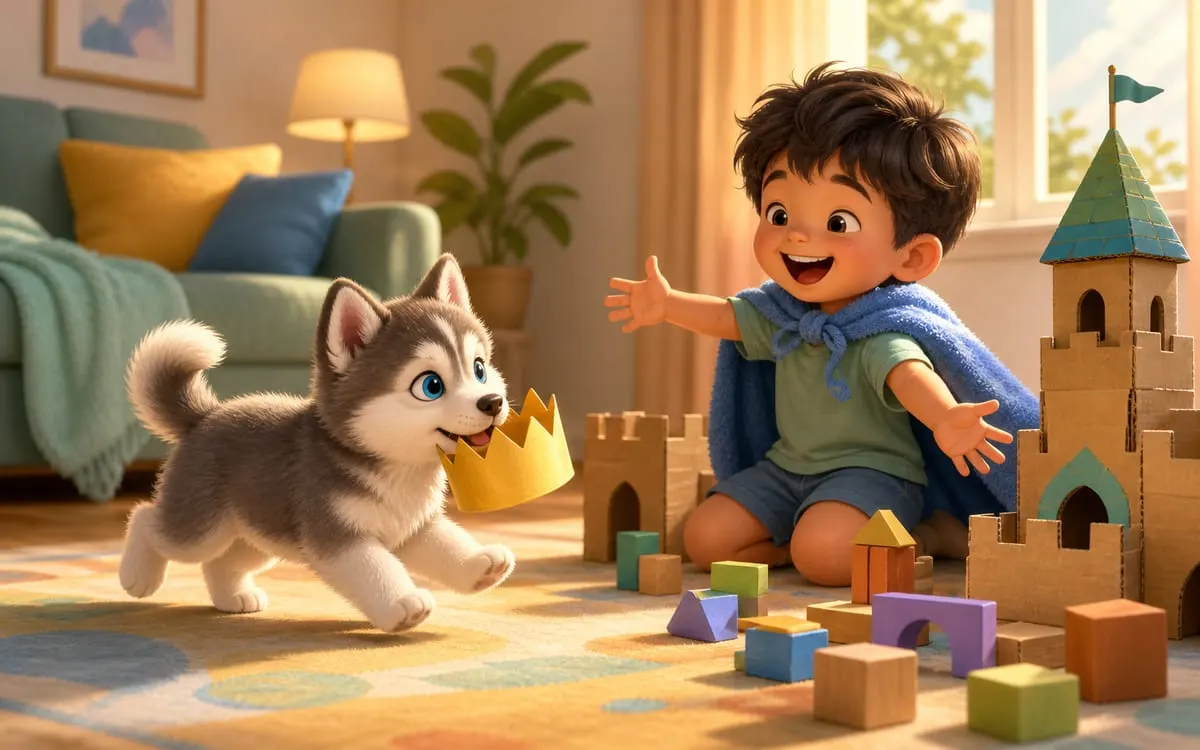
Your next adventure could be a moment together.
Now that you have met Pigúiça here, discover the story behind her world. See the illustrations, read the beginning and choose a book to share with your child, one page at a time.
Something shifts at four. They can follow two or three instructions in a row, they start to grasp the idea of rules, and they love feeling capable. Make an activity too easy and they'll wander off in two minutes. Too hard and they'll melt down. The sweet spot is where they have to try a little, and then they manage it.
Games with simple rules
- Homemade memory game: six pairs of cards drawn by them. It matters more to them, and they match faster because they recognise their own lines.
- Red light, green light: two commands, lots of laughing, and pure impulse-control practice.
- Guess the sound: make a noise behind the sofa, crumpling paper, tapping a spoon, and let them guess. Sharpens listening.
- Picture dominoes: sequencing and matching, no reading required.
Hands-on projects worth the mess
- Cardboard city: milk cartons, cardboard and tape. A project that can live on the table for days and grow each time.
- Themed collage: old magazines and a mission, find only blue things, or only things you can eat.
- Their own book: staple four sheets, they draw, you write down the sentences they dictate. Keep it. It's treasure.
- Real cooking: cracking eggs, stirring batter, building a sandwich. Measuring, counting, and eating the result.
- Obstacle course: crawl under a chair, jump a cushion, spin at the end. Let them design version two.
Routine and independence
- Picture routine chart: five drawings in morning order. It cuts the "come on, we're late" battle dramatically.
- One job that's theirs: napkins on the table, feeding the dog, picking the fruit. Repeated daily, it becomes pride.
- Five-minute timer: use it for tidying and it turns a negotiation into a race.
- Two options, never open questions: not "what do you want to wear?" but "this one or this one?". Independence without collapse.
- Solo play stretch: tell them you're doing the dishes and they'll play nearby. Start at ten minutes and grow it.
When it falls apart halfway
- If they quit, don't push in the moment: put it away and offer it again two days later. Often the activity wasn't too hard, it was just the wrong moment.
- Help with your hands, not your voice: rather than repeating the instruction louder, sit down and do the first piece. Demonstrating unblocks faster than explaining.
- Praise the effort, not the talent: "you tried three different ways until it worked" teaches persistence. "You're so clever" teaches fear of getting it wrong.
At the end of the day, a story helps it all settle. At four they can talk about what a character felt, which is where books like the Pigúiça the husky adventures from Dogavios earn their keep, giving you a way into courage and friendship without it sounding like a lesson.
Your next adventure could be a moment together.
Now that you have met Pigúiça here, discover the story behind her world. See the illustrations, read the beginning and choose a book to share with your child, one page at a time.