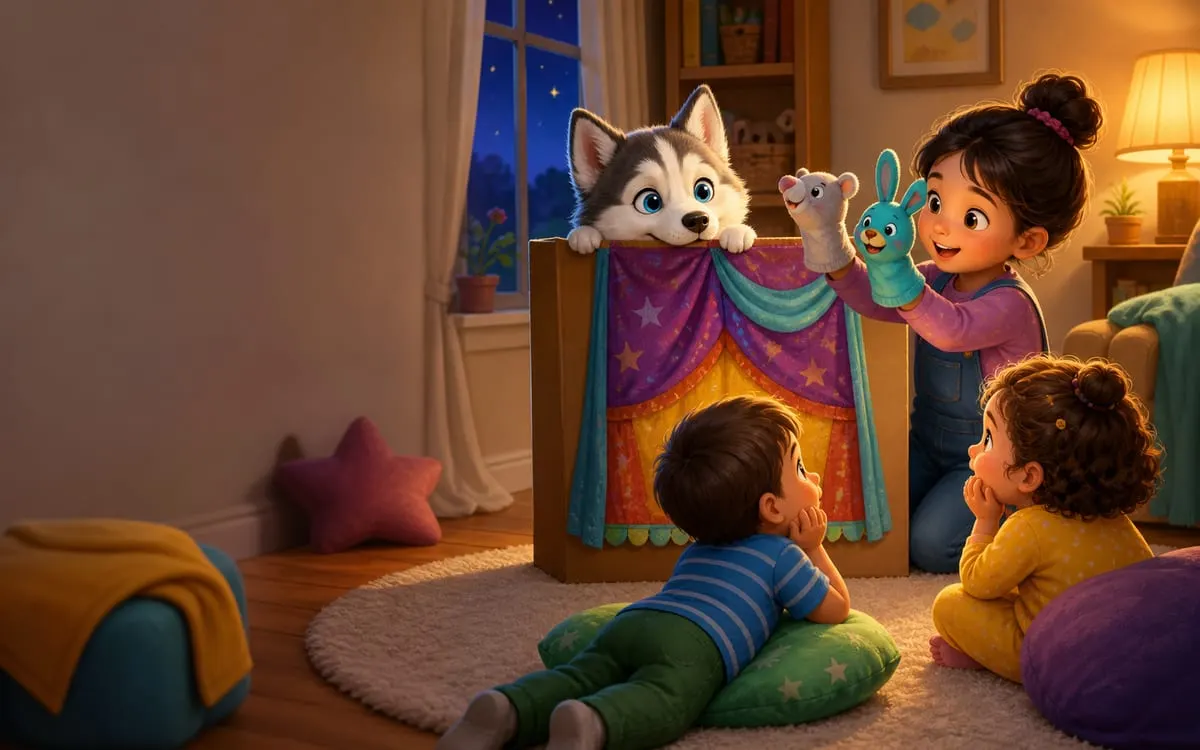

You don't need to be an actor or own expensive puppets to captivate a young child. Storytelling with puppets is one of the simplest ways to hold attention, boost language skills, and turn reading into pure fun.
Why puppets work so well
When a voice and a visual character enter the scene, a child's brain pays more attention than it does to a plain reading. The puppet creates a focal point that helps even very young children, ages 2 and 3, follow a story from start to finish. Plus, imitating voices and dialogue expands vocabulary and encourages the child to join in, responding to the character.
Easy homemade puppets
- Old sock: sew or glue on buttons for eyes, ready in five minutes.
- Paper bag: draw a face, cut out ears or a snout, and slip it onto your hand.
- Wooden spoon: draw a face on the back and wrap a cloth around it as clothing.
- Finger puppet: cut small circles from cardstock and wrap them around a finger.
A simple routine to start today
Pick a short book your child already knows. Before reading, introduce the puppet: «Look who came to tell the story with us today!». While reading, give the puppet the voice of one character and pause so it can «chat» with the child, asking what she thinks happens next. At the end, let the child play freely with the puppet for a few minutes.
Great for stories with memorable characters
Stories with a charismatic main character work especially well with puppets. The adventures of Pigúiça, the curious little husky pup from the Magical Garden, for example, come extra alive when a puppy puppet «joins in» the reading, barking softly or sniffing the pages, a simple way to make storytime unforgettable.
When your child resists
Some shyer children might find the puppet strange at first. Don't force it: keep it nearby without direct interaction until natural curiosity brings them closer on their own time.