Your next adventure could be a moment together.
Now that you have met Pigúiça here, discover the story behind her world. See the illustrations, read the beginning and choose a book to share with your child, one page at a time.
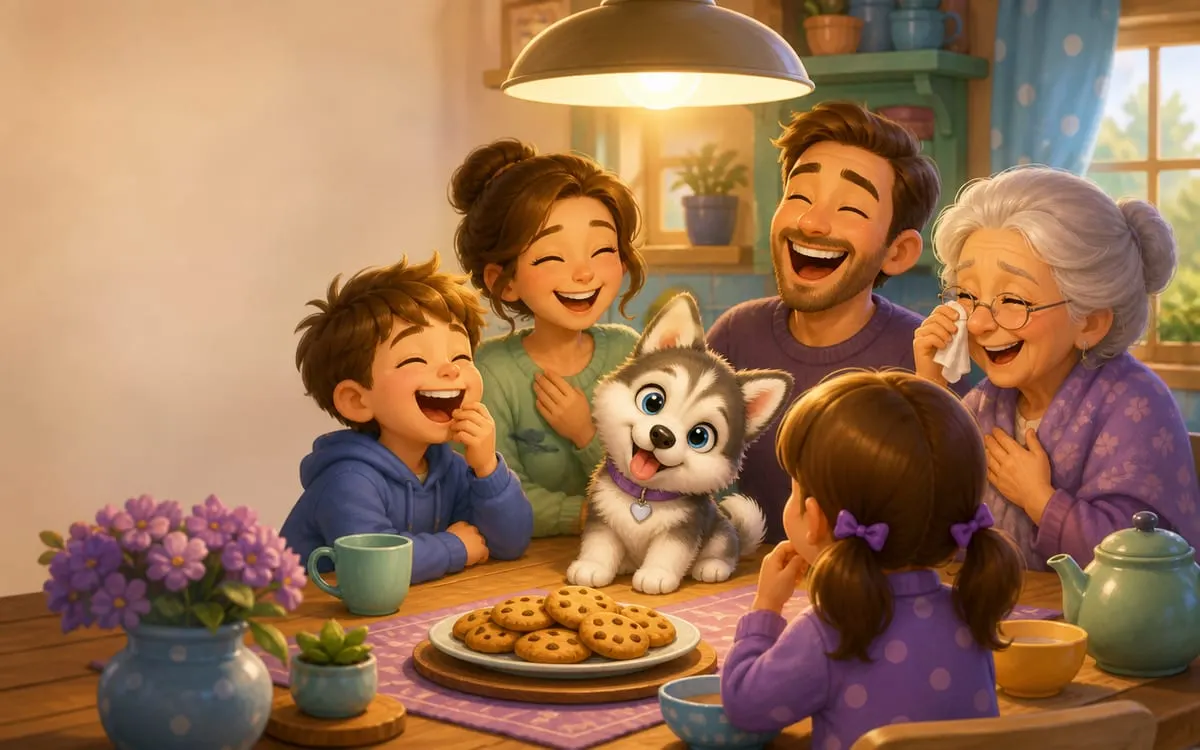
Looking for short jokes for kids? Here are 25 quick, clean jokes that are easy to remember, each just one or two lines. You can tell them in the car, in line, at dinner or in bed before sleep. Read the question, pause, and let your child try to guess the answer.
25 short jokes for kids
- What did the tomato do at the bank? It took out a statement.
- What is the oldest animal in the world? The zebra, because it is in black and white.
- Why does a dog wag its tail? Because the tail cannot wag the dog.
- What gets wetter the more it dries? A towel.
- Why was the math book sad? It had too many problems.
- What did the ocean say to the beach? Nothing, it just waved.
- Why is the elephant afraid of computers? Because of the mouse.
- Why do bees have sticky hair? Because they use honeycombs.
- What did the duck say to the other duck? You quack me up!
- What did the grape say when the elephant stepped on it? Nothing, it just let out a little wine.
- Why are fish so smart? Because they live in schools.
- Why can a ghost never tell a lie? Because you can see right through it.
- Why is the spider so good on the internet? It has a huge web.
- Why did the cat sit by the computer? To keep an eye on the mouse.
- What did zero say to eight? Nice belt!
- Why does the sun not go to school? It already has millions of degrees.
- Why do monkeys love bananas? They come in their own wrapper.
- What did the pencil say to the paper? I have a soft spot for you.
- What is a dinosaur’s favorite candy? A Tyrannosaurus lollipop.
- What did the cloud say to the wind? Do not blow me off.
- What does the penguin say on the phone? Hello, is it chilly over there?
- What did the cookie say to the milk? Let’s dunk into this friendship!
- Why was the clock sent to the principal? Because it kept killing time.
- Why did the chicken cross the road? To get to the other side.
- Why does the husky love snow? It is the only ice cream that never melts on her paws.
For kids aged 3 to 5
Little ones are still discovering how words work. Pick jokes about animals, food and funny sounds, like the duck and the dog ones. Do not worry if your child misses the wordplay. Often they laugh at your voice, your silly face and the pause before the answer.
Tell the joke slowly, use a playful voice and repeat it as many times as they ask. At this age, repetition is part of the fun. Soon they will start to guess the answer and giggle before you finish.
For kids aged 6 to 8
At this stage children can read, understand double meanings and love to guess. The mouse joke, the belt joke and the honeycomb joke work really well. Ask them to say the answer before you do, and cheer when they get it right or invent an even funnier one.
This is also a great moment to encourage reading. Let your child read a joke out loud to the family. Reading with rhythm, stopping at the right moment and being funny is a wonderful exercise in fluency and confidence.
How to tell a joke well
A good short joke depends more on how you tell it than on the words. Say the question calmly, look your child in the eyes and pause for two seconds before the answer. That pause gives their brain time to guess, and it is where the laughter lives.
If your child does not laugh, that is fine. Smile, switch jokes and try another. The goal is to have fun together, not to win a big laugh at any cost. A good joke brings people closer instead of demanding a reaction.
Games to play with jokes
Turn joke time into a game. Write a few jokes on slips of paper, fold them and put them in a jar. Each person draws one and tells it to the family. Another idea is to invent new jokes about your child’s favorite animals. Ask: what did the dog say to the cat? The answers are often funnier than the originals.
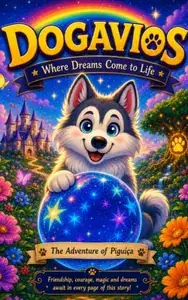
Want to keep the fun going? Try the free Pigúiça game, which runs in the browser with no sign-up and no ads, or print one of the free coloring pages and let your child illustrate a favorite joke. In the book Dogavios, the husky Pigúiça and her friend Fofuxo also share funny adventures in the Magic Garden.
Frequently asked questions
What is the best age to start telling jokes?
From age 3 you can share very simple jokes about animals and sounds. Wordplay usually clicks around age 5 or 6, when children understand that one word can have two meanings.
What if my child does not get the joke?
Explain it calmly and without rushing. Pointing out the wordplay helps your child learn new vocabulary. If it still does not click, save the joke for a few months later and tell a simpler one.
Do jokes help a child’s development?
Playing with jokes supports language, attention and reading, and it creates a warm family moment. It does not replace other activities, but it is a light and fun way to learn while laughing.
Your next adventure could be a moment together.
Now that you have met Pigúiça here, discover the story behind her world. See the illustrations, read the beginning and choose a book to share with your child, one page at a time.
Your next adventure could be a moment together.
Now that you have met Pigúiça here, discover the story behind her world. See the illustrations, read the beginning and choose a book to share with your child, one page at a time.