Your next adventure could be a moment together.
Now that you have met Pigúiça here, discover the story behind her world. See the illustrations, read the beginning and choose a book to share with your child, one page at a time.
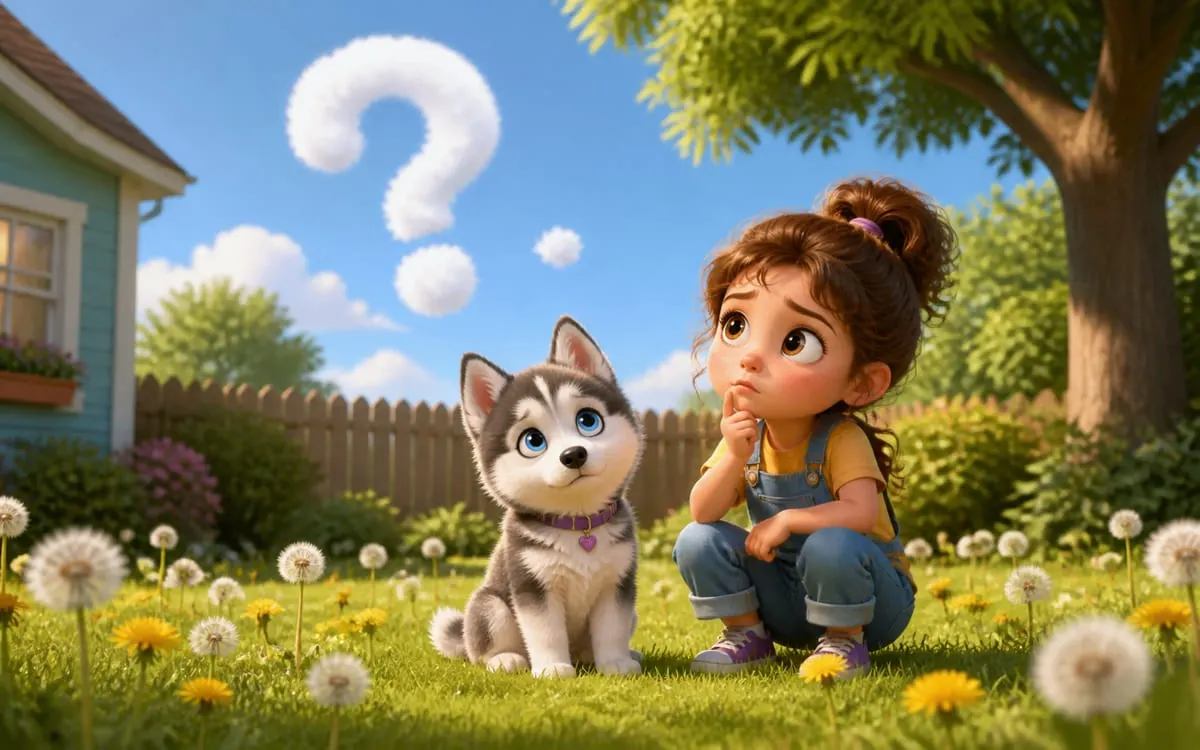
What has teeth but never bites? Few questions grab a child’s attention like a good riddle. Riddles are the toy that weighs nothing in the backpack: they work in the car, in line at the store, at the dinner table and even when the internet goes down. Below are 25 riddles for kids with answers, sorted by difficulty so you can pick the right ones for your child’s age. The answer comes right after each question, so cover it with your finger if you want to play along.
Behind the fun there is real brain work: figuring out what «has a neck but no head» is reasoning by analogy, the same skill kids use in math and reading comprehension.
Easy riddles (ages 3 to 5)
For little ones, the best riddles describe things they see every day: animals, fruit and the sky. Feel free to add hints with gestures and sounds.
- I have four legs, I say woof and I wag my tail when you get home. What am I? A dog.
- I am yellow and curved, and monkeys love me. What am I? A banana.
- I am orange, bunnies love me and I grow under the ground. What am I? A carrot.
- I shine in the night sky and change my shape every week. What am I? The moon.
- I have wings, I buzz and I make honey. What am I? A bee.
- I move very slowly and carry my house on my back. What am I? A snail.
- I am white, I come from a cow and I love cookies. What am I? Milk.
- What has teeth but never bites? A comb.
- What falls from the sky but never gets hurt? Rain.
Medium riddles (ages 6 to 8)
At this age kids can handle a bit of mystery and love spotting the trick on their own. Give them time before revealing the answer.
- The more you take away, the bigger I get. What am I? A hole.
- What gets wetter the more it dries? A towel.
- What has hands but can’t clap? A clock.
- What has a neck but no head? A bottle.
- What has one eye but can’t see? A needle.
- What has ears but can’t hear? Corn.
- What has cities but no houses, and rivers but no water? A map.
- What goes up but never comes down? Your age.
Hard riddles (ages 9 and up)
These call for out-of-the-box thinking and stump plenty of grown-ups. Perfect for challenging grandparents at Sunday lunch.
- What belongs to you, but other people use it more than you do? Your name.
- What can you catch but never throw? A cold.
- What has keys but can’t open a single lock? A piano.
- What breaks as soon as you say its name? Silence.
- The more you take, the more you leave behind. What are they? Footsteps.
- What is full of holes but still holds water? A sponge.
- Which month of the year has 28 days? All of them.
- What comes once in a minute, twice in a moment, but never in a thousand years? The letter M.
If your crew solved them all, level up with our hard riddles with answers, made to really stretch the brain.
How to turn riddles into a family game
Scoreboard on the fridge. One point for a right answer, three points for inventing a new riddle nobody solves. The scoreboard gives everyone a reason to play again the next day.
Inventing is the powerful part. To create a riddle, a child has to describe something without naming it. That is pure vocabulary and observation practice. Start with things in the living room: «I am round, I have numbers and I hang on the wall».
Hints in three levels. If your child gets stuck, give a small hint, then a medium one, and finally one that almost gives it away. Nobody quits and everyone feels like a winner.
Mix in brain teasers. Brain teasers often have a pun in the answer and make the game even more fun. We have a list of brain teasers with answers for when the riddles run out.
Why riddles are good for kids
Solving a riddle means holding several clues in mind at once, comparing them with what you already know and testing ideas. That is working memory and flexible thinking, skills school will ask for all the time. And there is a bonus: kids learn that getting it wrong is part of the game, because nobody solves every riddle on the first try.
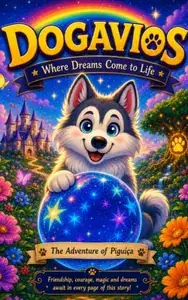
Pigúiça, the husky puppy from the Dogavios book, loves a good mystery. When your riddle stash runs out, the hunt goes on in Pigúiça’s game, free in the browser, where the little animals of the Magic Garden drop clues along the way. 🐾
Frequently asked questions
What is the difference between a riddle and a brain teaser?
A riddle describes something with clues and the child figures out what it is, like «what has teeth but never bites». A brain teaser often has a trick or a pun in the answer, so it works best with kids who can already read.
At what age can kids play riddle games?
From age 3, with very simple riddles about animals and everyday objects. Around age 6 they start to catch the tricks, and after 9 they can solve riddles that need abstract thinking.
What if my child can’t solve any riddles?
Go back one difficulty level and give hints with gestures and sounds. The goal is fun, not getting it right. A great move is asking your child to invent a riddle for you: suddenly the grown-up is the one doing the thinking.
Your next adventure could be a moment together.
Now that you have met Pigúiça here, discover the story behind her world. See the illustrations, read the beginning and choose a book to share with your child, one page at a time.
Your next adventure could be a moment together.
Now that you have met Pigúiça here, discover the story behind her world. See the illustrations, read the beginning and choose a book to share with your child, one page at a time.