There is a classic mistake in teaching letters at home: turning everything into a lesson. Kids smell «disguised class» from a mile away. What works is the opposite: real play that happens to have letters inside. These 9 do exactly that.
With the body
- Letter hunt: «find 5 things in the house that start with B». Running around and phonics in the same game.
- Play dough letters: sculpting the A is memorizing the A with your hands.
- Alphabet hopscotch: jump the squares singing each letter's sound, not its name.
With paper and pen
- The restaurant menu: the child «writes down» the family's dinner orders. Writing with a real purpose.
- Hidden notes: short messages in the lunchbox and under the pillow. Reading becomes a happy surprise.
- The name comes first: the letters of their own name are the ones a child wants to master first. Always start there.
With stories and screens (in the right dose)
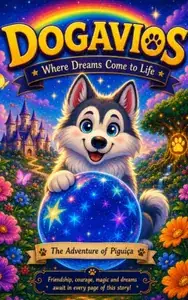
- Finger-pointed reading: when reading together, slide your finger under the words. The brain connects sound and shape on its own. An illustrated book like Dogavios, with short text per page, is the ideal format.
- Coloring letters: on the Dogavios coloring pages, ask them to find and paint every letter of their name on the page.
- Game with captions: in the Pigúiça game, the on-screen prompts («JUMP!», «SLIDE!») become urgent reading: kids learn to read fast because they WANT to react fast. 🐾
Golden rule: short and joyful sessions. Ten minutes of letter play beat an hour of reluctant workbook.