Your next adventure could be a moment together.
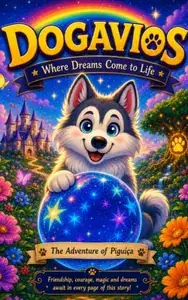
Now that you have met Pigúiça here, discover the story behind her world. See the illustrations, read the beginning and choose a book to share with your child, one page at a time.
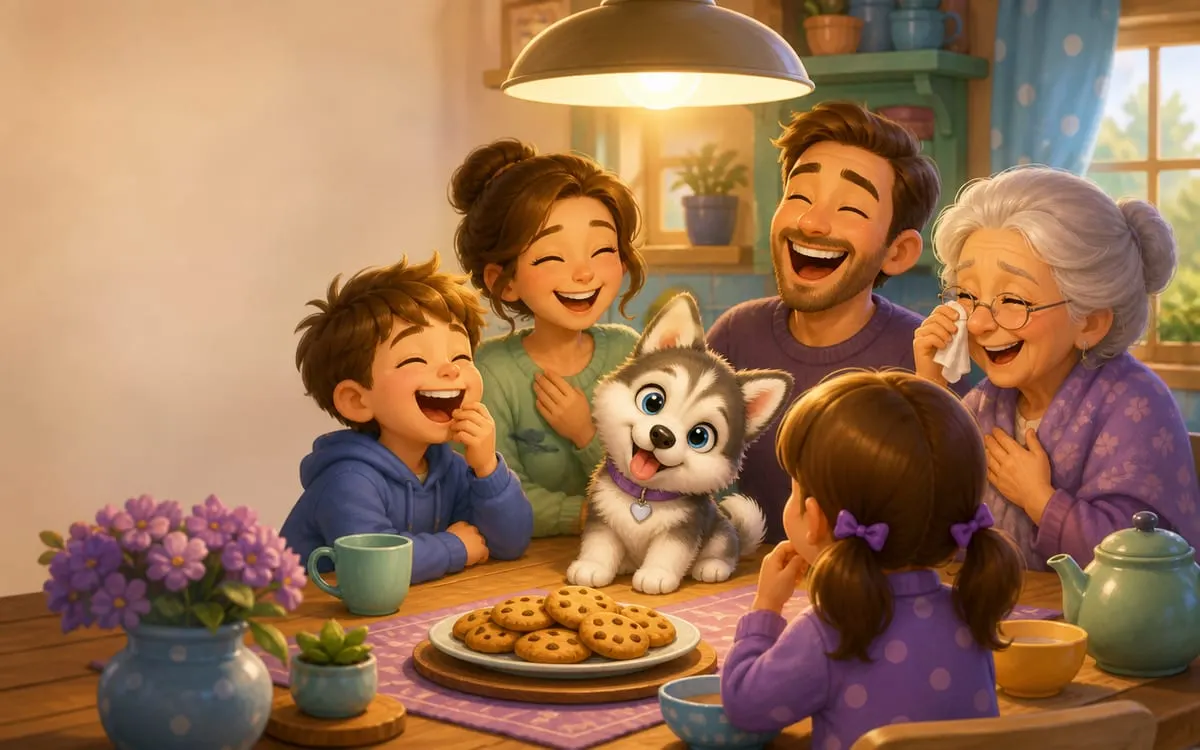
Good jokes for kids follow one simple rule: the child has to get it and be able to retell it. If only the grown-up laughs, it does not count. The 30 jokes below are short, clean and easy to remember, perfect for dinner, a long car ride or that late afternoon when everyone is tired of screens. They are grouped by theme so you can quickly find the right joke for the right audience.
Animal jokes
Animals are the all-time favorite topic for little ones, because kids already know every sound and habit. We start with dogs, of course.
- What do you call a dog magician? A labracadabrador.
- Why did the puppy sit in the shade? He didn’t want to be a hot dog.
- What is a dog’s favorite instrument? The trom-bone.
- What do you call a sleeping bull? A bulldozer.
- Why do cows wear bells? Because their horns don’t work.
- What do you call a bear with no teeth? A gummy bear.
- What do you call an alligator in a vest? An investigator.
- Why do fish live in salt water? Because pepper makes them sneeze.
If the crowd wants more creatures, there is a whole list of animal jokes for kids waiting for you.
Food jokes
Great for lunchtime, when the plate is full and patience is running low.
- Why did the banana go to the doctor? It wasn’t peeling well.
- What do you call cheese that isn’t yours? Nacho cheese.
- Why did the cookie go to the nurse? It felt crummy.
- What does a lemon say when it answers the phone? Yellow!
- Why did the orange stop halfway up the hill? It ran out of juice.
- What did one plate say to the other plate? Dinner is on me.
School jokes
School is joke gold because everyone goes there: kids laugh at books, pencils and even tests. For a bigger stash, we also put together school jokes for kids.
- Why was the math book sad? It had too many problems.
- Why did the student bring a ladder to school? To go to high school.
- What is a snake’s favorite subject? Hiss-tory.
- What did the zero say to the eight? Nice belt!
- Why did the teacher wear sunglasses? Because her students were so bright.
- Why was the broom late for school? It over-swept.
Family and home jokes
Everyday objects turn into characters, and kids start looking at walls and clocks in a whole new way.
- What did one wall say to the other wall? I’ll meet you at the corner.
- Why did the boy throw the clock out the window? He wanted to see time fly.
- Why did Mom put sugar under her pillow? So everyone would have sweet dreams.
- Why did Dad’s phone wear glasses? It lost all its contacts.
- What did the blanket say to the bed? Don’t worry, I’ve got you covered.
The silly ones every kid retells
These make no sense at all, and that is exactly why they work. Get ready to hear each one about fifteen times in the same week.
- Knock, knock. Who’s there? Boo. Boo who? Don’t cry, it’s only a joke!
- Knock, knock. Who’s there? Lettuce. Lettuce who? Lettuce in, it’s cold out here!
- What’s brown and sticky? A stick.
- Did you hear the joke about the roof? Never mind, it’s over your head.
- Want to hear a joke about paper? Never mind, it’s tearable.
If your family loves this style, you will enjoy our dad jokes for kids, the kind that make you roll your eyes and laugh at the same time.
How to tell a joke so kids really laugh
Ask the question and wait. The pause before the punchline is half the fun. Let your child take a guess, even a wrong one: often the guess is funnier than the joke itself.
Pick by age. Up to about age 5, sound jokes and knock-knock jokes work best, like «Boo who?» or the gummy bear. From 6 on, when kids start reading, puns like «hiss-tory» and «nacho cheese» click and become a source of pride.
Switch roles. After three jokes, ask your child to tell you one. Laugh for real, even if they forget the ending. A kid who feels like a great audience grows into a great storyteller.
Let them invent. Jokes made up by kids rarely make sense to grown-ups, and that is fine. The wordplay workout is already happening.
Why jokes are serious business
Telling jokes trains memory, speech rhythm and the courage to speak in front of others, all disguised as silliness. To get a pun, a child has to notice that one word can mean two things. That is language awareness, the same foundation that supports learning to read. The kid who tells the bulldozer joke today presents a school project without fear tomorrow.
Humor also brings families closer: laughing together builds good memories and softens tough days. And funny books create readers. Pigúiça the husky, from the Dogavios book, gets giggles with her clumsy adventures before she gets yawns, and after joke time the leftover energy fits perfectly in Pigúiça’s free game, right in the browser. 🐾
Frequently asked questions
At what age do kids start to understand jokes?
Around age 3, children already laugh at funny sounds and silly situations. Puns, which play with the double meaning of words, usually start to make sense around ages 6 or 7, along with learning to read.
What is the easiest joke for a kid to memorize?
Short ones with a one-word punchline: the hot dog, the gummy bear and nacho cheese are big favorites. The shorter the answer, the easier it is for kids to retell without getting lost.
How do I know if a joke is right for kids?
A good rule: the joke should laugh at a situation, an object or a play on words, never at a person, a group of people or anyone’s looks. If you would feel awkward hearing your child tell it at school, leave it out.
Your next adventure could be a moment together.
Now that you have met Pigúiça here, discover the story behind her world. See the illustrations, read the beginning and choose a book to share with your child, one page at a time.
Your next adventure could be a moment together.
Now that you have met Pigúiça here, discover the story behind her world. See the illustrations, read the beginning and choose a book to share with your child, one page at a time.