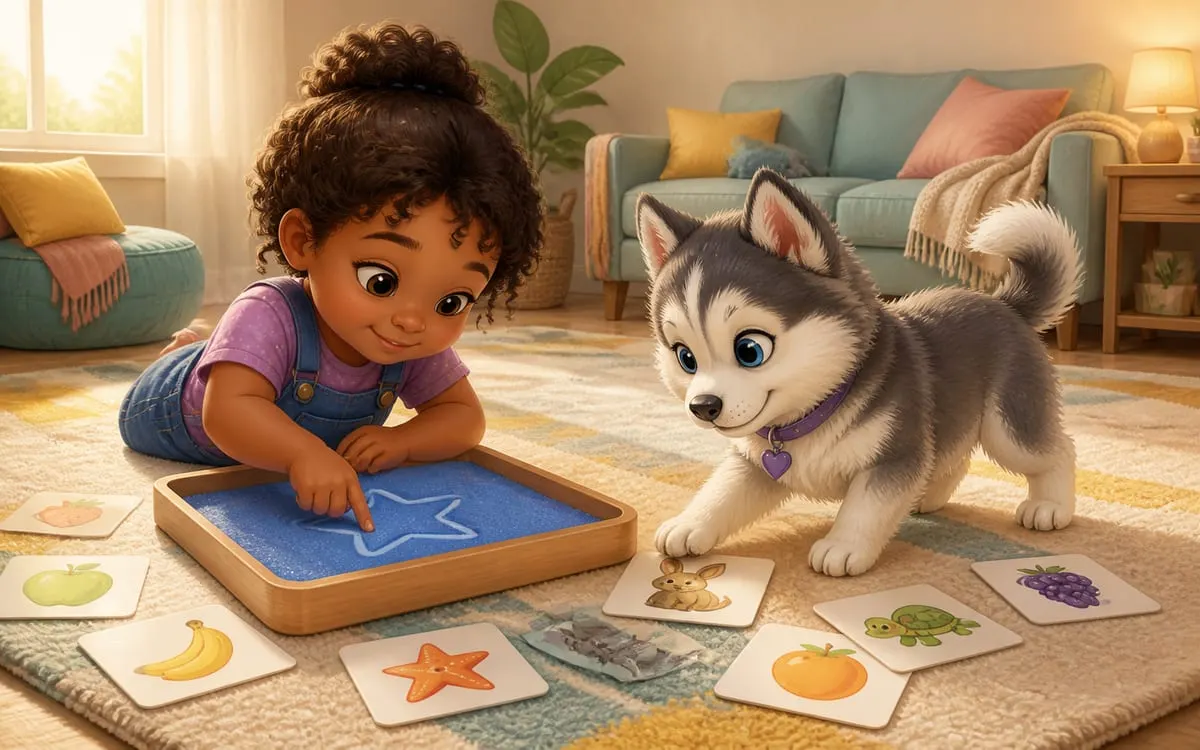

Say the words "teaching reading at home" and most parents picture flashcards, a sulking child and an exhausted adult. Delete that image. What actually works at home is the opposite: short bursts, joyful repetition, and enough patience to let your child move at her own speed. You're not replacing school, you're preparing the soil school plants in.
Start with sounds, not letters
- Play sound detective: before memorizing the alphabet, a child needs to hear that words are made of pieces. "What sound starts BALL? And BOX? Same one!" That's phonological awareness, and it holds up everything else.
- Rhyme every day: cat, hat, mat, bat. Do it in the car, in the bath, in the checkout line. Strong rhymers become strong readers.
- Clap the syllables: but-ter-fly, three claps. It's silly, it works, and kids love it.
- One letter at a time: start with the letters in her name. Nothing beats the pride of spotting your own initial out in the world.
Ten minutes beats a full hour
- Keep sessions tiny: ten to fifteen minutes, same time each day. Consistency wins over length, always.
- Stop before she's tired: end while she's still enjoying it. Then she comes back curious instead of dreading it.
- Write together: grocery lists, a note for Dad, labels on her drawings. Writing with a purpose teaches faster than copying rows of letters.
- Never interrupt to correct: let her finish. Then say the word again correctly, casually, with no correcting tone.
- Work a few words at a time: pick three or four words for the week and chase them everywhere, on the fridge, on street signs, in her notebook. Depth pays off more than variety.
- Let her teach: ask her to explain a letter to a younger sibling, or to the dog. Explaining consolidates the learning, and the pride comes free.