
Singing the alphabet is fun, but it doesn't teach reading on its own. What actually prepares a child to read is noticing that words are made of sounds, and that each sound has a shape that stands for it. That penny drops at different moments for different children, and pushing too early usually produces resistance rather than results.
Start with sounds, not letter names
- Play "starts with": in the car or the checkout line, "what else starts with the fff sound?" Saying the sound rather than the name avoids a classic confusion when blending later.
- Clap the syllables: ba-na-na, three claps. Hearing a word break into chunks is a huge step and entirely oral.
- Hunt for rhymes: "cat rhymes with hat." Rhyming tunes the ear to ending sounds, which later become written endings.
- Begin with their name: the first letter of their own name is always the most motivating. Then mom, dad, the dog.
Letters you can touch and move
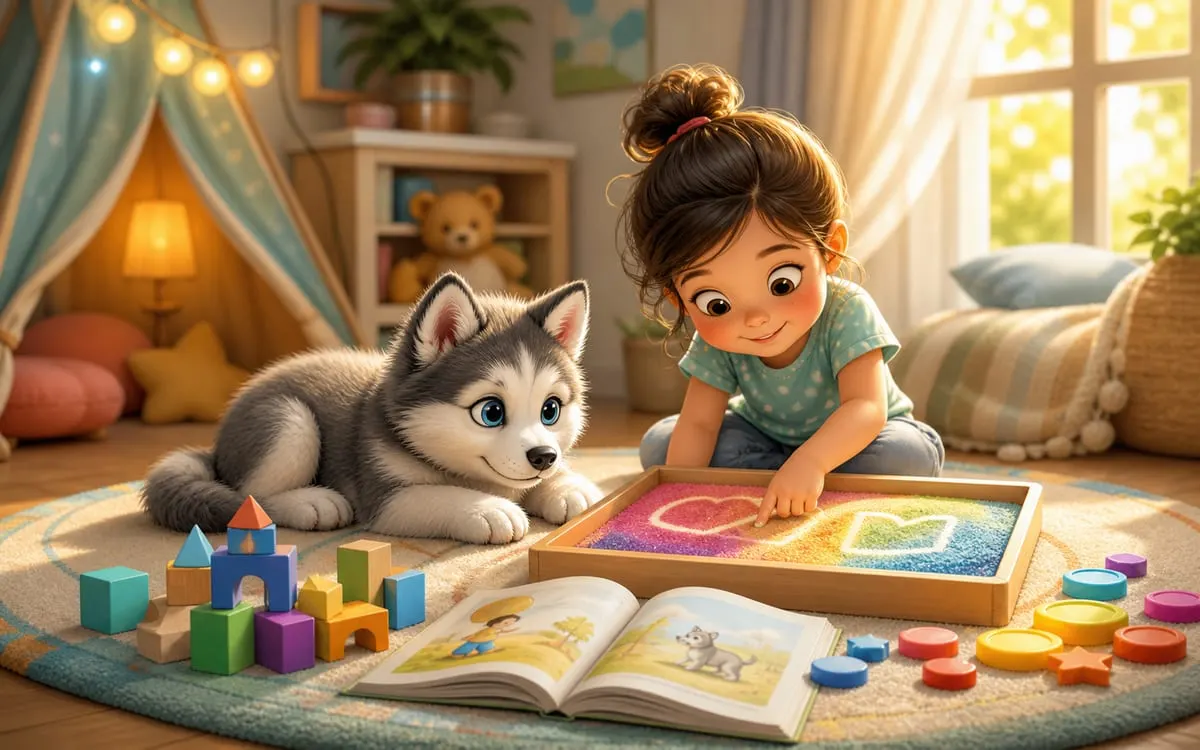
- Flour or sand tray: spread a thin layer on a baking sheet and trace letters with a finger. The movement locks in the shape better than a pencil, and erasing is just a shake.
- Playdough letters: rolling snakes and shaping letters trains hands and visual memory at once.
- Fridge magnets: keep letters within reach and build small words while you cook. Swap one letter and show how the word changes: CAT becomes BAT.
- Letter hunts around the house: pick a letter of the day and search labels, signs and book covers. Reading the world counts as reading.