Your next adventure could be a moment together.
Now that you have met Pigúiça here, discover the story behind her world. See the illustrations, read the beginning and choose a book to share with your child, one page at a time.
Few breeds match the physical stamina of a Siberian husky. They were developed to pull sleds for hours in extreme cold, and that engineering is still in there, inside the dog currently sprawled on your rug. This is why “a quick walk round the block” does not cut it, and why a large share of husky behaviour problems are really just stored-up energy.
How much time, by age
- Puppy under four months: several short bouts of free play, no forced running. The rough guide of five minutes of walking per month of age, twice a day, is a reasonable starting point, confirm with your vet.
- 5 to 12 months: build up gradually, avoiding jumps and repeated impact on hard surfaces while the joints are still growing.
- Adult (1 to 7 years): 90 minutes to two hours of activity a day, combining walking, running and play. Less than that tends to show up as destruction and howling.
- Senior: reduce intensity, keep frequency. Shorter, more frequent walks preserve muscle and mood.
What kind of activity works
- Long, continuous walks: the foundation. A steady pace tires them more than short bursts.
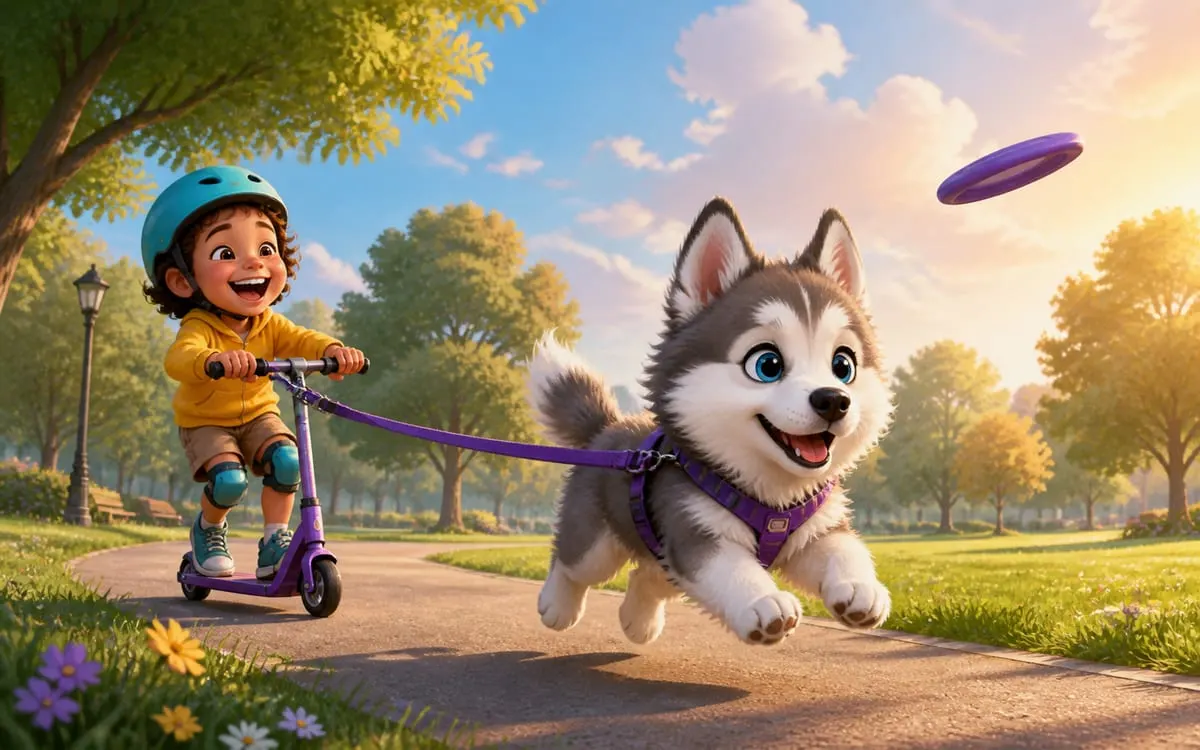
- Pulling with proper gear: canicross, bikejoring or cart pulling with a purpose-made harness. It is literally what he was built for.
- Trails and varied terrain: hills, grass, dirt and sand cost far more energy than flat pavement.
- Scent games: hiding treats and toys tires the mind. Twenty minutes of scent work is worth half an hour of running.
- Off-leash only in fenced areas: a husky loose in open ground is a recipe for a disappearance. Recall in this breed is famously unreliable.
Heat, safety and warning signs
- Avoid strong sun: go early morning and late afternoon. Press the back of your hand to the pavement: if it burns you in five seconds, it burns his paws.
- Never shave the undercoat: it insulates against heat as well as cold. Shaving makes temperature regulation worse.
- Always carry water: offer it during short breaks.
- Signs of overheating: heavy panting, a very red or bluish tongue, staggering, excessive drooling. Get him into shade, wet the paws and belly, and seek veterinary help immediately.
- Signs of too little exercise: destruction, constant howling, digging, circling and restlessness at night.
- Split it into two or three outings: two hours in one block is less effective than sessions spread across the day.
- Rest is part of the plan: an exercised dog needs quality sleep afterwards. Constant stimulation without pauses creates chronic restlessness.
The practical truth: if you do not enjoy going out every single day, rain or shine, a husky is probably not the right breed, and recognising that in advance is an act of responsibility. For those already living with one, or simply charmed by the breed, Pigúiça's adventures in Dogavios bring all that husky energy to children's story time.
Your next adventure could be a moment together.
Now that you have met Pigúiça here, discover the story behind her world. See the illustrations, read the beginning and choose a book to share with your child, one page at a time.