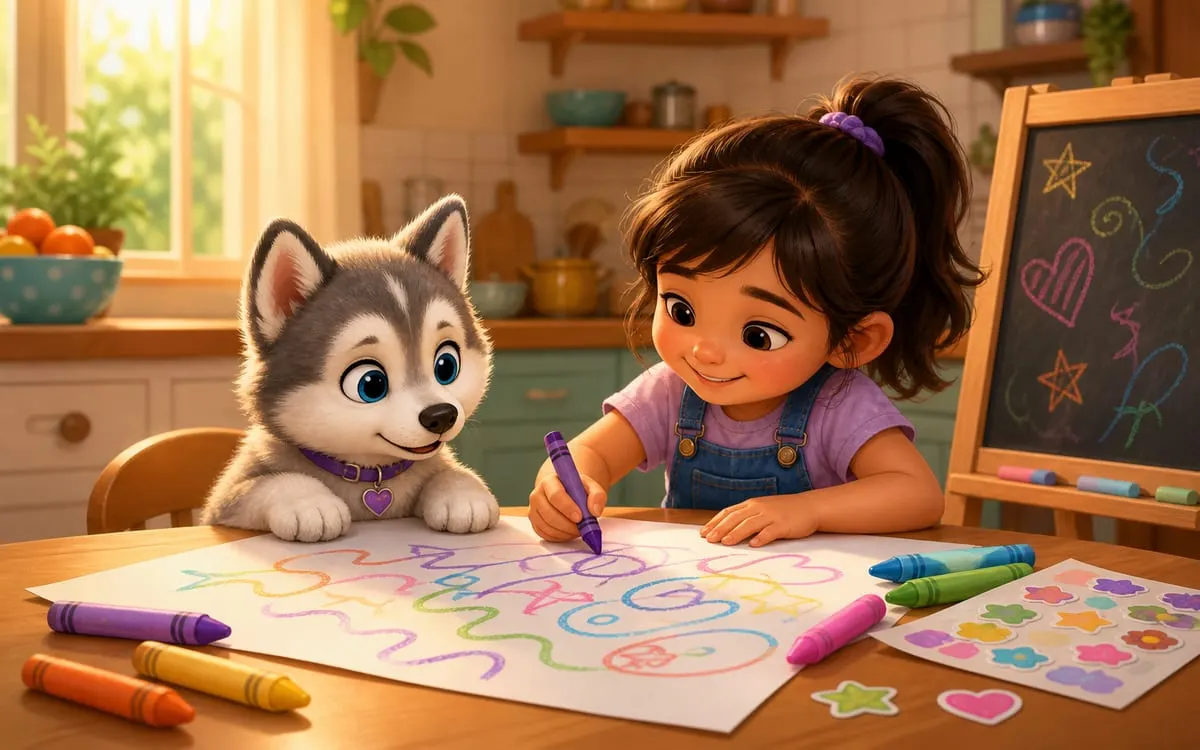

Before a child forms their first letter on paper, their little hands need to build strength and coordination, and that happens long before any handwriting workbook. Knowing where to start makes the whole process feel natural and enjoyable.
The foundation: pre-writing motor activities
Between ages 2 and 4, the focus should be on fine motor development, not letters themselves:
- Crumpling and tearing paper to build finger strength
- Playing with play dough, squeezing and rolling it
- Using tongs or clothespins to pick up small objects
- Drawing lines, circles, and zigzags freely with crayons
- Buttoning and unbuttoning clothes, or using clothespins
These movements prepare the exact muscles a child will later use to hold a pencil firmly.
From scribbles to the first letter
Around age 4, many children start trying to copy shapes and, later, the letters of their own name, usually the initial first. Don't push for perfect handwriting at this stage: the goal is for the child to associate writing with something enjoyable, not a task full of corrections.
Playful prompts that spark the desire to write
- Write in sand or flour with a finger, with no fear of getting it wrong.
- Create «letters» to stuffed animals or pets, even if they're just meaningful scribbles.
- Make a shopping list together before a trip to the store.
- Write the child's name on each drawing they make, gently encouraging them to try it themselves over time.
Reading to write better
Children who hear lots of stories tend to have richer vocabulary and a stronger desire to tell their own stories on paper. After reading the adventures of Pigúiça in the Magical Garden, for example, you can invite your child to «write» or draw what they imagine happens next in the little husky's next adventure, a light way to combine reading with creative writing.
When to seek a professional assessment
If, around age 5 or 6, a child shows real difficulty holding a pencil, avoids writing activities altogether, or shows intense frustration, it's worth talking to your pediatrician about a motor development assessment.