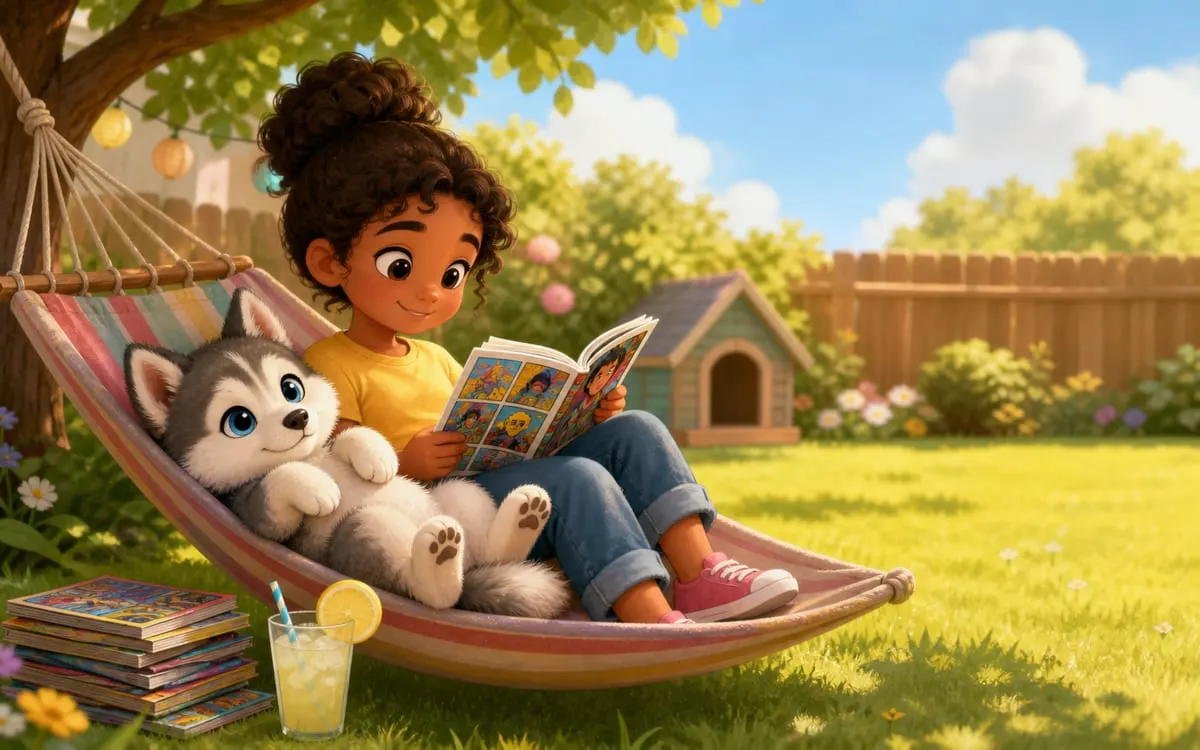
Many parents still wrinkle their nose at comics, thinking they «don't count» as real reading. The good news is exactly the opposite: comics can be one of the most effective tools for raising readers, especially with children who resist traditional books.
Why comics build real literacy
Reading a comic actually demands more cognitive skill than most people assume: the child has to connect text and image, infer emotions from characters' expressions, follow the sequence of panels, and understand onomatopoeia. This kind of visual-textual reading builds inferential reasoning, a skill essential for more advanced reading comprehension later on.
The perfect entry point for reluctant readers
Children who feel intimidated by pages full of text often open up with comics, because the images do part of the work of telling the story. This lowers the cognitive load and creates a sense of success, the child finishes the comic, feels proud, and wants the next one.
How to use comics in favor of reading
- Let the child choose the topic: superheroes, animals, adventure, interest in the subject matters more than the format.
- Read along the first time, pointing to speech bubbles in order.
- Alternate with traditional picture books, without forcing a full switch.
- Celebrate the habit, not the format, the goal is for the child to love reading, whatever the medium.
A bridge to other stories
Once a child gains confidence with comics, she often naturally opens up to books with more text and less supporting imagery. An illustrated book with an engaging story, like the adventures of Pigúiça in the Magical Garden, can be a great next step, still full of pictures, but with a bit more text to follow along.
A gentle reminder
If resistance to reading persists even with comics and other varied formats, or comes with broader difficulties at school, it's worth talking to your pediatrician or the school to understand whether something more is going on.