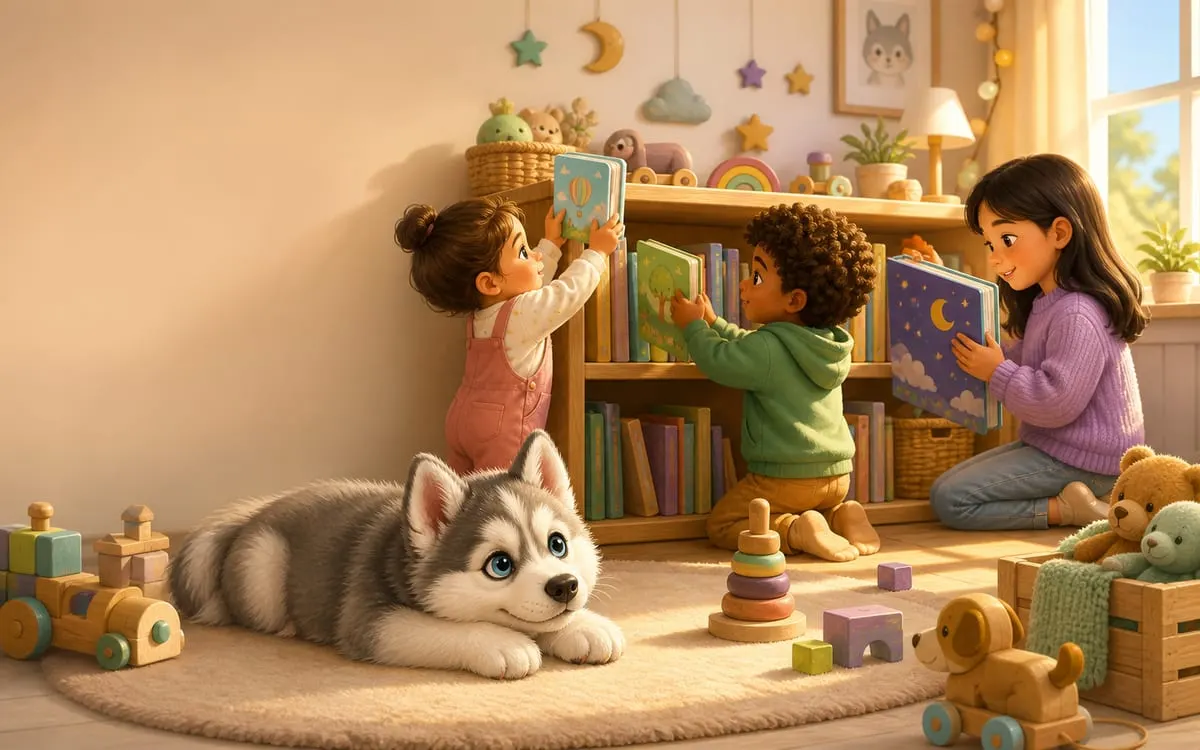
Your next adventure could be a moment together.
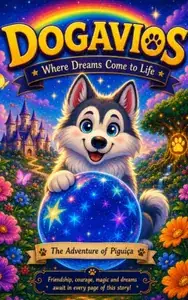
Now that you have met Pigúiça here, discover the story behind her world. See the illustrations, read the beginning and choose a book to share with your child, one page at a time.
Picking a book for Dia das Crianças seems simple until you're standing in front of hundreds of options. The trick is matching the book to the child's age and reading stage, a book that's perfect for a 6-year-old can frustrate a 2-year-old. Here's a straightforward, age-by-age guide so you can gift with confidence.
Ages 2-3: sturdy and repetitive
At this stage a book is almost a toy: it will be chewed on, flipped backward, dropped on the floor. Look for board books with few words per page and big, clear pictures. Short, repetitive phrases hold attention better than elaborate plots, toddlers love predicting what comes next.
Ages 4-5: stories with a beginning, middle, and end
Now you can introduce simple narratives with a small conflict and resolution, «the character lost something and found it,» for example. Rhyming books help with memorization and a growing love for how words sound. This is also the ideal age for the first bilingual books: kids absorb the rhythm of two languages effortlessly, almost like a sound game.
Ages 6-7: first solo reads
Many kids start decoding words on their own around this age. Look for short sentences, vocabulary that repeats page to page, and a plot that rewards the effort of reading, nothing dense enough to discourage a beginner. A bilingual book with parallel text in two languages works beautifully here: your child reads in one language and checks meaning in the other, building confidence in both.
Age 8: more text, more independence
By 8, many kids are already reading short chapters on their own. This is the time for books with more pages, characters with clearer personalities, and more sophisticated humor. Illustrations are still welcome, though, they keep interest alive even as text gets longer.
A tip that works at every age
- Bring the child to the book, not the other way around: if possible, let them choose between 2-3 options you've pre-screened.
- Animal characters work well across nearly every age, like Pigúiça, the little husky from the Magical Garden, whose bilingual book works both for reading aloud to toddlers and for early readers sounding out their first words alone.
- When torn between two ages, pick the simpler book, it's easier for a child to grow into an easy book than to get frustrated by a hard one.
In the end, picking the right book by age isn't about nailing the perfect complexity, it's about choosing something your child will want to pick up again on their own, the day after Dia das Crianças.
Your next adventure could be a moment together.
Now that you have met Pigúiça here, discover the story behind her world. See the illustrations, read the beginning and choose a book to share with your child, one page at a time.