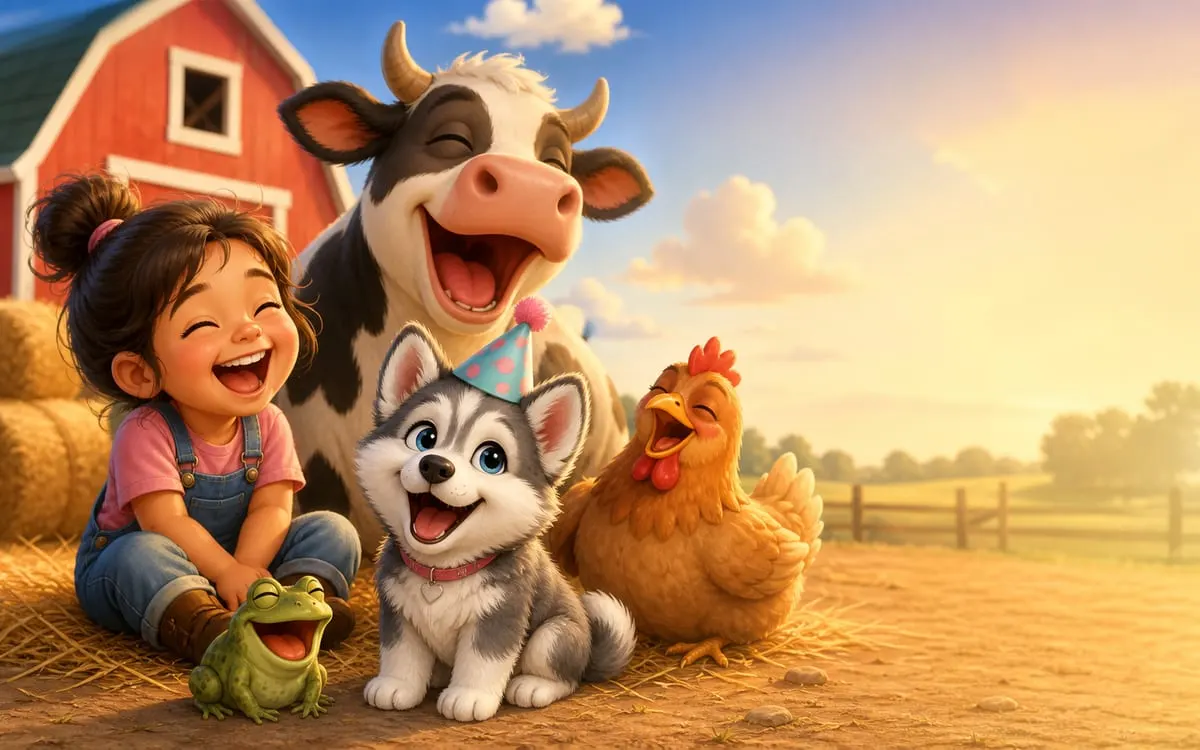
Your next adventure could be a moment together.
Now that you have met Pigúiça here, discover the story behind her world. See the illustrations, read the beginning and choose a book to share with your child, one page at a time.
Can the desert animal do it? That question brings the whole sand dunes into your living room: the grown-up asks, the child answers with their body and finishes with a sound. Here are 12 desert animal challenges, sorted by age from 3 to 8, all short, safe and done indoors.
You only need open space, socks or bare feet, and someone nearby. Read each question in a nature-documentary voice, let your child try, and celebrate the effort. At the end of every challenge they make the animal’s sound, and that is the part everyone will want to repeat.
Before you start: safety first
The desert here is pretend, with no hot sun and no burning sand. Move tables and sharp corners, clear away anything that could tip over or hurt, stay beside your child, do not let them climb on sofas, chairs or beds, and stop right away if they get tired or lose interest. Play is never a test.
Challenges for ages 3 and 4
At this age, big, simple movements work best. Each challenge lasts only a few seconds.
- Can the camel walk with a wobbly hump? Standing, with hands on the back forming a hump, your child takes ten slow steps across the room, swaying side to side like a caravan. To finish, the sound: «Bleeeh!»
- Can the fennec fox hear everything with its giant ears? With open hands beside the head like huge ears, they turn the face slowly to the right, then to the left, and pretend to listen for a tiny faraway noise. To finish, the sound: «Ee-ee-ee!»
- Can the desert tortoise walk super slowly? Crawling very gently across the rug, with an imaginary shell on the back, they cross the open space in five slow steps. To finish, the sound: «Fffff!»
- Can the lizard sunbathe without moving? Sitting, with arms stretched out beside the body like lizard legs, they close their eyes and stay still for five seconds, enjoying the pretend sunshine. To finish, the sound: «Tsss!»
Challenges for ages 5 and 6
Now your child has better body control and enjoys simple rules and counting.
- Can the snake slither without a sound? Standing, with one arm stretched forward, they make the arm wave slowly like a snake gliding on sand, side to side, without leaving their spot. To finish, the sound: «Ssssss!»
- Can the jerboa hop like a tiny kangaroo? With small hands close to the chest and both feet together, they take six short, soft hops without leaving the open space. To finish, the sound: «Peep, peep, peep!»
- Can the desert owl turn its head slowly? Standing, with big wide eyes, they turn only the neck to the right, back to the center, then to the left, three times, with no rush. To finish, the sound: «Hoo, hoo!»
- Can the scorpion hold its tail up high? Crouching, with one arm bent behind the head like a curled tail, they stay still for five seconds and then lower the tail calmly. No going on all fours with the tail up and no dropping to the floor. To finish, the sound: «Tek, tek, tek!»
Challenges for ages 7 and 8
Here come balance, focus and a bit of daring, still with a grown-up close by.
- Can the vulture glide without flapping its wings? On tiptoes, with arms spread wide, they turn very slowly in place, as if soaring high above, and count to eight without losing balance. To finish, the sound: «Keeee!»
- Can the desert ant walk in a perfectly straight line? They walk heel to toe, as if following an invisible thread across the rug, carrying a small cushion in both hands, slowly, without dropping it. To finish, the sound: «Tic, tic, tic!»
- Can the gecko walk on hands and feet, super light? On all fours, with knees off the floor, they take eight soft, slow steps, no rushing, and stop as soon as they feel tired. To finish, the sound: «Gek-ko, gek-ko!»
- Can the meerkat keep watch over the whole desert? Standing very straight, with hands against the chest like little paws, they look right, left and straight ahead, frozen for ten seconds, alert like a sentry. To finish, the sound: «Rooo!»
Turn the challenge into coloring time
After so much moving, children are often ready to sit down and focus. Offer one of our free printable coloring pages and ask them to color the animal from the challenge they liked best. Each colored animal becomes a trophy, and chatting about sand, dunes, colors and paws builds attention and vocabulary.
If they want more, the free Pigúiça game runs in the browser, with no sign-up and no ads. Kids who enjoyed this format will also like our sister post, Can the forest animal do it?, and can get to know who Pigúiça is, the blue-eyed puppy from the Dogavios book.
Tips to make the challenges work
Use a narrator voice. Asking the question with suspense is half the fun, and the sound at the end is the prize.
Let your child propose. If they invent a new animal, welcome it and make it their challenge. Maybe a hare, a cricket or an armadillo.
Swap roles. When the grown-up tries too, kids laugh, loosen up and ask for more.
Celebrate effort. “You tried again!” means more than “you got it.”
Do just a few at a time. Three or four challenges are plenty, and the rest can wait until tomorrow.
Frequently asked questions
What ages are these challenges for?
They were designed for children ages 3 to 8. The first four are the simplest, and the last ones ask for more balance and focus. Families can mix the groups and adapt to their child’s pace.
Do I need any materials or a big space?
No. A rug or a free corner of the living room is enough. None of the challenges use heavy, sharp or fragile objects, nobody climbs on furniture, and a grown-up stays close the whole time.
What if my child cannot do a challenge?
That is fine. Make it easier, try another animal or repeat it tomorrow. The goal is to play and move together, not to pass a test. Praise the attempt and always finish with a hug.
Your next adventure could be a moment together.
Now that you have met Pigúiça here, discover the story behind her world. See the illustrations, read the beginning and choose a book to share with your child, one page at a time.