Your next adventure could be a moment together.
Now that you have met Pigúiça here, discover the story behind her world. See the illustrations, read the beginning and choose a book to share with your child, one page at a time.
When a family decides it is time for a dog, the first question is almost always “which breed?” It is a fair question, but an incomplete one. Breed tells you about tendencies in temperament and energy, not about the exact dog who will end up sleeping on your rug. Two Labradors from the same litter can turn out remarkably different. So treat the list below as a compass, not a promise.
Profiles that usually do well with children
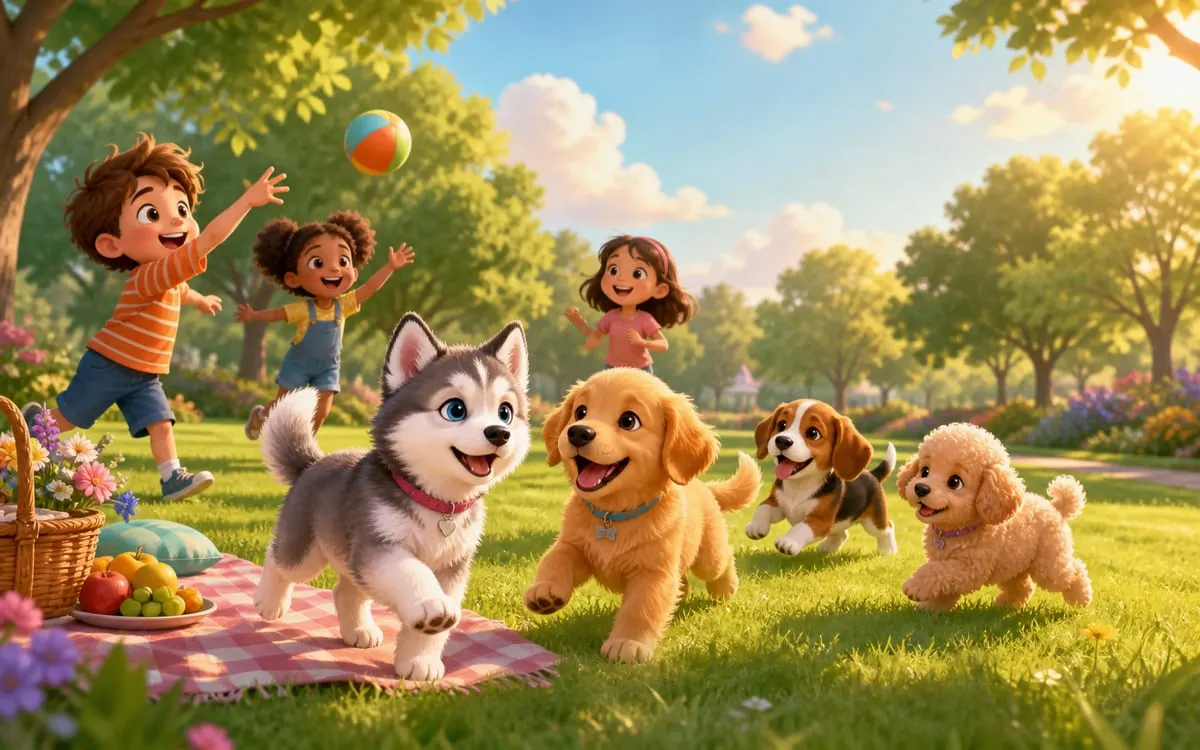
- Labrador and Golden Retriever: patient, tolerant of noise and chaos, and easy to train. In exchange they need genuine daily exercise and tend to gain weight easily.
- Beagle: practical size, playful and sociable. That nose will follow a scent to the end of the world, so a secure yard and leash walks are non-negotiable.
- Cavalier King Charles: gentle and home-loving, great for apartments. Prone to heart conditions, so regular veterinary checkups matter enormously.
- Poodle: clever, quick to learn and low-shedding. Needs regular grooming and real mental stimulation, or it will invent its own entertainment.
- Siberian Husky: friendly and playful, but with sky-high energy and a talent for escaping. A match for very active families, not for anyone hoping for a calm dog.
- Mixed-breed rescues: the best-kept secret. Shelters have adult dogs whose temperament is already formed and known to their carers, a predictability no puppy can offer.
What matters more than breed
- The dog's age: puppies are adorable and exhausting. An adult dog of three to six is a settled personality and often the wiser choice with small children.
- Your actual time: add up the hours your family really has each day for walking, playing and training. Pick a dog that fits that number, not your imagined routine.
- Size and strength: a large, joyful dog can knock over a three-year-old with no bad intent at all. That is a management issue, not an aggression issue.
- Ongoing cost: food, vaccines, parasite control, neutering and a cushion for emergencies. Adopting is cheap; keeping a dog is not.
Deciding without regret
- Talk to people who live with one: owners, vets and shelter volunteers will tell you the part the cute videos leave out.
- Visit first: bring the children, watch the dog with them, and come back on a second day before deciding.
- Never buy on impulse: pet shop windows and social media litters are terrible selection criteria. Choose responsible adoption, or breeders who show you the parents, the environment and the health testing.
- Always supervise: no breed removes the need for an adult in the room when children and dogs interact.
- Think about coat and allergies: no breed is truly hypoallergenic, but low-shedding dogs make life easier when someone at home has rhinitis.
- Picture the senior dog he will become: large breeds age sooner and may need joint care for years. That is part of the commitment too.
In the end, the best dog for your child is the one whose energy matches your family's, and who will have time, patience and veterinary care for its entire life. While you talk it over at home, a good story helps: Pigúiça, the blue-eyed husky from Dogavios, is a lovely way to open a conversation with kids about care, respect and friendship.
Your next adventure could be a moment together.
Now that you have met Pigúiça here, discover the story behind her world. See the illustrations, read the beginning and choose a book to share with your child, one page at a time.