Every family waits on that first word. But long before "mama" arrives, a lot has already happened: your baby has heard thousands of sounds, worked out that voices carry intent, and discovered that pointing makes the world move. Speech is the visible tip of a much longer process. Our job is to feed that process, not hurry it.
What usually happens, and when
- Around 6 months: babbling with repeated syllables (ba-ba, da-da). Not a word yet, but the engine is turning over.
- Between 10 and 14 months: the first meaningful word. It's usually someone or something central to daily life.
- By 18 months: 10 to 50 words is a common range, and the spread between babies is enormous.
- Near 2 years: two-word combinations start, "want water", "where daddy". That leap matters more than the exact word count.
What actually encourages speech
- Narrate the day: "now I'm opening the window, look at the sun". It feels odd talking to yourself, but that's how vocabulary gets in.
- Wait for the answer: ask something, then count to five in silence. Babies need time to assemble sound, and most adults answer for them.
- Expand instead of correcting: if he says "wawa", answer "yes, water!". You hand back the right form without erasing his attempt.
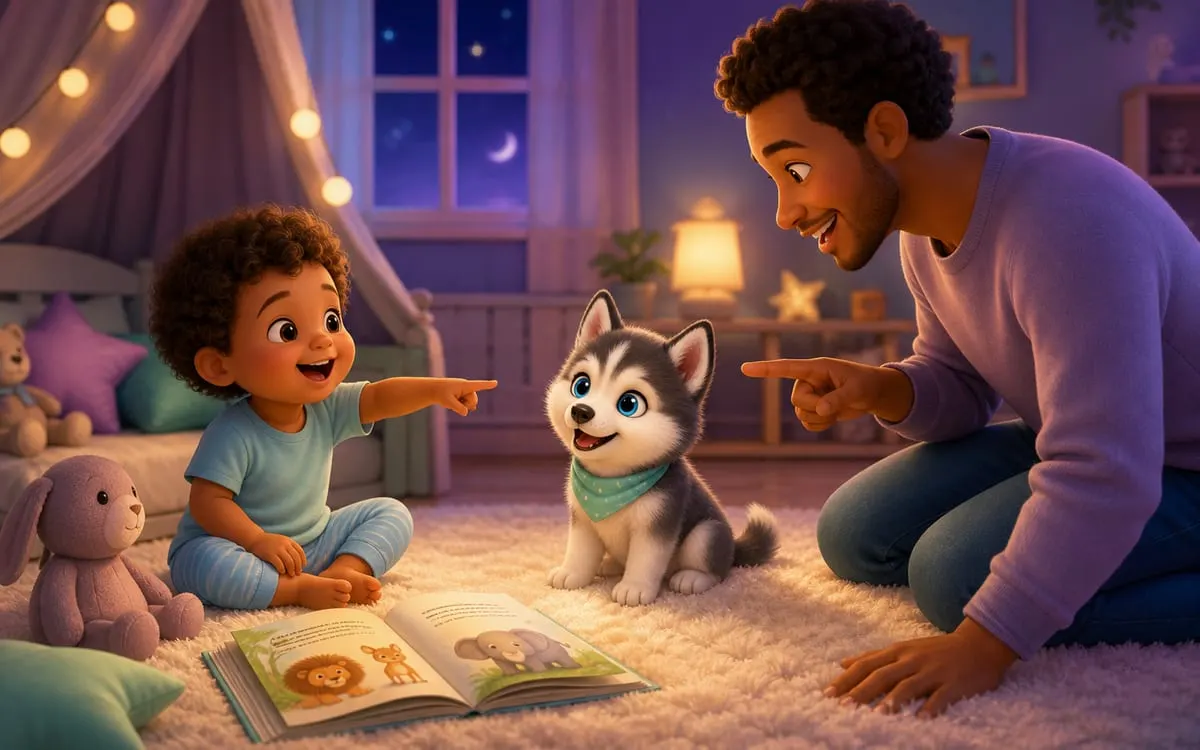
- Celebrate gestures: pointing, waving, showing you things. Babies who gesture a lot tend to talk sooner.
- Less screen, more face: speech is learned by watching mouths, eyes and expressions. Video can't replace that.
- Sing, constantly: songs have predictable rhythm and repetition, two things a baby's brain loves. Nursery rhymes teach more words than any app.
- Offer choices instead of yes/no questions: "banana or apple?" invites him to produce sound. "Do you want to eat?" only asks for a nod.