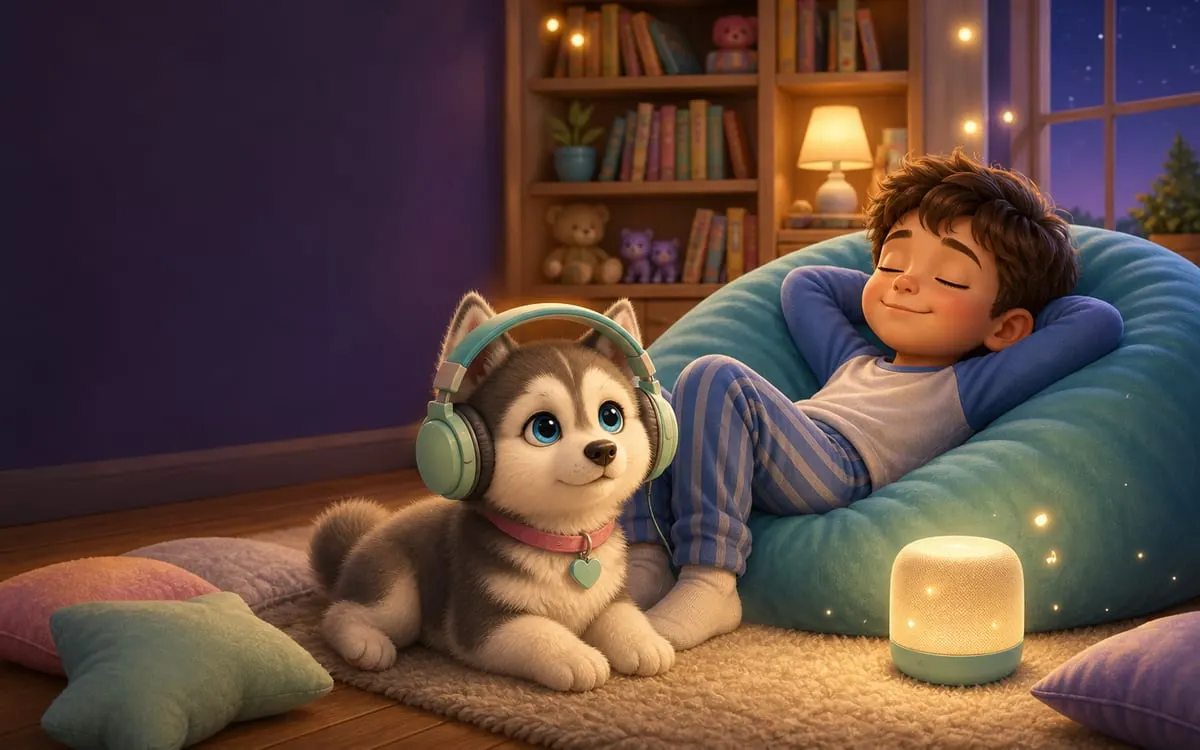

If your child loves listening to a story on a tablet or in the car, you've probably wondered: does this count as real reading, or is it just entertainment? The answer is more encouraging than many parents realize.
What science says about listening to stories
Audiobooks activate brain areas tied to language comprehension, imagination, and vocabulary building, largely the same ones involved in traditional reading, with the difference that the child doesn't have to decode the words herself. For kids who can't yet read, or who read with effort, listening to a well-narrated story exposes her to sentence structures and vocabulary more complex than she could read on her own.
A complement, not a replacement
Audiobooks don't replace the habit of flipping through a physical book, looking at the illustrations, and connecting words to written text. The ideal approach is using both formats: a physical book for shared reading time, and an audiobook for other parts of the day, like a car ride or a quiet play session.
Good moments to use audiobooks
- In the car, in place of screen cartoons, great for longer trips.
- During solo play, as a calm background while drawing or building with blocks.
- With reluctant readers, kids who resist books but love stories, audiobooks lower the barrier to entry.
- At bedtime, as part of the routine, especially when parents are too tired to read aloud.
Choosing the right audiobook
Look for expressive narration, with different voices for each character, this helps hold interest. Stories with an engaging main character work great in this format: the adventures of Pigúiça, the little husky pup from the Magical Garden, for instance, gain extra charm when narrated aloud, complete with barks and garden sounds.
An important reminder
If you have concerns about speech delay or language difficulties beyond what's expected for your child's age, it's worth talking to your pediatrician, audiobooks are a great complement, but they don't replace a professional assessment when one is needed.