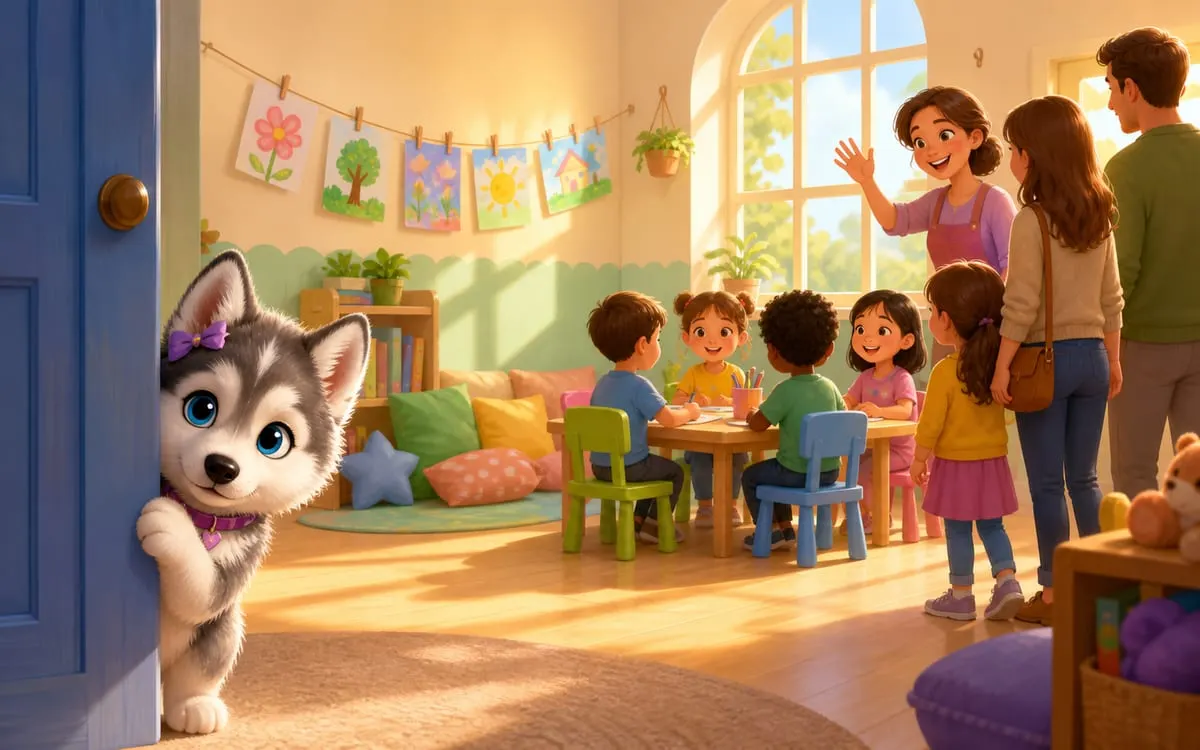
Your next adventure could be a moment together.
Now that you have met Pigúiça here, discover the story behind her world. See the illustrations, read the beginning and choose a book to share with your child, one page at a time.
Looking for school and teacher riddles for kids? Here are 20 short, clean riddles with answers, perfect for children aged 4 to 9. Read them in the car on the way to school, during homework time, or at bedtime.
They come in three groups: classroom and school supplies, teachers and lessons, and recess and friends. Read the riddle out loud, give your child a moment to think, and only then share the answer.
Classroom and school supplies riddles
We start with things your child already knows from the backpack. These make great first riddles, because the answer is always close by.
- I have pages but I am not a tree, and I tell stories without speaking. What am I? Answer: a book.
- I am made of wood, I write, and I get shorter every day. What am I? Answer: a pencil.
- I fix your mistakes and shrink the more I work. What am I? Answer: an eraser.
- I am green or black, and the teacher fills me with words using chalk. What am I? Answer: a chalkboard.
- I carry your books on my back and never complain. What am I? Answer: a backpack.
- I have two metal legs that open and close to cut paper. What am I? Answer: scissors.
- I live in a box full of friends and I color all your drawings. What am I? Answer: a crayon.
Teacher and lesson riddles
Now the talk moves to lessons. Here kids think about subjects, schedules and homework, which makes it easy to chat about school in a light way.
- I teach new things every day, but I am no magician. Who am I? Answer: a teacher.
- I have plus, minus and times, but I am not a store. What am I? Answer: math.
- I have an A, a B and a C, but I am not soup. What am I? Answer: the alphabet.
- I am the work you do at home after school. What am I? Answer: homework.
- I show up at the top of your test to tell how many you got right. What am I? Answer: a grade.
- I hang on the wall with numbers from one to twelve and tell you when class ends. What am I? Answer: a clock.
- The teacher reads my list of names every morning to see who came to school. What am I? Answer: attendance.
Recess and friends riddles
Of course recess could not be left out. These are the favorites for kids who love games and company.
- When I ring, everybody runs outside. What am I? Answer: the school bell.
- You swing me through the air and jump over me without going anywhere. What am I? Answer: a jump rope.
- I keep your snack safe until recess. What am I? Answer: a lunchbox.
- I share pencils, giggles and secrets with you. Who am I? Answer: a friend.
- One person counts to ten with eyes closed while everyone else hides. What game is this? Answer: hide-and-seek.
- I have slides, swings and a seesaw. What am I? Answer: the playground.
How to play riddles with your child
A good riddle starts a good conversation. A few simple ideas to get more out of them:
- Give one hint at a time. If your child gets stuck, say the first letter of the answer or point to something similar.
- Switch roles. Ask your child to read the riddle to you, to a sibling, or to a grandparent on a video call.
- Celebrate wrong guesses. A silly guess is still thinking, and kids learn that mistakes are part of the game.
- Pick the right moment. In line, in traffic, or while packing the backpack, a riddle makes time fly.
For little ones aged 4 and 5, choose riddles about objects like the backpack, scissors and pencil. For kids who already read, let them solve it alone and then explain why.
Now let your child invent one
The best way to finish is to ask your child to make up a riddle. Pick a school object, like glue or a pencil sharpener, and help build three clues: what it does, what it is made of and where it lives. When they are done, it is your turn to guess.
After the game, why not color what you found? On the printable coloring pages your child can pick a drawing and give color to a favorite character. They can also play the free Pigúiça game, with no sign-up and no ads, and read who Pigúiça is, the blue-eyed husky who loves learning new things in the Magic Garden.
Frequently asked questions
What ages are these school riddles for?
They were written for children aged 4 to 9. The object riddles suit the youngest, while the math and alphabet ones challenge kids who are learning to read.
How do riddles help kids learn?
They train attention, vocabulary and logical thinking. Children connect clues, remember what they have seen and say the answer in their own words, all while playing.
Can I use these riddles in the classroom?
Yes. Teachers often use riddles as a warm-up at the start of class or as an end-of-day treat. Read one, collect guesses and let the class explain how they got there.
Your next adventure could be a moment together.
Now that you have met Pigúiça here, discover the story behind her world. See the illustrations, read the beginning and choose a book to share with your child, one page at a time.
Your next adventure could be a moment together.
Now that you have met Pigúiça here, discover the story behind her world. See the illustrations, read the beginning and choose a book to share with your child, one page at a time.