Looking for farm jokes for kids? Here are 20 short, squeaky-clean jokes about cows, sheep, chickens, pigs, horses and tractors. They work for kids aged 4 to 9, and most of them earn a giggle the very first time.
The secret of barnyard jokes is that children already know the characters. They know the cow says moo and the rooster wakes everybody up, so the wordplay and the animal sounds make sense right away. Even better, after hearing a joke twice, kids want to tell it to grandpa, to their teacher and to the dog.
The 20 farm and barnyard animal jokes
- Why did the cow go to space? To see the Milky Way.
- Where do cows go for fun? To the moo-vies.
- How does a sheep say goodbye? See ewe later!
- What do you call a sheep with no legs? A cloud.
- Why did the chicken go to the library? Book, book, book!
- Why won't eggs tell jokes? They might crack up.
- What do you call a duck that loves math? A quack-ulator.
- What did the little pig say when he fell in the mud? What a great puddle!
- Why doesn't the horse wear sneakers? It already has horseshoes.
- Why did the horse go to the doctor? She was a little hoarse.
- Why did the tractor go to the doctor? It had the engine sniffles: vroom, achoo!
- Why do roosters never oversleep? Their alarm clock goes cock-a-doodle-doo.
- What did the baby chick say when it hatched? I'm egg-cited!
- Why did the scarecrow win an award? He was outstanding in his field.
- How does the barn cat answer the phone? Meow-llo!
- What do you call a baby goat who tells jokes? A funny kid!
- Why do bees have sticky hair? They use honeycombs.
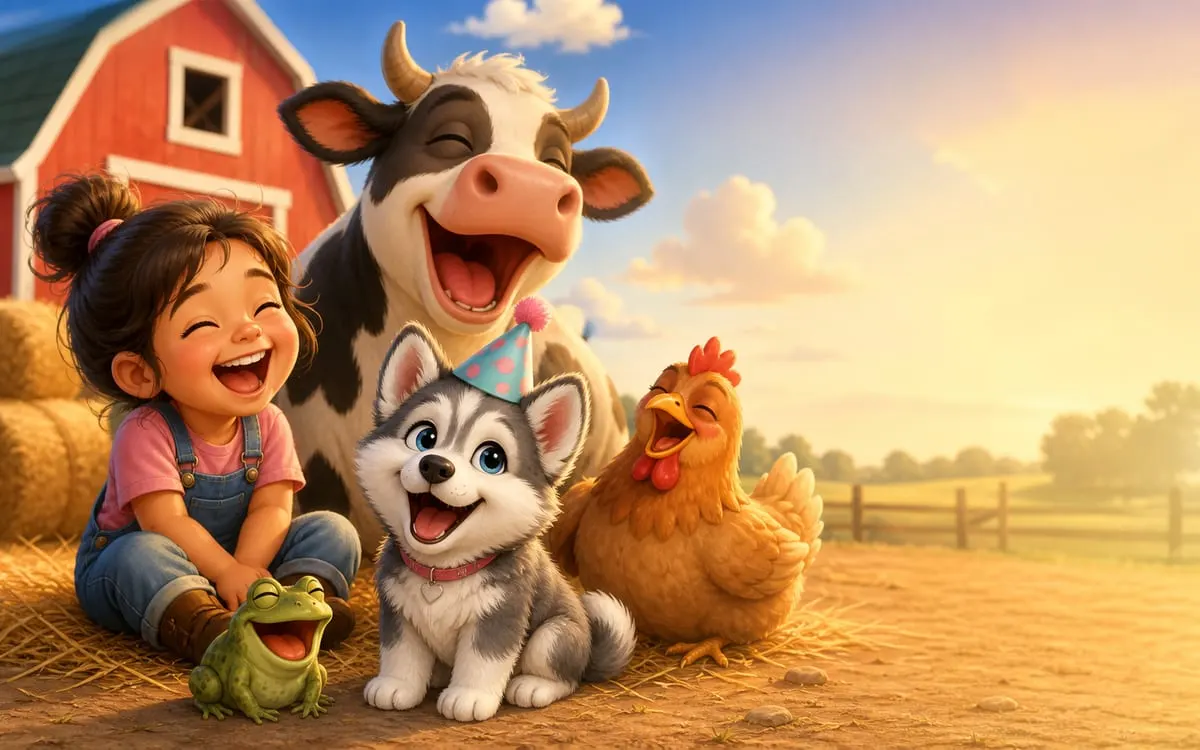
- What do you get when a husky and a cow sing together? A woo-moo duet! Pigúiça loved that one.
- What did the cow say to the calf at bedtime? Have a moo-velous dream!
- Why did the chicken cross the road? To get to the other side!
How to tell a joke to a little kid
Telling jokes is a small art, and with children it is easier than it looks. A few simple tips:
Ask the question, then wait. Let your child think and guess. Even a wrong guess is fun, and the real answer lands even better.
Play with the sounds. In animal jokes, your voice does half the job. Stretch out the moo, make the baa wobble, and save the funny word for the very end.
Go slowly and repeat. Kids ask for the same joke ten times, and that is great. It is how they learn the rhythm of a joke and the game of words.
Let them tell it. Swap places: you ask, they answer, then they ask you. Remembering and retelling a joke trains memory, vocabulary and the confidence to speak up.
If a joke falls flat, do not worry. Laugh at it anyway, say «oops, that one was a bit silly», and move on to the next. Kids copy your mood, so a relaxed, playful tone keeps the whole game fun.
Which jokes fit which age
At 4 and 5, sound jokes work best, like the moo-vies, the baby chick and the rooster. The fun is in making the animal noise together.
At 6 and 7, wordplay jokes arrive, like «see ewe later» and «egg-cited». They need a quick explanation the first time, and when it clicks, you get a big laugh.
At 8 and 9, kids want to invent their own. Try this challenge: pick one farm animal and create a new joke using the sound it makes.
Games to keep the fun going
After a round of jokes, the energy is high. Grab a coloring page with farm friends and let your child paint the character from their favorite joke. If you want even more giggles, we also have a list of animal jokes for kids.
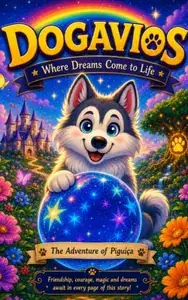
For a play break on the computer or phone, Pigúiça's free game runs right in the browser, with no sign-up and no ads. Pigúiça is the blue-eyed husky puppy from the Dogavios book, and she would love to meet the cow, the sheep and the rooster from this list.
Want a family game? Each person draws a farm animal and has to tell a joke about it. Whoever makes everyone laugh wins the title of «funniest farmer» of the day.
Frequently asked questions
At what age do kids understand farm jokes?
Sound-based animal jokes work from about age 3 or 4. Wordplay jokes like «see ewe later» land better from age 6, when children start playing with words that sound alike.
Why do kids laugh so much at animal jokes?
Because animals are characters they know and love. When the animal does something silly or talks in a funny way, the child feels part of the game and can often guess where the joke is going.
How can I help my child make up their own jokes?
Start with the question and answer pattern and ask for just the answer. Give an animal and a sound, for example «cow» and «moo», and let their imagination work. Praise the effort, even when the joke makes little sense. It gets better with practice.