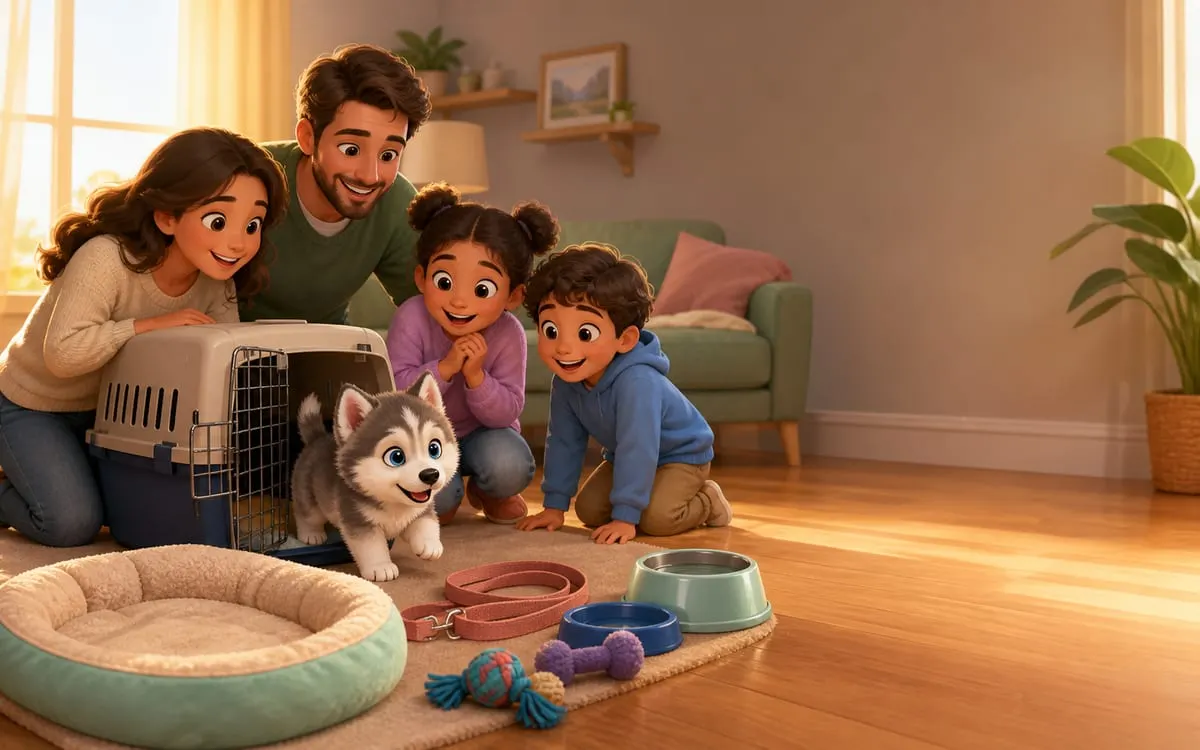
Your next adventure could be a moment together.
Now that you have met Pigúiça here, discover the story behind her world. See the illustrations, read the beginning and choose a book to share with your child, one page at a time.
Bringing home a first dog is one of the loveliest, and most underestimated, decisions a family makes. It is not buying a new toy: it is accepting a ten-to-fifteen-year commitment to a creature who depends on you for everything. The good news is that nearly every regret traces back to lack of preparation, and preparation is exactly what you can do in advance.
Decisions that come before the dog
- Who the responsible adult is: children help, but they are not the owners. Name, out loud, which adult answers for food, walks, grooming and vet visits.
- Monthly budget and a cushion: quality food, parasite control, annual vaccines, and savings for emergencies. Accidents and surgeries do not send warnings.
- Adopt or buy: shelters have adult dogs with known temperaments, already neutered and vaccinated. If you go to a breeder, insist on seeing the parents, the environment and health testing.
- House rules agreed in advance: sofa or no sofa? sleeps where? food from the table? Decide together and apply it identically, or the dog will simply be confused.
The basics that should be ready
- A bed and a space of his own: somewhere nobody disturbs him, children included. This prevents most future conflicts.
- Bowls and the right food: ask the shelter or vet what he is already eating and transition gradually if you need to change it.
- Leash, harness and ID: a tag with your phone number from day one, even if he is not going outside yet.
- Dog-proofed home: cables, cleaning products, medication, chocolate, grapes and bins out of reach. Screens on balconies and windows.
- A vet chosen beforehand: save the number and book the first appointment within the first week.
The first three weeks
- Week 1, quiet and routine: no welcome party, no visitors. Few rooms, fixed schedules, plenty of rest.
- Week 2, trust: start short walks, teach his name and a recall with treats, and let the dog choose when to approach the children.
- Week 3, expansion: widen his territory, introduce visitors one at a time, and begin structured games with the kids, always supervised.
- Warning signs: refusing food for more than a day, persistent diarrhoea, lethargy or repeated growling all deserve professional assessment, a vet, or a trainer using positive methods.
- Agree who takes him on holiday: settle this before adopting, not the night before travelling. Boarding, daycare or a trusted relative.
- Keep notes in the first month: sleep, appetite, wees and poos. That simple diary helps your vet enormously at the first appointment.
- Expect setbacks: accidents indoors and crying at night are normal early on. Punishment slows learning; routine speeds it up.
In those first weeks the dog is not being difficult; he is trying to work out where he has landed. Patience now buys years of easy living later. To bring the children into that spirit of care, stories help enormously, the adventures of Pigúiça, the husky from Dogavios, are a gentle way to talk about responsibility with kids who are still learning it.
Your next adventure could be a moment together.
Now that you have met Pigúiça here, discover the story behind her world. See the illustrations, read the beginning and choose a book to share with your child, one page at a time.