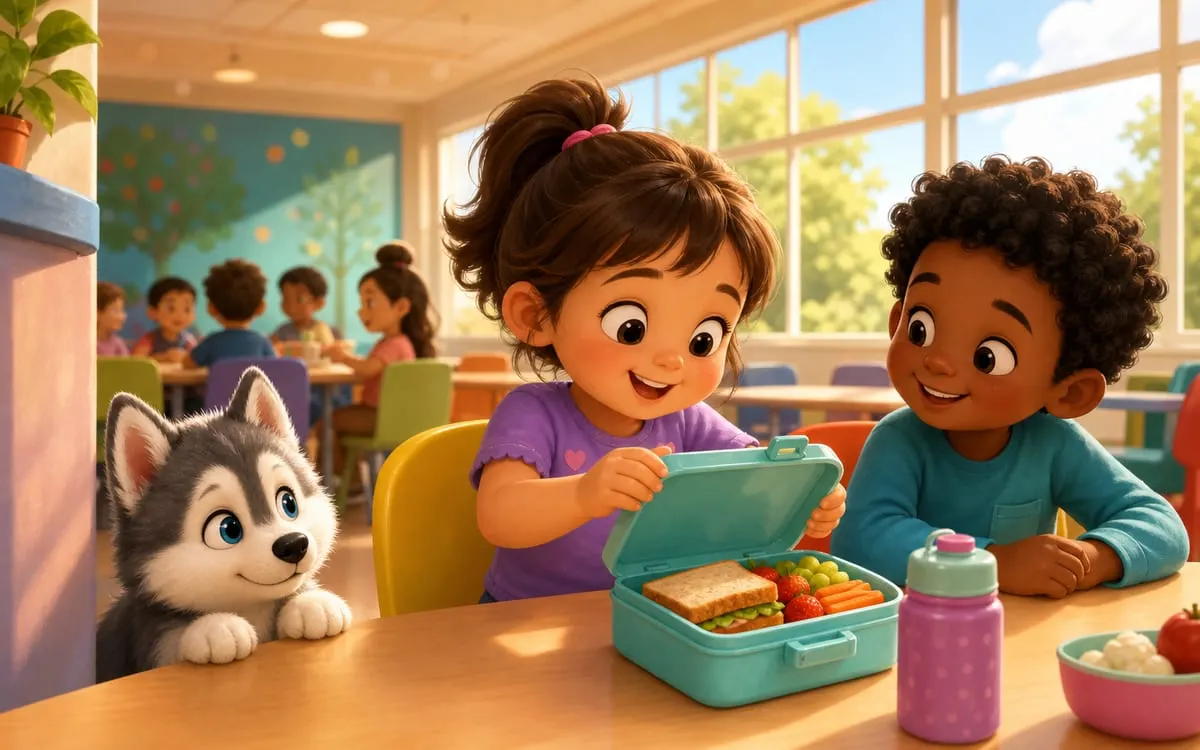

It's a common scene: the child eats normally at home, but the lunchbox comes back from school almost untouched. Before worrying, know that this is one of the most frequent behaviors in childhood, and it almost always has a concrete explanation.
The most common reasons
- Overwhelming environment: loud, crowded cafeterias distract kids who are more sensitive to stimulation
- Too little time: many lunch breaks last only 15-20 minutes, not enough time to eat calmly
- Social anxiety: worrying about who to sit with can take away their appetite
- «Different» food: the texture or temperature of school food can differ from what's served at home
- Play takes priority: some kids would rather spend free time playing than eating
What parents can do
Send foods your child already knows and likes, in smaller portions that are easy to eat quickly, cut fruit, small sandwiches, or cubed cheese. Avoid packaging that's tricky to open alone. Talking with your child, without judgment, about what they can realistically eat in the time available helps set realistic expectations.
What teachers can help observe
Ask the teacher to discreetly notice: does the child eat alone? Do they seem distracted? Is there enough time? This outside-the-home information is valuable because parents don't see the actual cafeteria behavior.
Building a positive ritual at home
Reinforce the joy of eating at home with calm, unhurried, screen-free meals, this helps your child associate food with a pleasant moment, which can gradually carry over to school too. Reading a story before meals, like one of Pigúiça's adventures in the Magical Garden, can help create a smooth transition from playtime to the table.
When to seek professional guidance
If the food refusal is extreme, generalized (also happening at home), or comes with weight loss, it's important to talk to a pediatrician. In most cases, though, it's a passing phase tied to the school environment rather than a broader eating problem.