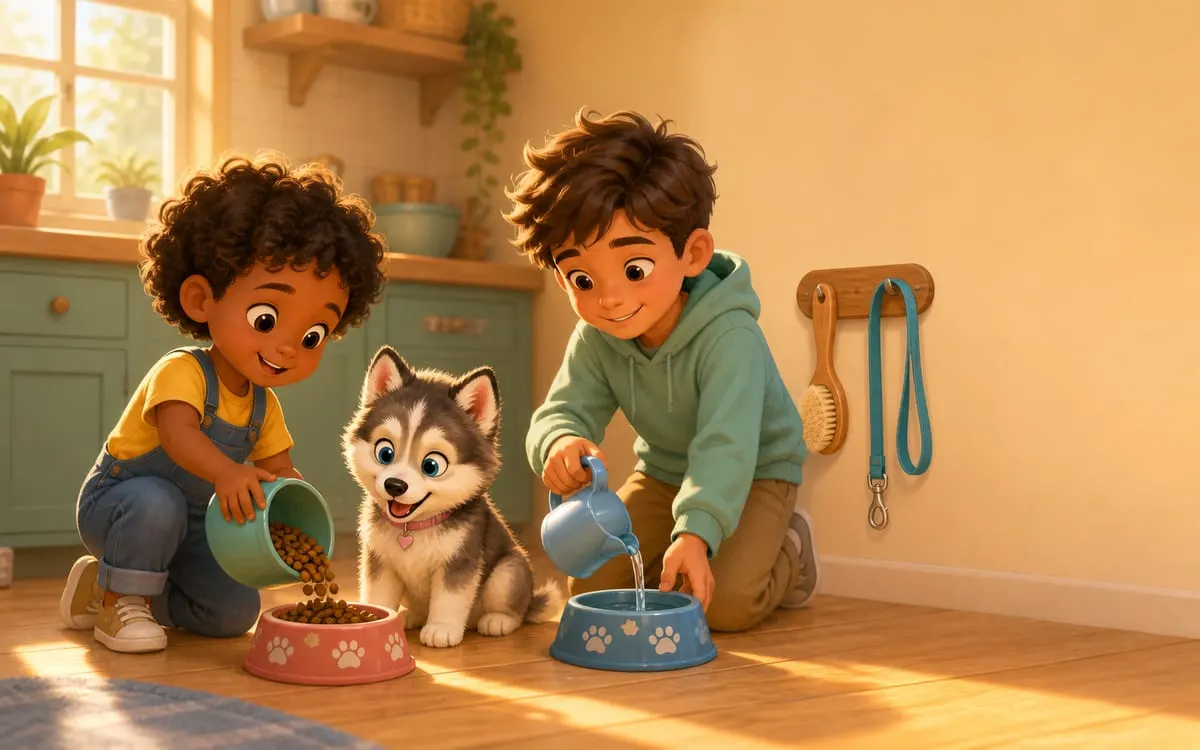

Every parent has heard the promise: “I'll look after him, I swear.” And every parent knows how that usually goes. The child did not lie, consistency is a skill still under construction. It falls to the adult to build the structure that turns intention into habit, with tasks of the right size and reminders that do not depend on a child's memory.
Jobs by age group
- Ages 2 to 4: filling the water bowl with help, tidying the dog's toys, throwing a ball. Always with an adult alongside.
- Ages 5 to 7: brushing with a soft brush, measuring food with a marked cup, holding the lead together with an adult, drying paws after a walk.
- Ages 8 to 11: a short accompanied walk, washing bowls, teaching tricks with positive reinforcement, marking worming dates on the calendar.
- Ages 12 and up: walking alone in a safe area, bathing with supervision, attending the vet appointment and writing down the instructions.
- Never the child's job: medication, health decisions, restraining an excitable dog in the street, and ultimate responsibility for anything. That is always the adult's.
Making the habit stick
- A visible chart in the kitchen: tasks drawn out, with boxes to tick. What is seen gets remembered.
- Attach the task to an existing habit: “Thor's water after you brush your teeth” works far better than “remember the water”.
- One task at a time: consolidate one before adding another. A long list turns into nothing done.
- Praise the process: “I noticed you filled the water without being asked” is worth more than any material reward.
- Never use care as punishment: “go clean up the poo because you misbehaved” turns the dog into a penalty.