
It's almost impossible not to compare: your niece speaks full sentences at 2, while your child still babbles a few loose words. Before panicking, know this, the «normal» range for speech development is wide. Still, there are milestones that help tell natural variation apart from something worth a closer look.
What to expect by age
- 12 months: a few simple words, like «mama» or «more»
- 18 months: around 10-20 words, points at what they want
- 24 months: combines two words («want water»), 50+ word vocabulary
- 3 years: short 3-word sentences, mostly understood by strangers
Real red flags
Unlike a simple delay, some signs deserve earlier evaluation:
- No babbling at all by 12 months
- Doesn't point or respond to their name by 18 months
- Doesn't combine two words by 24 months
- Loses skills they previously had (regression)
- Trouble understanding simple commands, on top of speaking little
Factors that aren't cause for alarm
Bilingual children often take a bit longer to sort out two languages, that's expected and not a true delay. Boys, on average, speak a little later than girls. And every child has their own pace within the typical range.
When to see a speech therapist
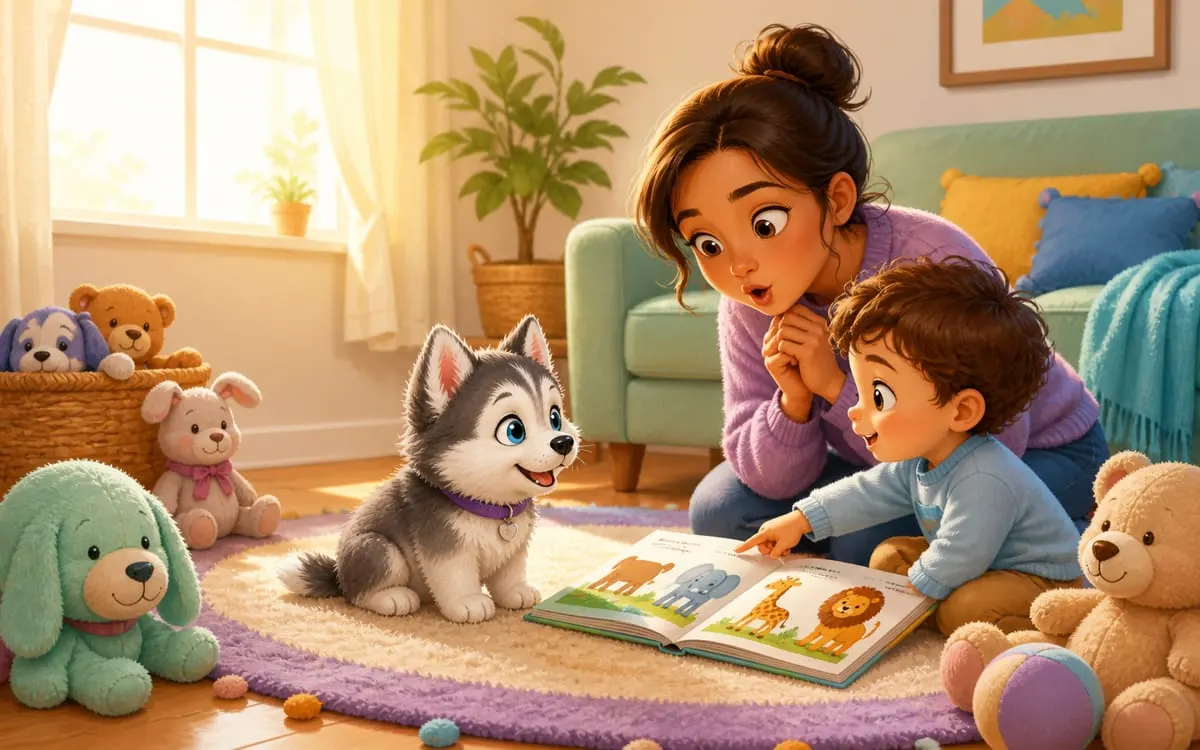
If two or more red flags show up, or if your parental gut keeps saying something's off, booking a speech evaluation costs nothing but time, and the earlier it happens, the simpler the support usually is. Your pediatrician can also guide and refer you. In the meantime, talking often, naming everyday objects, and reading aloud together, like the adventures of Pigúiça the husky pup, are simple habits that boost language development in any child, delay or not.