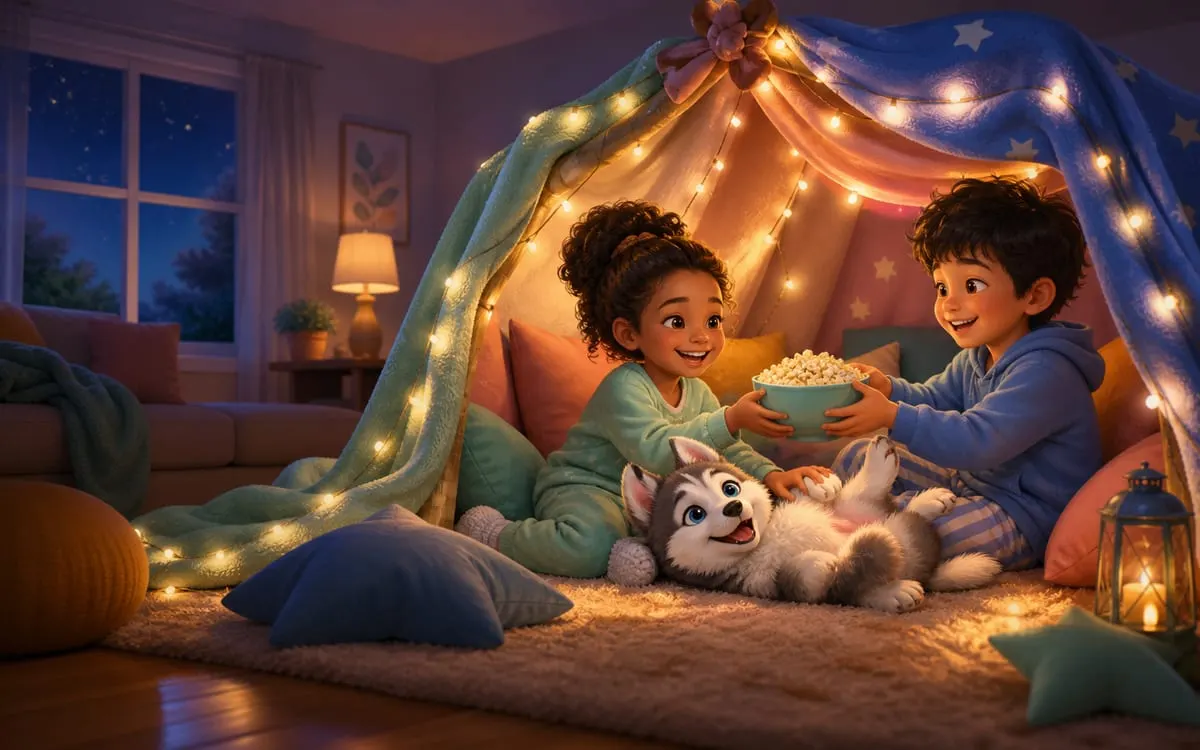
Your next adventure could be a moment together.
Now that you have met Pigúiça here, discover the story behind her world. See the illustrations, read the beginning and choose a book to share with your child, one page at a time.
If you've ever shouted "stop fighting!" while very much fighting with them, welcome to a club with almost universal membership. Siblings fight because they're sharing space, toys, and above all, you. It doesn't mean they hate each other or that your parenting is off. It means they're still learning to negotiate, and negotiating is hard even for adults.
Get out of the judge's seat
- Don't investigate who started it: you'll never find out, and the inquiry mostly teaches kids to accuse better. Address the problem, not the blame.
- Describe what you see: "two people want the same truck and nobody is happy" calms things down, because it shows you understood without picking a side.
- Hand the solution back to them: ask what idea would fix this. Kids from about four up are often surprisingly good when given the problem back.
- Step in firmly only for aggression: then the rule is short and clear, no lecture. Separate, comfort both, talk once everyone is calm.
- Careful with comparisons: saying the other one could already do that at his age lights a rivalry that can last years. Compare a child only to themselves.
Prevent fights before they start
- One-on-one time with each child: a lot of fighting is a bid for attention. Ten exclusive minutes per child can cut a whole week's conflict.
- Some things have a clear owner: a few toys can be off-limits to sharing. Owning something outright reduces the need to defend everything.
- Watch hunger and tiredness: most fights land right before lunch and in the late afternoon. A snack often works better than any conversation.
- Avoid labels: the wild one and the good one become prophecies. Describe the moment instead: "you've got a lot of energy today."
- Set the rules before the conflict: how long each one gets the toy, whose turn is next on the console. Rules agreed in calm are the ones respected mid-fight.
After the fight
- Don't force apologies: a required sorry teaches compliance, not empathy. Ask instead what would help their sibling feel better.
- Name the feelings: jealousy, anger, and frustration become far less frightening once they have names inside the house.
- Praise what worked: when they solve something themselves, say so out loud. Noticed behavior is repeated behavior.
One thing worth remembering: children learn about conflict far more from stories than from lectures. Reading together about friendship, jealousy, and making up gives them language for what they're feeling, and creates a moment where both kids are on the same lap, on the same side. That's why Dogavios, with Pigúiça the husky learning about friendship and courage in the Magical Garden, works so well as a shared read for siblings of different ages.
Your next adventure could be a moment together.
Now that you have met Pigúiça here, discover the story behind her world. See the illustrations, read the beginning and choose a book to share with your child, one page at a time.