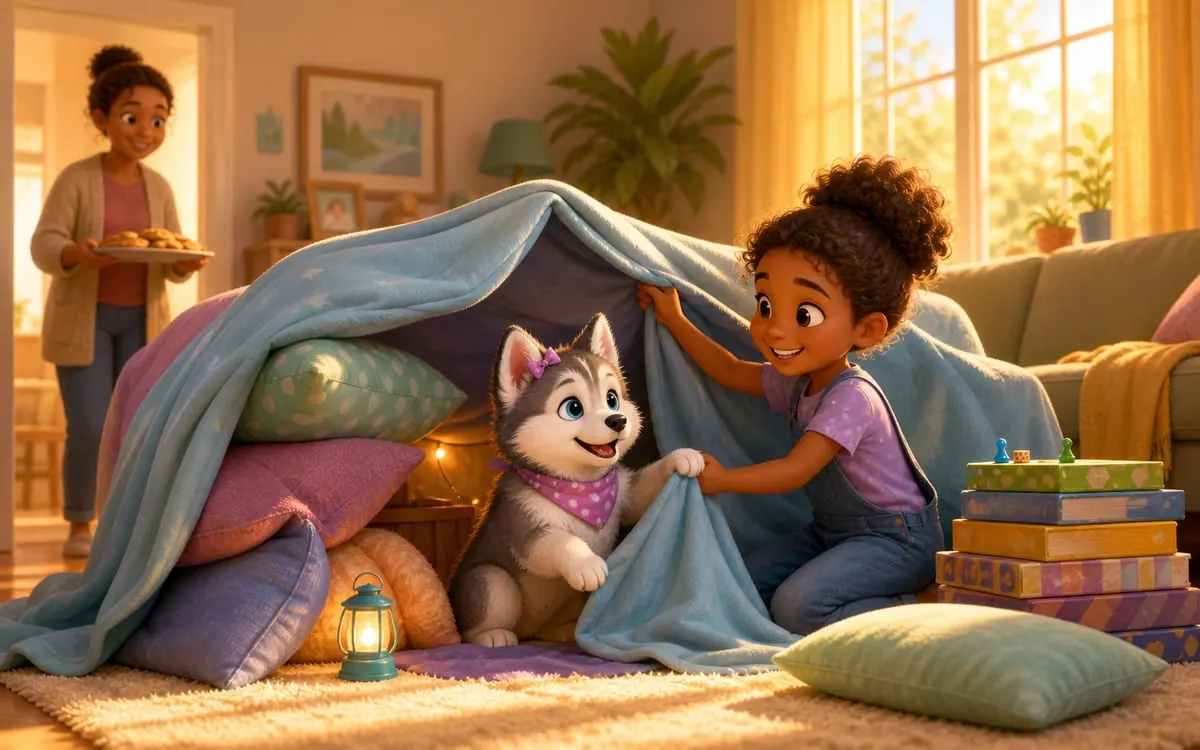
Your next adventure could be a moment together.
Now that you have met Pigúiça here, discover the story behind her world. See the illustrations, read the beginning and choose a book to share with your child, one page at a time.
«Only children turn out spoiled» is one of the most repeated, and most mistaken, sayings about raising kids. Decades of developmental psychology research find no significant personality differences between only children and kids with siblings once other factors are controlled for. Let's separate the myth from reality.
The «spoiled only child» myth
This stereotype dates back to studies from the late 19th century that are now considered methodologically outdated. Current research shows that only children tend to have more developed vocabulary, strong relationships with adults, and a strong sense of responsibility, traits linked to more one-on-one attention and conversation with parents, not some personality «flaw».
The real challenge: social practice with peers
The most consistent difference between only children and kids with siblings is daily practice negotiating and sharing with same-age peers, something siblings naturally train at home. The good news is this can be built in other ways.
How to help with socialization
- Prioritize regular playdates with cousins, neighbors, or classmates, consistency matters more than the number of meetups
- Enroll them in group activities early on: team sports, theater, or group classes
- Practice sharing at home with the parents themselves: «it's my turn now, then it's yours»
- Avoid resolving every conflict for them, leave room to practice negotiation with other kids
Cultivating independence
Without the natural «competition» between siblings, it's important to deliberately create small responsibilities and moments of solo play so the child develops autonomy and tolerance for boredom, skills that naturally grow in bigger families but can also be encouraged intentionally.
The role of books in socialization
Stories with characters who make friends and work through small conflicts, like Pigúiça's adventures in the Magical Garden, give children concrete models of how to relate to others, an especially valuable resource for kids with fewer everyday chances to observe sibling interactions.
An important reminder
Being an only child doesn't determine personality or social success. What really matters is how many opportunities for togetherness, conversation, and social practice the child gets, something entirely possible to build, with or without siblings.
Your next adventure could be a moment together.
Now that you have met Pigúiça here, discover the story behind her world. See the illustrations, read the beginning and choose a book to share with your child, one page at a time.