The northern lights, or aurora borealis, are colorful lights that appear in the night sky near the North Pole when particles from the Sun meet the air high above us. To explain that to kids aged 3 to 8, nothing beats a riddle. Below are 10 riddles with answers and fun facts, all simple and true.
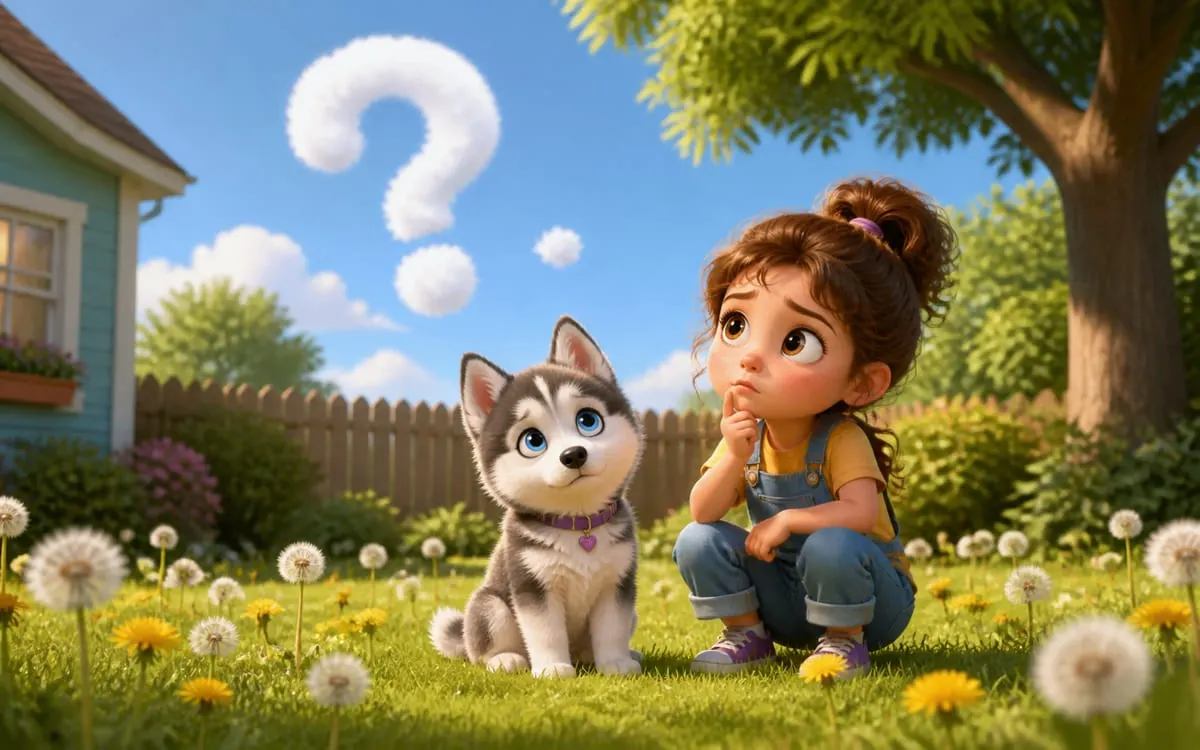
In Iceland, where families head out on winter nights to look for the dancing sky, these lights are called norðurljós. It is a country the Dogavios team loves, and Pigúiça, our blue-eyed husky, would be thrilled to see them up close.
10 riddles and fun facts about the northern lights
Read the riddle aloud, let your child think, and only then share the answer. A wrong guess is even better: that is how curiosity grows. Each item has the riddle, the answer and a safe fun fact.
Riddle: I am a curtain of light that dances in the night sky, with no cloth and no clothesline. Who am I? Tap to see the answer
Answer: The northern lights, also called aurora borealis. Fun fact: In Iceland they are called norðurljós, which means northern lights. Icelandic kids grow up hearing that name.
Riddle: I come from the Sun, but I bring no heat: I bring tiny particles that travel through space. What am I? Tap to see the answer
Answer: The solar wind. Fun fact: When these particles get close to Earth, they meet the air high up in the sky, and that air lights up with a colorful glow.
Riddle: I am the color that shows up most in auroras, and I look like tree leaves. Which color am I? Tap to see the answer
Answer: Green. Fun fact: Green is very common in auroras. Sometimes pink and purple show up too, and every night the sky paints a different picture.
Riddle: I need a very dark sky to appear. What gets in my way? Tap to see the answer
Answer: City lights. Fun fact: That is why families drive away from bright streets to look for the aurora. The darker the place, the better the view.
Riddle: I am an invisible shield around Earth, and I guide particles from the Sun toward the poles. Who am I? Tap to see the answer
Answer: Earth’s magnetic field. Fun fact: Because of it, the aurora appears near the North Pole and also near the South Pole.
Riddle: I have a twin sister at the bottom of the world, where the penguins live. What is her name? Tap to see the answer
Answer: The aurora australis, or southern lights. Fun fact: The southern aurora looks a lot like the northern one. It is like two sisters, one at each end of the planet.
Riddle: I am in the sky all the time, but in the daytime the Sun is too bright and nobody can see me. When do I shine best? Tap to see the answer
Answer: At night. Fun fact: In Iceland, the long winter nights are the best time to look for the aurora. In summer the sky stays too bright.
Riddle: I come in many shapes: a band, an arc, a curtain, a wavy ribbon. What do I do all the time? Tap to see the answer
Answer: I change shape. Fun fact: The aurora moves slowly and changes its drawing while you watch. It is worth waiting a little and watching calmly.
Riddle: I dress in layers and never leave home without a hat and mittens. What am I for? Tap to see the answer
Answer: Warm clothes in layers. Fun fact: Waiting for the aurora takes time and the night air is cold. Layers hold in body heat, and it is easy to take one off if you get warm.
Riddle: I am a gadget that can collect more color than your eyes see when I stay open for a little while. Who am I? Tap to see the answer
Answer: A camera with a long exposure. Fun fact: In photos, the aurora often looks more colorful than in real life. Live, it can look like a pale mist, and that is perfectly fine.
How to use the riddles at each age
Ages 3 to 4: pick just two or three riddles and give clues with gestures. Hold up a real curtain and sway it slowly to copy the aurora.
Ages 7 to 8: try a challenge: who can explain in their own words where the light comes from? Then draw the aurora together with crayons or colored pencils.
Tips for watching the aurora with kids in the cold, safely
Seeing the real thing takes patience and preparation. Before heading out, remember that nobody controls the sky: some nights it shows up, others it does not. Go expecting a night out, and any light you see is a bonus.
Dress in layers. Wear thermal clothes underneath, a warm sweater in the middle and a waterproof coat on top. A hat, mittens, thick socks and closed boots make a big difference. Pack an extra pair of mittens too.
Pick a safe spot. Choose familiar places with parking or open ground, away from the road and from any frozen water. Always go with adults and never let a child wander off from the group in the dark.
Take warm-up breaks. Agree on a signal for your child to say they are cold, and head back to the car or a heated place without a fuss. Bring a thermos with a warm drink and a small snack.
What if the aurora does not show up?
No problem. The game goes on at home. Turn off the bedroom light, put green and purple cellophane over a flashlight and let the lights dance on the wall. Then why not print some coloring pages and paint a sky full of colors? And if there is still energy left, the free Pigúiça game runs in the browser, with no sign-up and no ads.
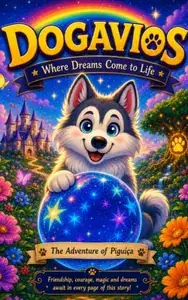
If you want to keep the adventure going, meet the book «Dogavios: Onde os Sonhos Ganham Vida», where Pigúiça and Fofuxo live stories in the Magic Garden.
Frequently asked questions
When is the best time of year to see the northern lights?
Generally in the cold, dark months, when nights are long. In Iceland, winter is the most popular season. Because the sky needs to be dark and clear, it helps to have more than one night available to try.
Can small children see the aurora?
Yes, with warm clothes, constant supervision and stops to warm up. If it is too cold or too late for your little one, show photos and videos at home and play the riddles.
Is the aurora bad for the eyes or health?
No. The aurora happens very high in the sky and is just light to admire from afar. The thing to watch out for is the cold of the night, not the light.
Your next adventure could be a moment together.
Now that you have met Pigúiça here, discover the story behind her world. See the illustrations, read the beginning and choose a book to share with your child, one page at a time.