
For the family dog, a new baby is a revolution: unfamiliar smells, strange sounds, rearranged furniture and, above all, less attention. When all of that lands at once, the dog associates the baby with loss. When it is prepared in advance, the dog associates the baby with good things. The difference between those two outcomes starts months before the birth.
During pregnancy
- Shift the routine early: if walk times are going to change, change them now, so the dog does not blame the baby for the disruption.
- Set up the nursery ahead of time: let the dog sniff the cot, the pram and the furniture calmly, then decide whether that room will be off limits.
- Train the essentials: sit, down, a solid “place” cue and “leave it”. “Place” is the single most useful cue in a house with a baby, it moves the dog away without shouting or grabbing a collar.
- Get him used to the sounds: play recordings of a baby crying at low volume paired with treats, increasing gradually.
- Veterinary check: vaccines, worming and flea control up to date before the birth, and mention any signs of anxiety to your vet.
The first meeting
- Scent before the person: bring home a blanket the baby has used a day or two before discharge and let the dog investigate without pressure.
- Greet the dog first: whoever is carrying the baby comes in afterwards. The dog gets his reunion, settles, and only then does the baby appear.
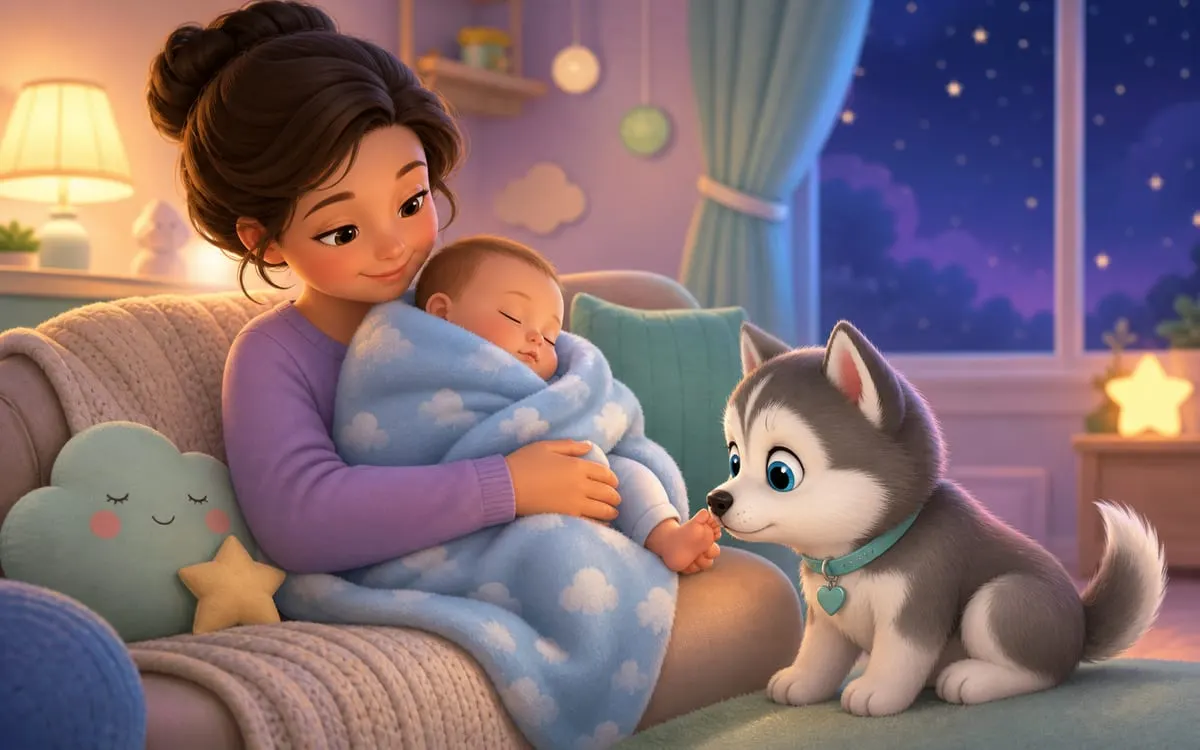
- Seated, calm and low-key: an adult holds the baby while sitting; the dog approaches on a loose leash and sniffs the feet. Never bring the baby's face to the dog's muzzle.
- End early: two good minutes beat ten tense ones. Finish while everything is still relaxed and give the dog something nice.