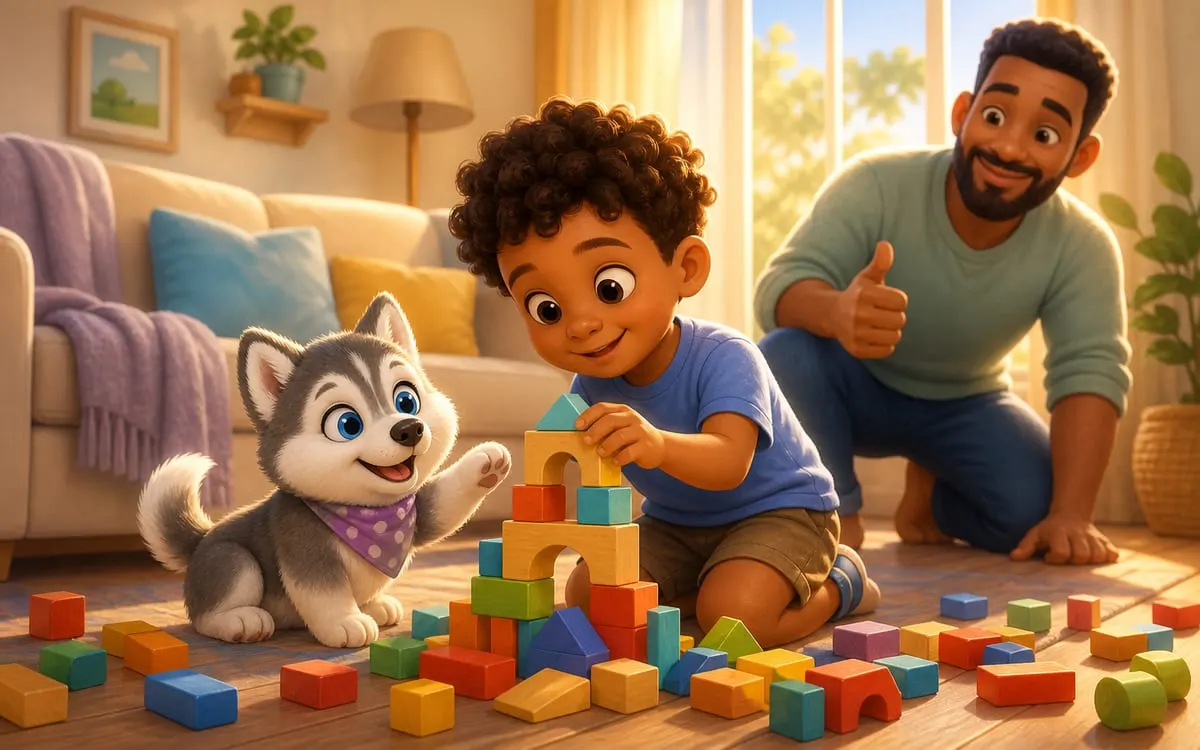

There's a cruel myth in parenting: that a well-raised child doesn't get frustrated. It's actually the reverse, frustration is the workout. Every “no,” every puzzle piece that won't fit, every loss at memory match is one more rep of emotional strength training. Your job isn't to spare your child frustration, and it isn't to leave them alone in it. It's to stay beside them while they learn to move through discomfort.
Before: set the stage
- Let them try longer: count to ten before you step in. Adult impatience quietly steals the learning.
- Offer help in layers: first “want me to hold it?”, then “want me to show you?”, and only then “want me to do it?”
- Name the discomfort in advance: before a game, say “someone will win and someone will lose, and losing feels yucky in your chest.”
- Don't always let them win: losing sometimes at home, with support, is far cheaper than losing for the first time at age eight in front of classmates.
During: what to say in the hard moment
- Name it without shrinking it: “That is frustrating. You tried so many times and it still didn't work.” Skip “it's not a big deal.”
- Resist fixing: the pull to finish the drawing or snap the piece in is powerful. Stay close and just be there.
- Offer a break, not a bailout: “Want to pause and come back to it? We can try again in a bit.”
- Shrink the problem: “Let's just do the blue corner for now.” Smaller pieces restore the feeling of possible.
- Share your own mistake: “I burned the rice today and got really annoyed. Then I took a breath and started over.” Hearing an adult fail out loud normalizes everything.