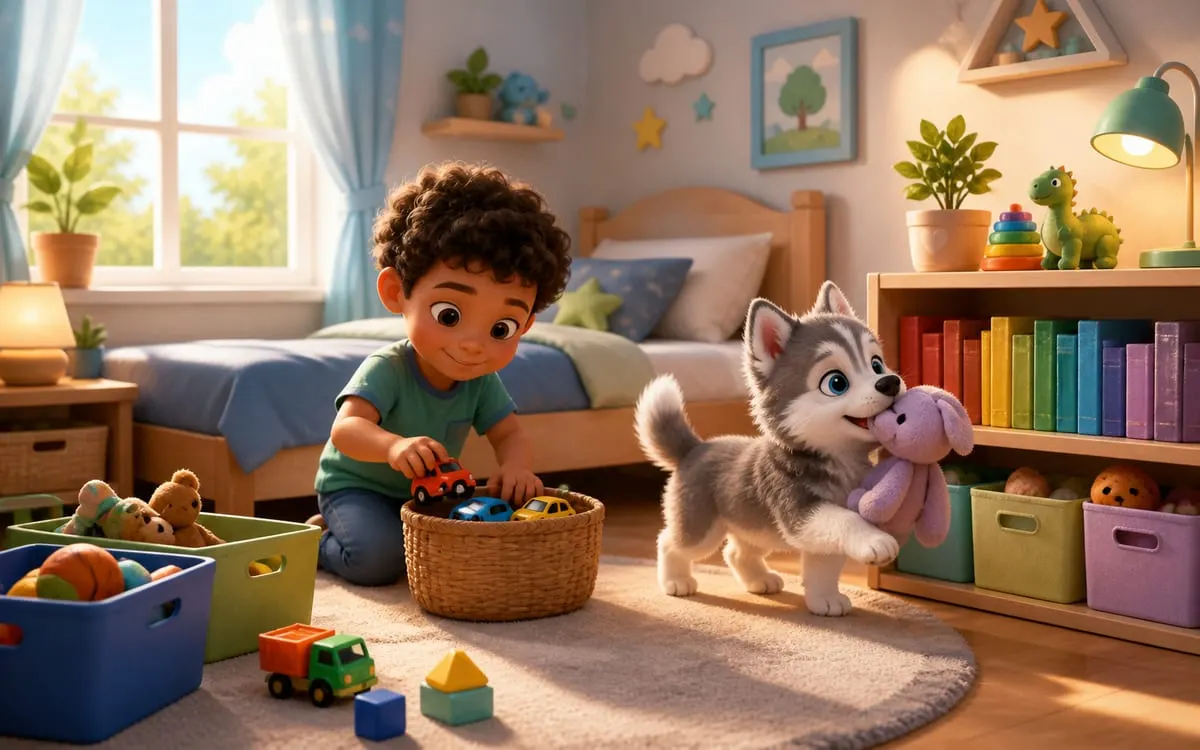

You tidy the room, walk out, come back fifteen minutes later, and it looks like a storm passed through. Before concluding your child is just messy, look at the system: most kids' rooms are organized for an adult's eye, not a child's hands. When tidying requires stacking, nesting, and categorizing, no small child is going to keep it up.
Start by removing, not organizing
- Fewer toys in sight: a child with thirty options plays with none of them. Keep a few accessible and store the rest outside the room.
- Rotate: swap the selection every two or three weeks. Stored toys come back feeling new, and daily mess drops by half.
- Declutter with your child present: saying the toys are going to another child who needs them works far better than making them disappear overnight.
- Beware of many small pieces: games with a hundred tiny parts guarantee chaos. Keep them up high for supervised use.
- Split the room into zones: a sleeping corner, a playing corner, a storage corner. Spaces with a clear purpose help a child know what to do where.
A system a child can actually use
- Open bins, no lids: a lid is an obstacle. An open basket means putting something away is a single gesture.
- Picture labels: pre-readers need images. A photo of a car taped to the front of a bin answers the where-does-this-go question instantly.
- Everything at their height: low shelves, light drawers, a reachable rail. Independence starts with furniture height.
- Few categories: four or five big bins work. Twenty little containers sorted by type is adult organizing, and it lasts one day.
- Leave empty space on purpose: a clear patch of floor is where play actually happens. A room packed with furniture erases the play area.