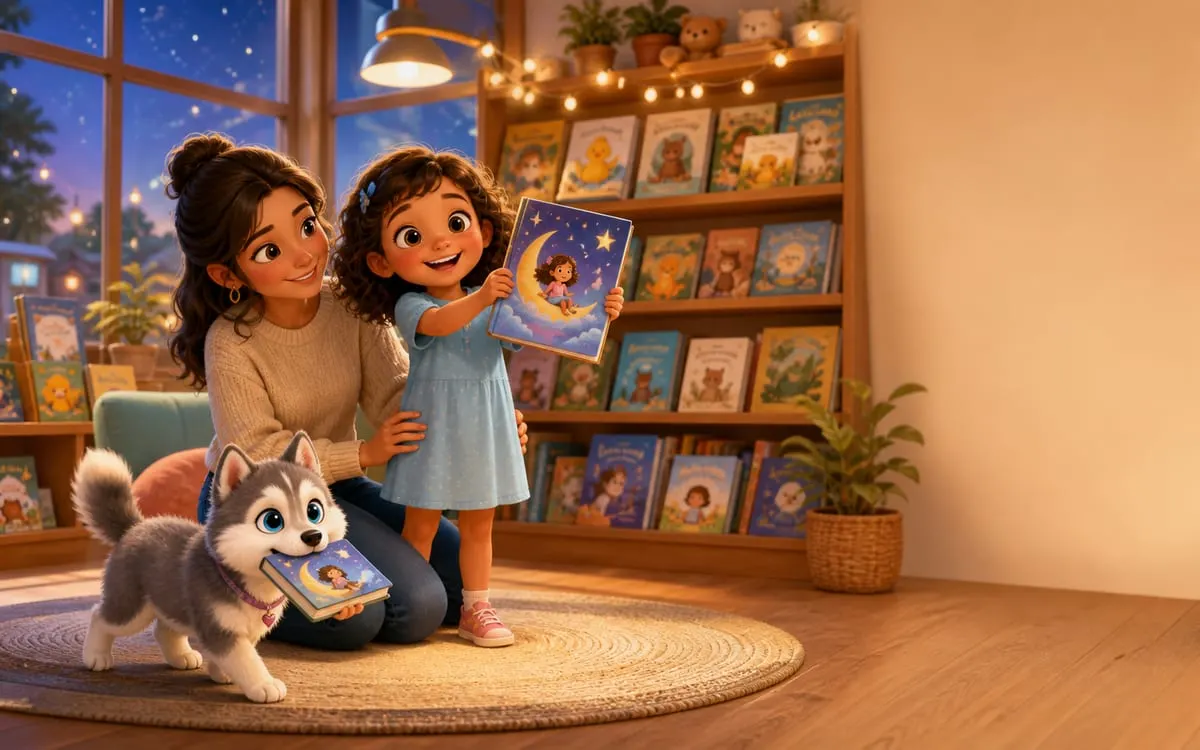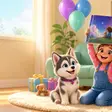
Your next adventure could be a moment together.
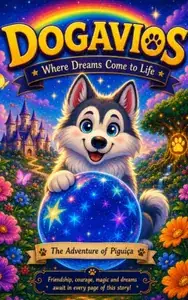
Now that you have met Pigúiça here, discover the story behind her world. See the illustrations, read the beginning and choose a book to share with your child, one page at a time.
The age range printed on a children's book is a statistical average, not a diagnosis of your child. There are 5-year-olds who follow long stories and 8-year-olds who still want plenty of pictures, and both are completely normal. Choosing well means looking at the child in front of you, not the number on the back.
The three filters that actually matter
- Emotional maturity, not age: a sensitive child may not be ready for the scary villain another kid in the same class finds hilarious. You know her threshold better than any publisher.
- Interest before level: a motivated child reads above her technical level without noticing. An "age-appropriate" but boring book gets abandoned on page three.
- Format matched to her attention: if she can't yet hold twenty minutes, a chapter book turns into frustration. Start with short texts with a visible finish line.
A rough map to use as a compass
- 0 to 2: board books, few words, nameable objects, textures and flaps.
- 3 to 5: a complete story in one sitting, lots of illustration, routines and simple emotions, repetition and rhyme.
- 6 to 8: short chapters, humor, mystery, series with a recurring character, illustrations still present.
- 9 and up: plots with more layers, characters facing moral dilemmas, denser nonfiction. From here personal taste takes over.
Quick tests in the shop
- Read a page aloud right there: if you stumble, she will too. Good children's text has rhythm.
- Five fingers: for independent reading, five hard words on a page means it's above the sweet spot.
- Check page density: a solid block of text intimidates a new reader even when the words are easy.
- Let her open it: if she turns three pages on her own, the book passed the most reliable test there is.
- Check the ending: young children need clear closure. Ambiguous endings only work later.
- Estimate the running time: work out whether the book fits the attention span she has today. A thirty-minute text for a ten-minute child is guaranteed frustration.
- Be wary of a moral stapled to the last page: kids smell a lecture and switch off. A good story teaches through the plot, not through the closing note.
And don't fear going down a level: rereading something easy builds fluency, while reading something harder together builds vocabulary. Both directions are useful in the same month. Illustrated books with a complete story tend to be the most flexible here, Dogavios, with Pigúiça the husky in the Magical Garden, gets read aloud to little ones and read alone by 6- and 7-year-olds, which stretches its shelf life considerably. It's on Kindle Unlimited in 18 languages, in case you'd like to use the same story to introduce a second one.
Your next adventure could be a moment together.
Now that you have met Pigúiça here, discover the story behind her world. See the illustrations, read the beginning and choose a book to share with your child, one page at a time.