
Concentration isn't a personality trait, it's a skill, and like any skill it grows with practice and the right conditions. Before concluding your child simply can't focus, check three very concrete things: how much they slept, how much stimulation surrounds them, and whether the task is sized right for their age.
Fix the basics first
- Sleep underpins everything: a sleep-deprived child gets wired, not drowsy. One week of bedtime half an hour earlier moves focus more than any exercise.
- Movement before sitting: twenty minutes of running, jumping or biking before a task organizes the body. Going straight from the couch to a worksheet never works.
- Kill the background noise: a TV playing that nobody's watching still drains attention. Silence, or quiet instrumental music.
- Right-sized tasks: use a rough guide, a few minutes of sustained focus per year of age. Age five, five to ten minutes. Not a rigid rule, but it keeps expectations realistic.
Games that train attention
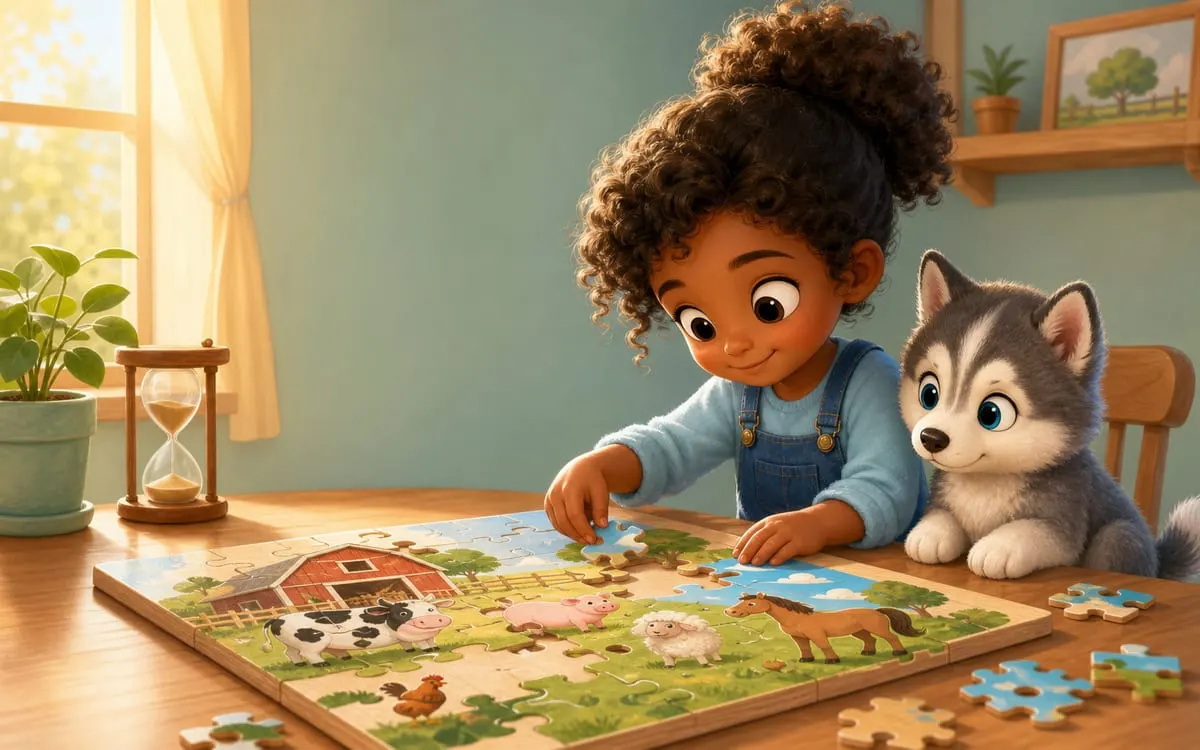
- A slightly hard puzzle: one that requires trial and error, not the one they could assemble blindfolded.
- Spot-the-difference and object hunts: "find everything blue in this room in one minute" trains sustained visual search.
- Freeze dance and stop-songs: stopping suddenly trains inhibitory control, the ability to hold back an impulse, concentration's twin.
- Memory games and sequences: start with four pairs and build up. Clap a rhythm and have them repeat it, getting gradually longer.
- Cooking a multi-step recipe: four steps forces them to hold a goal in mind from start to finish.
- Slightly longer read-alouds: add one page a week. It's sustained-attention training disguised as cuddling.