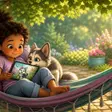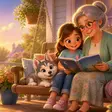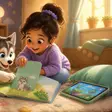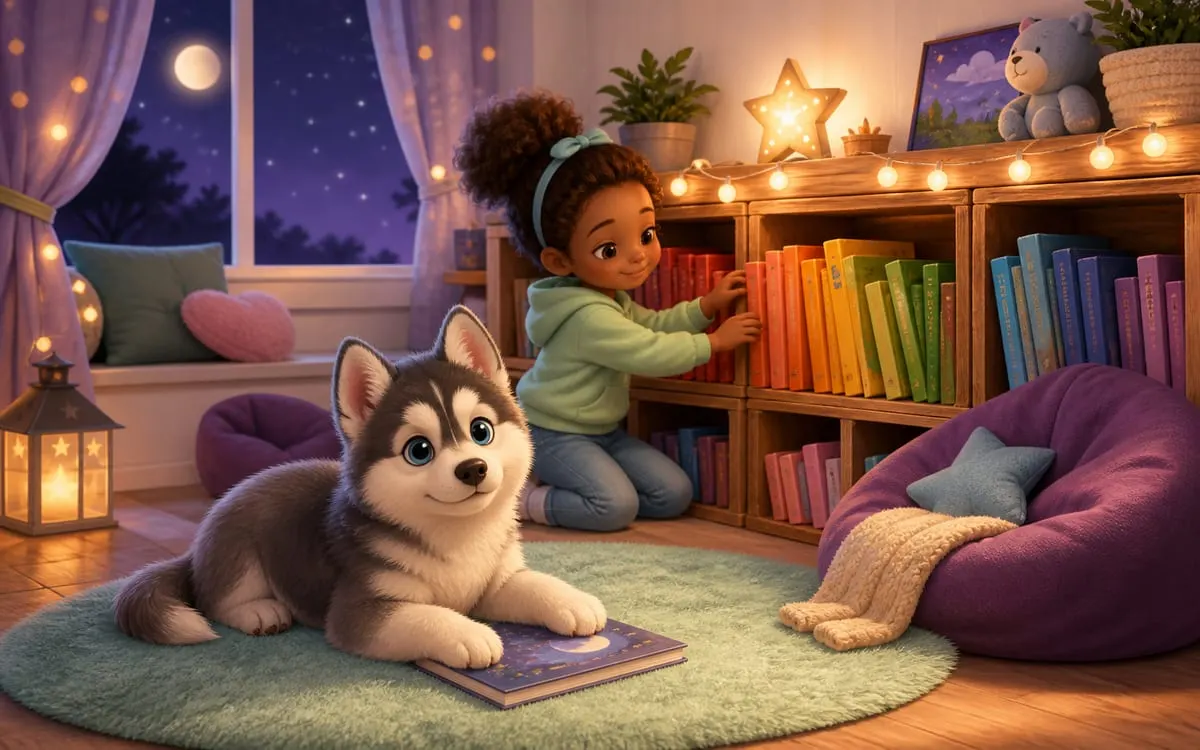
You don't need a hundred books to have a library at home. You need the right books, within your child's reach, and a way to refresh what's gone stale. Families who read a lot rarely have enormous shelves, they have living collections that change through the year, with something new always in rotation.
What belongs on the shelf
- Around 20 to 30 books at a time: more than that turns into wallpaper. Kids stop seeing what's there.
- Mix the types: story picture books, wordless books, one nonfiction favorite (dinosaurs, the body, space), poetry or rhymes, and something with flaps or textures for the little ones.
- Keep the "too easy" books: rereading what she already masters is what builds fluency and confidence. Don't always push a level up.
- Let her taste in: if she only wants tractor books, buy the tractor book. Genuine interest is the cheapest fuel there is.
- One or two in another language: even if nobody at home is fluent, hearing another sound system opens the ear.
How to spend less
- Used bookshops and swaps: secondhand picture books often cost a third of retail, and children could not care less.
- The public library: use it as a filter. Whatever she borrows three times, buy without worrying it'll flop.
- Rotate with other families: get three or four households from school together and swap boxes monthly.
- Digital subscriptions: something like Kindle Unlimited solves the variety problem at a fixed cost, especially during book-devouring phases.
- Ask for books as gifts: at birthdays, suggest a title instead of one more plastic toy. Most guests are relieved to get a specific idea.
- Watch end-of-school-year sales: the deepest children's discounts tend to land in December and January, which is when you can restock cheaply.