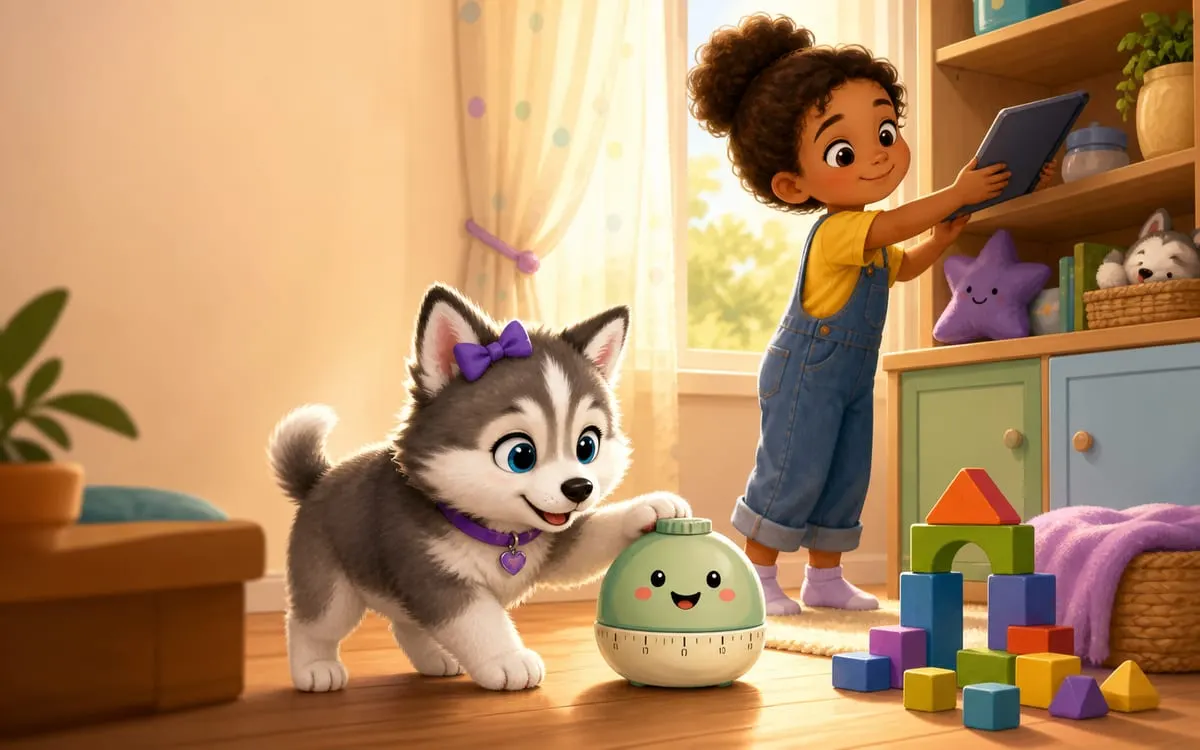
Your next adventure could be a moment together.
Now that you have met Pigúiça here, discover the story behind her world. See the illustrations, read the beginning and choose a book to share with your child, one page at a time.
You've read a screen time recommendation before and closed the tab feeling awful, because your actual life doesn't fit that number. So let's start here: the guidelines exist to orient you, not to judge you. A house with two working parents, a baby and a five-year-old lives a reality no manual describes, and that doesn't make anyone a bad parent.
The age references
- Under 2: ideally video calls with grandparents and family only. At this stage the brain learns mainly from real human faces, and a screen can't stand in for that. A little on a chaotic day ruins nothing.
- Ages 2 to 5: around one hour a day, ideally slow, well-chosen content, and with someone alongside when possible. This is the stage where company matters more than duration.
- Ages 6 to 10: one to two hours of leisure viewing, outside schoolwork. Context rules (when and where) beat stopwatches here.
- Age 11 and up: the focus shifts from the clock to content and conversation. At this age, what they watch and who they talk to weighs far more than how many minutes.
Three things that matter more than minutes
- What it's displacing: forty minutes replacing boredom isn't a problem. Forty minutes replacing sleep, a family meal or free play is. Always ask: what did this screen take the place of?
- The quality of what's playing: thirty minutes of a story with a beginning, middle and end is not the same as thirty minutes of seven-second clips on infinite scroll. A clock can't tell the difference. Your child's brain can.
- The time of day: the same hour at ten in the morning and at eight at night has completely different effects. Evening screens cost sleep, and poor sleep wrecks the entire next day.
What to do this week
- Measure before changing: log three honest days without trying to improve them. Almost everyone is surprised, in one direction or the other.
- Cut thirty minutes, not two hours: small changes survive. Radical ones last three days and rebound worse.
- Create a free zone, not a total limit: no screens at the table, none in the last hour before bed. Two clear rules outperform any timer.
Screens aren't the villain, badly chosen, badly placed ones are. Something short, calm and story-shaped fits comfortably into any age budget. The Dogavios cartoons were made with that in mind: seven short, violence-free episodes with Pigúiça the husky, sized for the time you actually have and good for a conversation afterward.
Your next adventure could be a moment together.
Now that you have met Pigúiça here, discover the story behind her world. See the illustrations, read the beginning and choose a book to share with your child, one page at a time.