After the game, discover the story together.
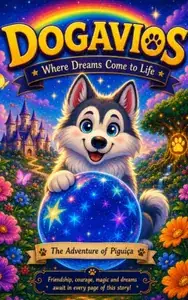
Pigúiça also has an illustrated adventure to read together. Explore real pages, read the beginning free and check the complete edition if you would like to continue.
Search for free educational games and you get thousands of results. The catch is that most of them are quizzes in disguise with cheerful sounds attached: right answer, gold star; wrong answer, sad buzzer. That tests a child, it does not teach them. A genuinely good educational game gets kids thinking, trying, failing on purpose and finding the path themselves. Here is what to look for and what each type actually builds.
How to spot a good educational game
- Mistakes teach instead of punish: in a good game, getting it wrong shows why and lets you retry immediately. If the screen just makes a disappointed noise and sends you back to the start, kids learn to avoid the game, not the subject.
- Difficulty that grows: look for levels that get harder as your child succeeds. A single flat level becomes boring within ten minutes.
- Less text, more action: for early readers, the game has to explain itself with pictures and sound. If an adult must read the instructions aloud every time, independence disappears.
- No shop in the middle: play it yourself first. A truly free game does not interrupt the fun every two minutes with coin offers or a disguised buy button.
What each type of game builds
- Puzzles and shape fitting: spatial reasoning and patience. A nice routine is timing the same puzzle and trying to beat that record the following week.
- Memory games: they strengthen working memory, the same one kids use to follow multi-step instructions. Start with six pairs and climb.
- Platformers and runners: they look like pure fun, but they train fine motor coordination, reaction time and planning, a child has to predict the jump before making it.
- Word and sound games: excellent for phonological awareness while learning to read. Ask your child to say the word out loud before clicking; the benefit doubles.
- Logic and sequencing games: the foundation of computational thinking. Afterwards ask which level was hardest and how they solved it.
Linking the screen to the real world
- The afterwards rule: agree that every screen game turns into an offline one. Played a collecting game? Hide ten objects around the house and rebuild the level on the living room floor.
- Visible timer: put a timer on the table instead of announcing the end out of nowhere. A signposted finish prevents most arguments.
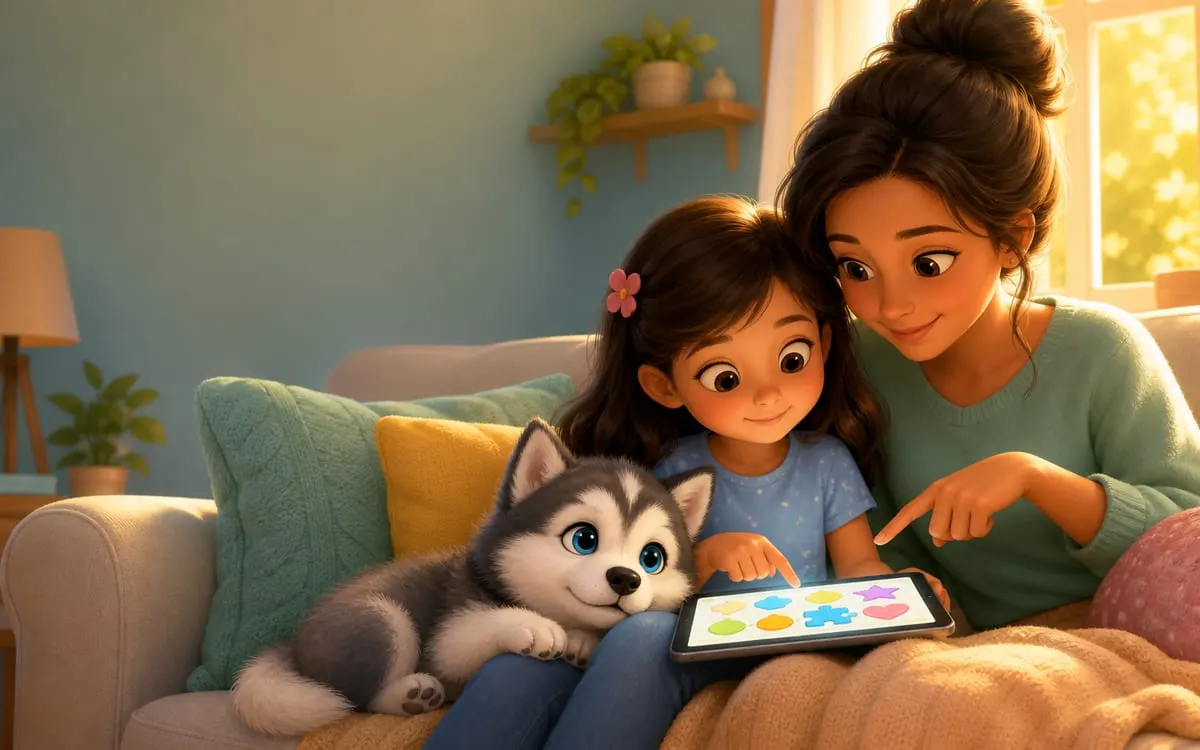
- Play the first round together: it teaches the game and shows you exactly what your child is looking at.
No install, no sign-up and no aggressive ads is a rare combination, and it is exactly what Pigúiça's game offers. The blue-eyed husky from Dogavios runs, jumps and collects stars in the Magical Garden right in your browser, in 18 languages.
After the game, discover the story together.
Pigúiça also has an illustrated adventure to read together. Explore real pages, read the beginning free and check the complete edition if you would like to continue.