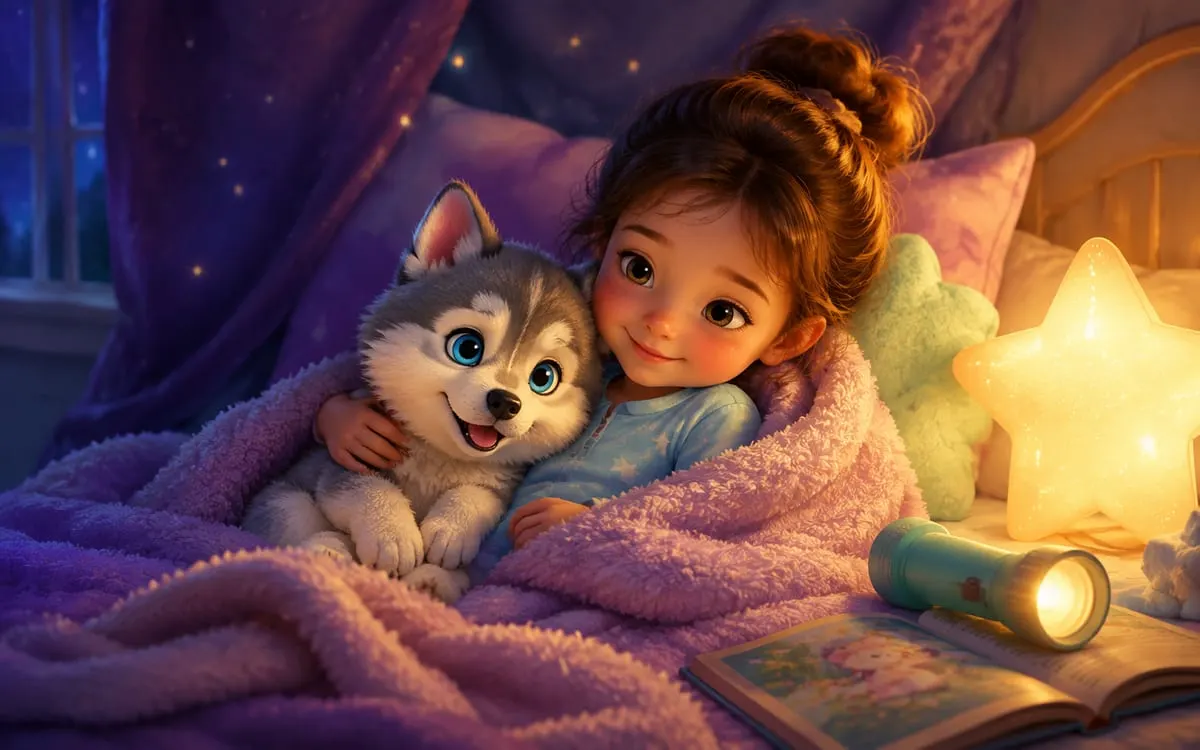
Your next adventure could be a moment together.
Now that you have met Pigúiça here, discover the story behind her world. See the illustrations, read the beginning and choose a book to share with your child, one page at a time.
You turn off the light, give the goodnight kiss, and three seconds later comes the call. There is something in the closet. If you have already tried explaining that monsters are not real and watched it accomplish absolutely nothing, that is because fear of the dark in children is not a logic problem. It is a safety problem, and that is how it has to be treated.
Why this fear shows up
It usually appears between two and six years old, and it is a developmental milestone rather than a weakness. In this stage imagination explodes, but the ability to sort the real from the imagined is still under construction. In the dark, the brain loses the visual cues confirming the room is unchanged, and imagination fills the gap. That is why arguing about whether the monster exists never works: to your child, the fear is real even if the monster is not.
What to do tonight
- Validate before solving: start with I know you are scared, and I am right here. Denying the feeling leaves a child alone with it.
- Use warm, low light: an amber or reddish night light interferes with sleep far less than white or bluish light. Keep it away from their face.
- Leave the door ajar: hearing the household is a constant reminder that they are not alone.
- Do the sweep together: walk the room, open the closet, look under the bed. Do it calmly and matter of factly, never like a hunt, so you do not reinforce the idea of danger.
- Hand over a courage tool: a small flashlight by the bed, a guardian stuffed animal, a water spray with a drop of lavender renamed calm spray. Objects give a child back the feeling of control.
What helps over the week
Beyond the emergency response, a few adjustments reduce how often the episodes happen at all.
- Mind the day's content: scary cartoons, games and conversations feed images that return at night. Filter gently, especially in the afternoon.
- Play with the dark in daylight: flashlight hide and seek, hand shadows on the wall, a blanket fort. This turns darkness into familiar territory.
- Let them tell the fear's story: drawing the monster and then giving it a silly hat drains the image of its power.
- Check in at set intervals: if they need company, come back after two minutes, then five, then ten. Predictability soothes better than lying beside them all night.
Be patient with the calendar. This fear usually fades on its own, but if it is growing, blocking sleep every single night, or showing up during the day too, it is worth raising with your pediatrician.
Stories help as well, because they show characters who feel afraid and keep going anyway. In Dogavios: Where Dreams Come to Life, the husky Pigúiça meets the unknown of the Magic Garden with a quiet, contagious courage, exactly what a child needs to hear before closing their eyes.
Your next adventure could be a moment together.
Now that you have met Pigúiça here, discover the story behind her world. See the illustrations, read the beginning and choose a book to share with your child, one page at a time.