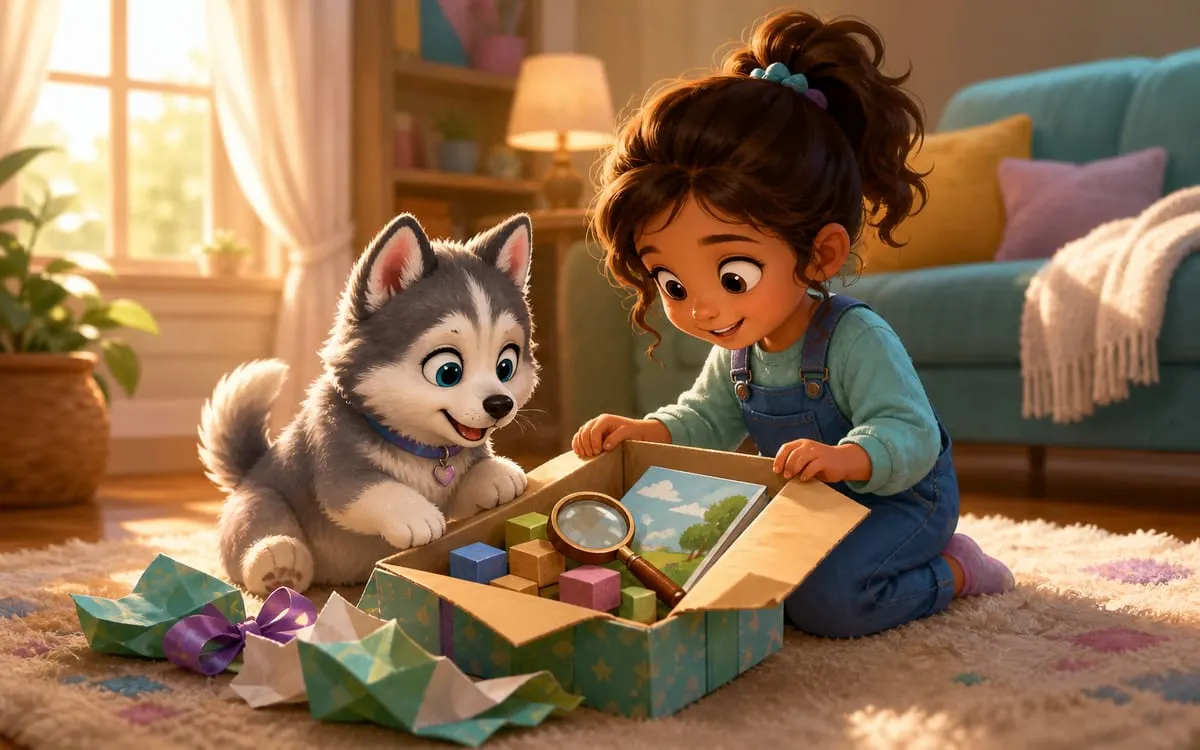
A gift can be a story to share.
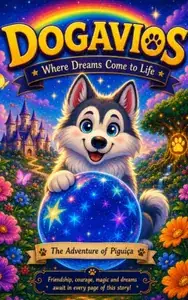
For someone who enjoys adventures and puppies, meet Pigúiça before choosing. See the illustrations and check the edition’s language and format on Amazon; digital and printed books are different options.
There is a trap hidden in the phrase educational gift: it tends to lead toward toys that feel like homework in wrapping paper. The child opens it, says thank you politely, and never touches it again. The educational gifts that work are the ones where learning is a side effect of fun rather than the stated purpose. Conveniently, those are almost always the cheapest and simplest options on the shelf.
What actually builds skills, by area
- Language, picture books (low budget): nothing beats reading aloud for new vocabulary per minute. A child who hears stories daily starts school with a measurable head start.
- Spatial reasoning, blocks and puzzles (low to mid budget): directly linked to later math ability. Building is geometry in disguise.
- Executive function, board games (low to mid budget): waiting a turn, planning a move and surviving a loss are worth more than any logic app.
- Fine motor, play dough, safety scissors, threading beads (low budget): direct preparation for handwriting.
- Emotions, stories with real conflict: children learn to name fear, jealousy and courage through characters long before they can discuss their own feelings.
Choosing by age
- Ages 2 to 3: stacking, sorting, picture books, play dough. Learning here is sensory and physical.
- Ages 4 to 5: simple rule games, puzzles up to 100 pieces, books with a plot, first letters without pressure.
- Ages 6 to 8: science kits, light strategy games, short chapter books, craft projects that end in a finished object.
- Any age: a gift adults use alongside the child returns roughly three times more than one used alone.
Warning signs a gift will be forgotten
- It promises to teach everything: the more skills listed on the box, the less well it usually does any of them.
- It has only one right answer: single-solution toys go stale within a week.
- It needs an adult at all times: if it can't be played with solo sometimes, it stays in the box.
- It's a screen dressed as learning: most educational apps return far less than an ordinary deck of cards.
- One gift at a time: opening five educational toys on the same day guarantees none of them gets real attention. Hold some back for the following weeks.
- Repetition is not a problem: when a child does the same puzzle for the tenth time, she is consolidating, not stalling. Let her repeat as much as she likes.
If you want a safe pick, the illustrated book remains the educational gift with the best return: cheap, battery-free, and it delivers language and emotional learning in the same package. Dogavios follows the husky Pigúiça facing fears and making friends in the Magical Garden, exists in 18 languages, a real help in bilingual homes, and comes with a free game and free cartoons for when a child wants the same world in another format.
A gift can be a story to share.
For someone who enjoys adventures and puppies, meet Pigúiça before choosing. See the illustrations and check the edition’s language and format on Amazon; digital and printed books are different options.