Your next adventure could be a moment together.
Now that you have met Pigúiça here, discover the story behind her world. See the illustrations, read the beginning and choose a book to share with your child, one page at a time.
Say "early years activities" and most people picture printed worksheets, card stock and an afternoon of prep. It isn't that. Between two and six, development happens through play, conversation and everyday chores. What good preschools add is intention, and you can bring that home in small doses.
Language and talking
- Dialogic reading: instead of just reading, stop and ask "what do you think happens next?". This one habit measurably widens vocabulary.
- Retell the day backwards: ask them to tell you about today starting from snack time. Sequencing and memory in one go.
- Rhyme volley: you say a word, they answer with a rhyme. This is direct groundwork for reading.
- Name the feeling: use precise words, frustrated, embarrassed, excited. Emotional vocabulary is vocabulary too.
Fine motor and early maths
- Tongs and transfers: ice tongs, pompoms and a muffin tray. Direct preparation for the hand that will hold a pencil.
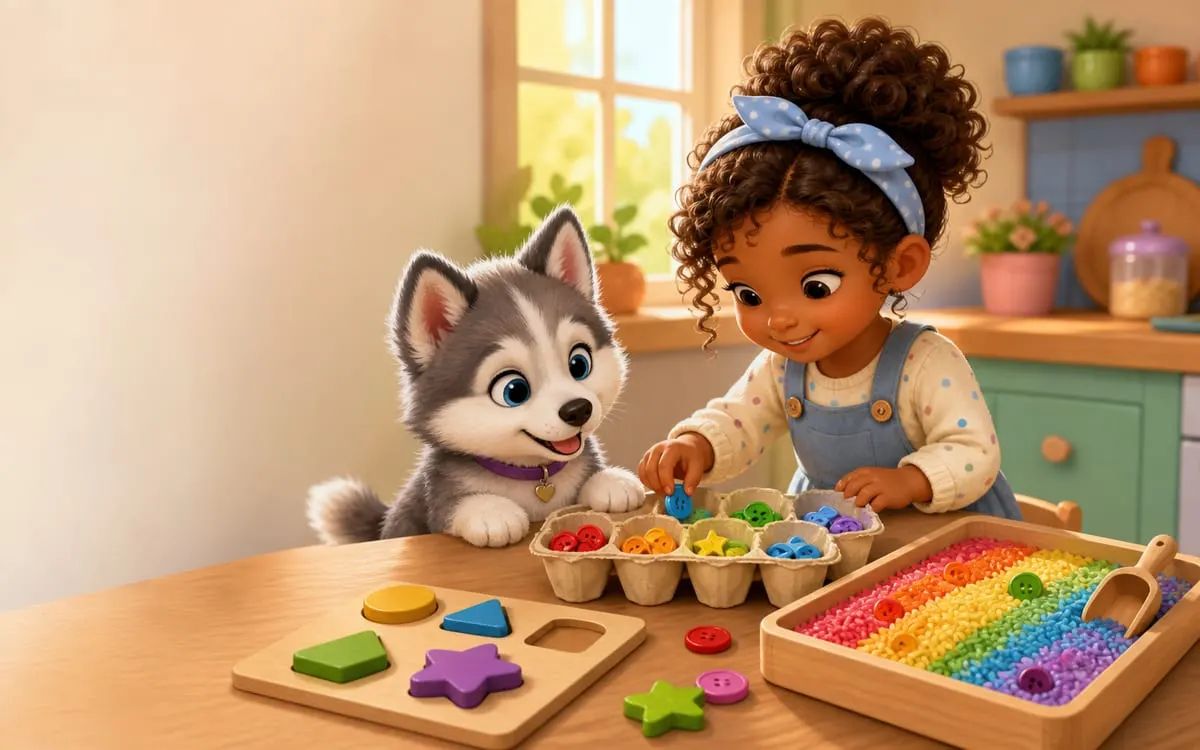
- Sort and count: socks into pairs, cutlery by type, buttons by colour. Maths hidden inside a chore.
- Measure the house: how many feet long is the hallway? How many hands wide is the table? Non-standard units come first.
- Patterns with anything: a colour sequence with bottle caps and the job of continuing it.
Social and emotional (the part most often skipped)
- Drawn house rules: three rules as pictures, instead of the same lecture on repeat.
- Waiting your turn: any simple board game does it. It's frustration tolerance practice.
- Genuinely helping: one fixed, age-appropriate job builds belonging and self-worth like little else.
- The repair conversation: once everyone's calm, talk about what happened and what could go differently. The learning lives there, not in the middle of the tears.
Signs it's working
- They repeat the game alone later: that's the most reliable sign the activity landed, far more than a nice-looking result on paper.
- New questions appear: when a child starts asking "but what if...", their thinking has left autopilot.
- They tolerate a little more frustration: waiting thirty seconds longer than they could last month is real progress, even if nobody notices it.
Building a routine without losing your mind
Pick one activity from each block per day. Fifteen to twenty minutes is plenty at this age; beyond that, attention evaporates. Set the materials out the night before and leave them visible. And when your child changes the rules of what you proposed, let them. Adapting the activity is a sign they're thinking, not a sign it failed.
At reading time, stories with a recurring character help children predict and join in. The Pigúiça the husky adventures from Dogavios come in bilingual editions, which makes an easy excuse to introduce a second language without extra effort.
Your next adventure could be a moment together.
Now that you have met Pigúiça here, discover the story behind her world. See the illustrations, read the beginning and choose a book to share with your child, one page at a time.