Your next adventure could be a moment together.
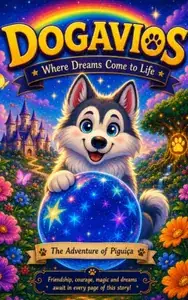
Now that you have met Pigúiça here, discover the story behind her world. See the illustrations, read the beginning and choose a book to share with your child, one page at a time.
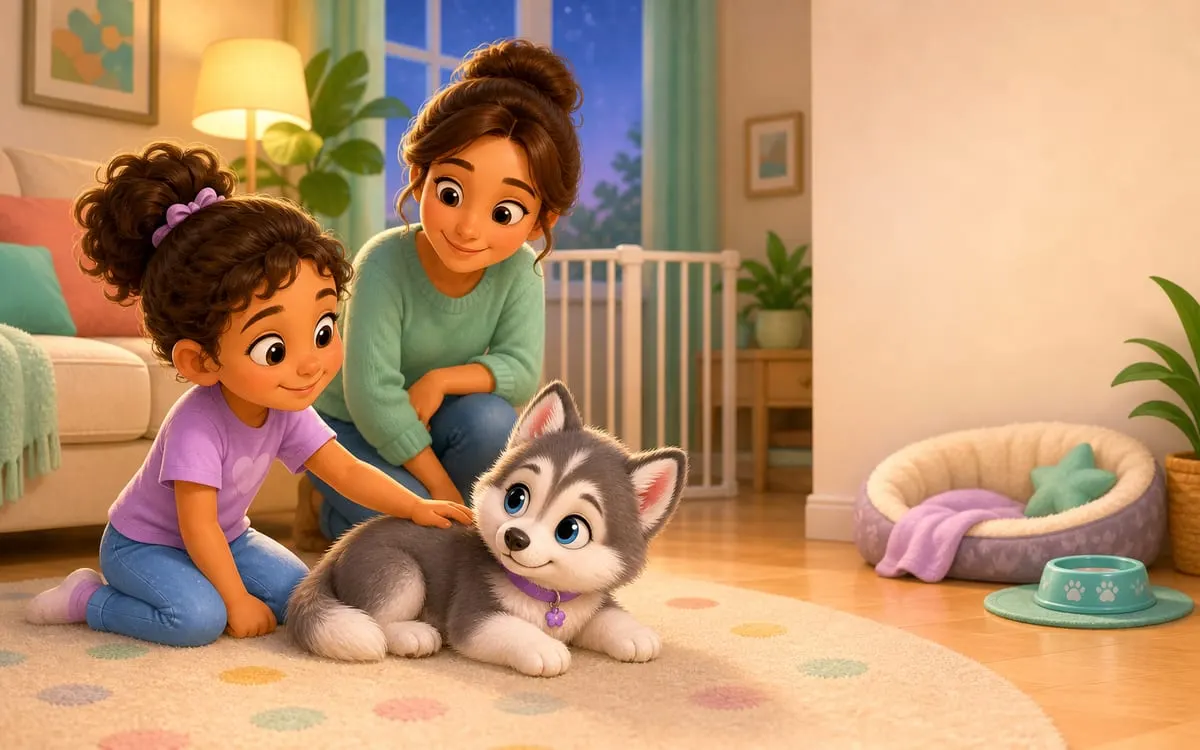
Children and dogs under one roof is one of childhood's best combinations, as long as the adults structure it. Almost every incident between a dog and a child is preceded by clear signs of discomfort that nobody noticed or took seriously. The good news: those signals are easy to learn, and the rules are simple.
Non-negotiable household rules
- A dog who is eating is left alone: no hands in the bowl, not even “so he gets used to it”. If he guards food, get professional help rather than pushing through.
- A sleeping dog is never woken: a startled dog reacts on reflex. Teach children to call his name from a distance instead.
- His bed is sacred territory: a place nobody touches him, and one he can leave whenever he likes.
- No riding, no hugging around the neck, no pulling ears or tail: tight hugs are uncomfortable for most dogs, even the patient ones.
- Stroke the chest and back: hand coming from below, never over the top of the head.
Signs the dog wants space
- Subtle signals: lip licking, yawning when not tired, turning the head away, shaking off as if wet.
- Clear signals: whites of the eyes showing, stiff body, ears back, low tense tail, moving away.
- Final warning: growling. Never punish a growl, punishment teaches a dog to skip the warning and go straight to a bite.
- What to do: call the child away casually, without telling anyone off, and give the dog somewhere quiet.
Hygiene and health for the pair
- Worming and flea control up to date: follow your vet's schedule. Parasites are the most real health risk and the easiest to prevent.
- Wash hands: after playing, before eating. Simple and effective.
- No face licking: not a drama, just basic hygiene, and it stops children putting their face near the muzzle out of habit.
- Pick up waste immediately: in the garden and on walks, every time.
- Keep nails trimmed: accidental scratches during play are far more common than bites.
Games that actually work
- Fetch: burns energy, has clear rules and keeps a healthy physical distance.
- Hide the treats: the child hides, the dog searches. Tires the mind and delights both.
- Trick training: children from around five love teaching “paw”, always with an adult nearby.
- Avoid tug and chase games: they raise arousal too high and often end badly with small children.
- Stop before the peak: end the game while both are still calm. Almost every mishap happens once excitement tips over the edge.
- An adult stays in charge: the adult gives the dog instructions during play, even when the child is the one throwing the ball.
Safe coexistence is a habit, not luck. Teaching a child to read a dog is one of the great gifts of empathy you can give. Stories help that conversation along, following Pigúiça, the husky from Dogavios, is a gentle way to show that every animal has its own limits and feelings.
Your next adventure could be a moment together.
Now that you have met Pigúiça here, discover the story behind her world. See the illustrations, read the beginning and choose a book to share with your child, one page at a time.