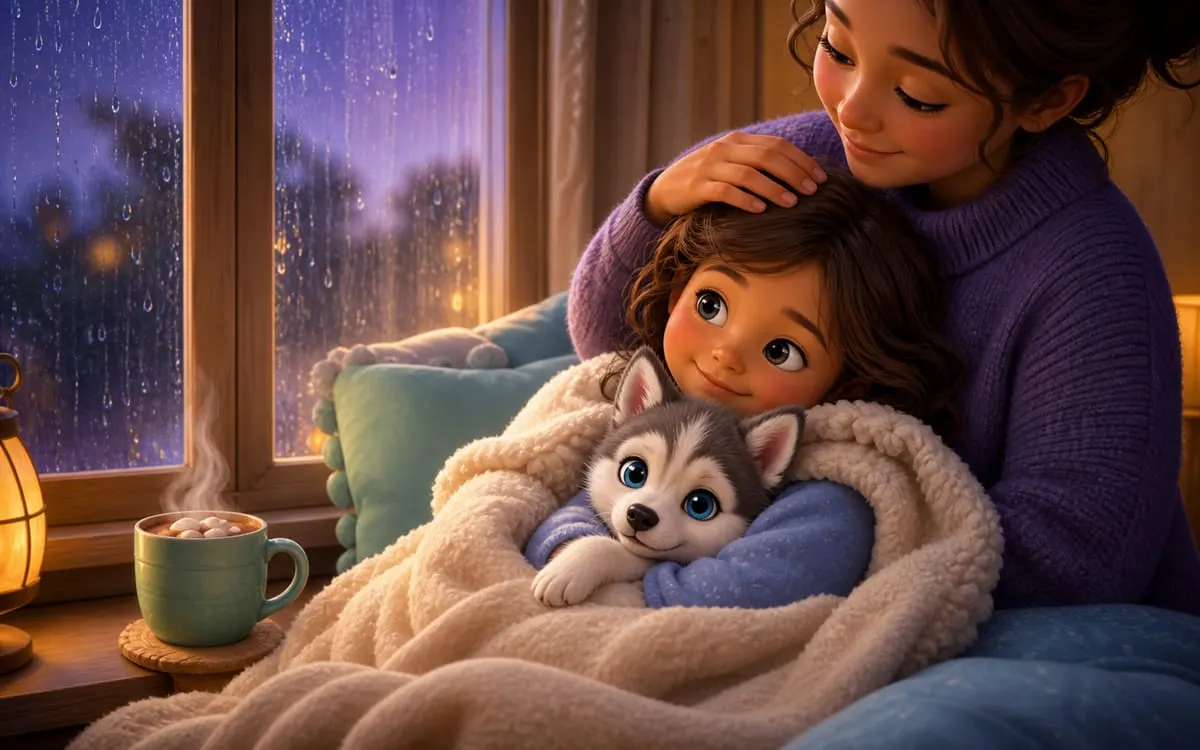
Your next adventure could be a moment together.
Now that you have met Pigúiça here, discover the story behind her world. See the illustrations, read the beginning and choose a book to share with your child, one page at a time.
Anxious children rarely announce “I'm worried.” They say it through their bodies and their behavior, which is why so much childhood anxiety gets read as defiance, clinginess or laziness. Fear and nervousness are part of healthy development: fear of the dark, of monsters, of sleepovers, of the first day of school. What's worth watching is intensity, duration and how much it interferes with daily life.
Signs that often go unnoticed
- Recurring physical complaints: stomachaches or headaches that show up on school mornings and vanish on weekends.
- Repeated reassurance-seeking: “You're definitely picking me up? What if you forget?”, asked again and again.
- Meltdowns at transitions: the scene at the school gate is often fear, not disobedience.
- Disrupted sleep: long delays falling asleep, waking at 3 a.m., bedwetting after months of dry nights.
- Perfectionism: erasing until the paper tears, crying over small mistakes, refusing to try new things.
- Avoidance: skipping parties, sports or sleepovers, avoidance is anxiety's signature move.
- Irritability: in kids, anxiety often wears the face of a bad mood.
- Restlessness and poor focus: body fidgeting, mind somewhere else.
- Extra clinginess: unable to be in another room alone.
- Appetite changes: eating noticeably less, or grazing constantly.
How to respond at home
- Validate before you fix: “It sounds like your body feels scared. That's really uncomfortable.” Never say “there's nothing to worry about.”
- Don't promise the impossible: instead of “nothing bad will happen,” try “whatever happens, we'll handle it together.”
- Give the worry a name: “Let's call that little voice Mr. Worry. What's he saying right now?” Externalizing restores a sense of control.
- Balloon breathing: in through the nose filling the belly, slowly out through the mouth, six times.
- Approach in small steps: avoiding brings relief today and more fear tomorrow. Build tiny steps and celebrate each one.
- Predictability soothes: walk through tomorrow's plan the night before.
- Mind your own anxiety: children read an adult's emotional state long before they process the words. If you walk into school tense, their body concludes there's danger. A short, confident, smiling goodbye communicates safety far better than any long explanation ever will.
When to see a professional
Speak with your pediatrician or a child psychologist if symptoms last for weeks, if your child refuses school, if there's weight loss, if sleep is badly affected, or if they're dropping activities they used to love. None of this replaces a professional assessment, it just helps you observe well and arrive at the appointment with useful notes.
Talking about fear gets easier when a character carries it first. In Dogavios, the husky Pigúiça feels unsure in the Magical Garden too, and children listening often say it themselves: “that happens to me.” Sometimes that one sentence opens the conversation you've been waiting for.
Your next adventure could be a moment together.
Now that you have met Pigúiça here, discover the story behind her world. See the illustrations, read the beginning and choose a book to share with your child, one page at a time.