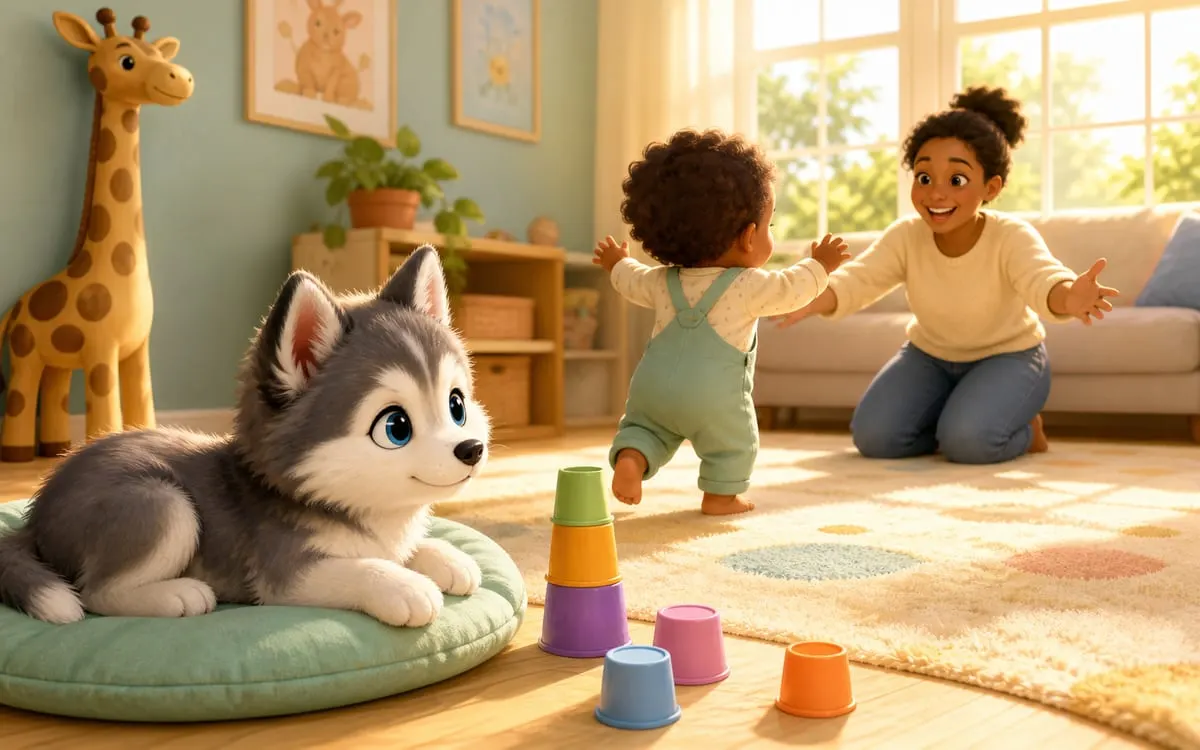

Mom groups swapping «mine is already walking» or «mine already speaks in sentences» tend to generate more anxiety than help. The truth is child development happens within wide windows, not fixed dates, and knowing those windows usually brings more reassurance than worry.
Milestone map by age
- 6 months: sits with support, rolls over, brings objects to mouth, laughs out loud
- 9 months: sits without support, crawls or scoots, points with a finger
- 12 months: stands with support, may take first steps, says 1-2 words
- 18 months: walks independently, climbs stairs with help, growing vocabulary
- 24 months: runs, kicks a ball, combines two words, engages in pretend play
- 3 years: pedals a tricycle, dresses partially on their own, speaks in sentences
It's a window, not an exact line
A baby can walk at 10 months or at 17 months, and both fall within the expected range. Prematurity, temperament, and even birth order (younger siblings sometimes «skip» steps through imitation) all influence pace. Directly comparing to another child rarely helps.
Real signs worth mentioning to the pediatrician
- Losing previously acquired skills (regression), at any age
- No eye contact or social smile by 3 months
- Doesn't sit without support by 9 months
- Doesn't walk by 18 months
- Doesn't point or respond to their name by 12-15 months
The role of routine checkups
Regular pediatrician visits exist precisely to track these milestones with a trained eye, bring up any concern, no matter how small it feels, without worrying you're «overreacting». Between checkups, simple play, floor time, and reading aloud together, like the adventures of Pigúiça, naturally support motor and language development.