
Reading to a newborn feels pointless. He doesn't understand the words, turns his head away, tries to eat the page. But that's exactly where reading starts working: through the sound of your voice, the closeness, the predictability of the ritual. Choosing the right book is what makes the moment last longer than thirty seconds.
What to choose at each stage
- 0 to 6 months: high contrast, black and white, big simple shapes. Vision is still developing and that's what he can actually focus on. Cloth and bath books fit well here.
- 6 to 12 months: thick board books with everyday objects, one per page. Ball, dog, bottle. Naming is the main activity.
- 12 to 18 months: lift-the-flaps, textures, finger holes. He wants to act on the book, not just look at it.
- 18 to 24 months: first tiny stories with repetition and rhyme, plus routine books (bath, sleep, food). He's starting to recognize sequences.
How to read to someone who can't talk
- You don't have to read it all: if he wants three pages of staring at the dog photo, stay there. Point, make the sound, comment. That is reading.
- Let him turn the pages, even at the wrong moment. Control is half the fun at this age.
- Talk about the picture instead of only reading the printed line. "Look, the baby is crying. You cry when you're hungry too, don't you?"
- Two-minute sessions: that's a baby's real attention span. Five micro-moments across the day beat one long sitting.
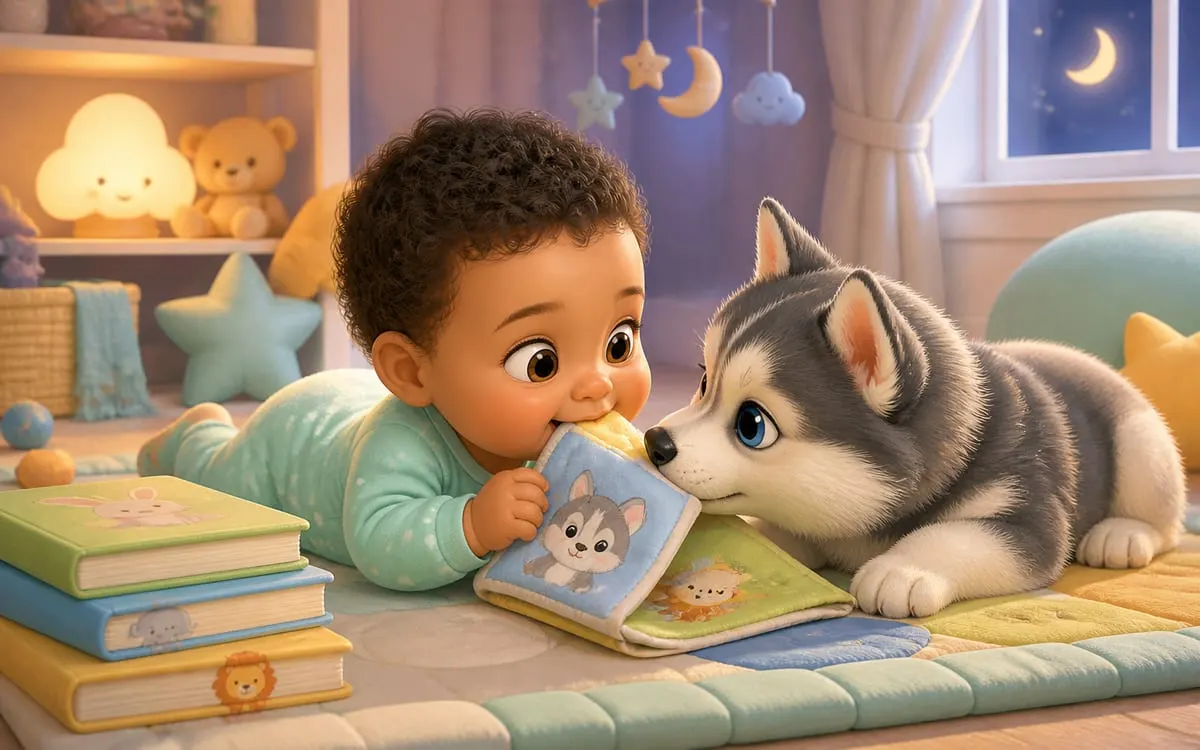
- Accept the chewing: board and cloth books exist for a reason. Mouthing is how he investigates the world, not a sign of boredom.
- Keep the same intonation: in the same book, use the same voice on the same pages. That predictability is exactly what he's learning to recognize.
- Read outside bedtime too: a tired baby has no patience. The best window is often morning or just after a nap.