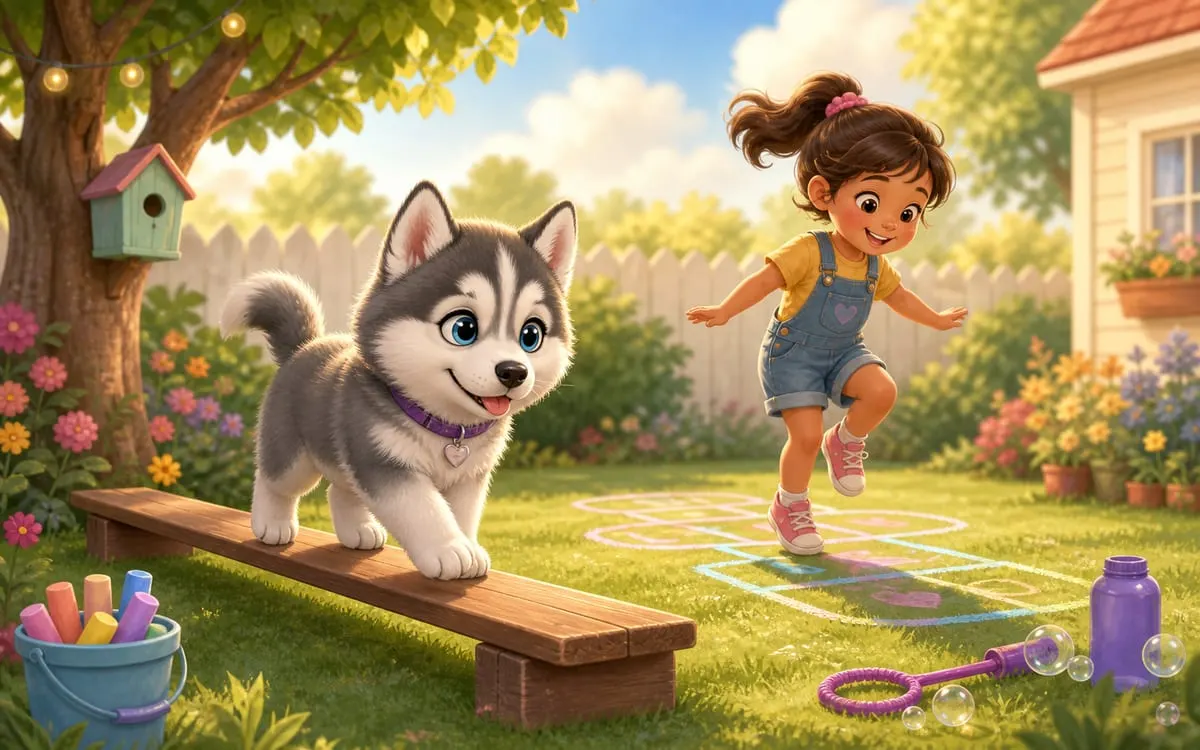
Your next adventure could be a moment together.
Now that you have met Pigúiça here, discover the story behind her world. See the illustrations, read the beginning and choose a book to share with your child, one page at a time.
Five is the age of good questions. They want to know why it rains, they'll count to a hundred just to prove they can, and they point at letters on the cereal box. It's the perfect window for activities that prepare reading without turning your home into a classroom, because at this age, play is still what teaches.
Play that builds reading
- Letter hunt: pick a letter of the day and spot it on signs, packaging and book covers. It becomes a street game.
- Silly rhymes: you say a word, they answer with a rhyme, invented ones allowed. Phonological awareness is the strongest predictor of fluent reading.
- Hidden notes: short messages in the lunchbox or under the pillow. They'll work hard to decode them.
- Drawing dictation: you describe a scene, they draw what they heard. Listening and sequencing in one.
- Take-turns reading: you read a line, they repeat it or read the word they recognise. No harsh corrections.
Numbers and logic without worksheets
- Cooking with measurements: half, double, three spoonfuls. Fractions before school formalises them.
- Counting real money: coins sorted by value and one small purchase paid with their own money.
- Pattern sequences: lay out red-blue-red with bottle caps and ask them to continue.
- A simple board game: dice, counting spaces, and the enormous lesson of sometimes losing.
Body, focus and getting along
- Skipping or hopscotch: coordination, rhythm and counting in a single activity.
- Animal yoga: dog pose, cat pose, tree pose. Great after school, better before bed.
- A week-long project: sprout a bean in cotton wool and record what changed each day.
- Cooperative game: build one big puzzle together, with no winner.
- Screen-time agreement: decide the how-much and the when together. Involving them in the rule dramatically reduces the fight later.
Common mistakes at this age
- Rushing school content: pushing letter formation or sums before they're ready usually creates resistance, not an advantage. Good play prepares them better than worksheets.
- Correcting everything they say or write: if they write "hors" for horse, celebrate that they wrote at all. Spelling arrives later; the willingness to write, once killed, is hard to revive.
- Overfilling the calendar: at five, unscheduled time is where creativity and self-regulation actually develop. Leave gaps in the day on purpose.
- Comparing them to cousins or classmates: at five there are enormous and perfectly normal differences in reading, writing and coordination. A different pace is not a delay.
At five, many children start wanting to read the stories they already know by heart. If that's yours, books with short sentences and a character they adore, like Pigúiça the husky from Dogavios, also available in bilingual editions, are often the nudge that gets them reading by choice.
Your next adventure could be a moment together.
Now that you have met Pigúiça here, discover the story behind her world. See the illustrations, read the beginning and choose a book to share with your child, one page at a time.