The math that stalls so many students at school actually begins on the living room floor: counting pieces, splitting candy between siblings, noticing that the same amount can be arranged in different ways. When that foundation is built through play, the arithmetic on paper later just puts symbols on top of something the child already feels.
With dice, cards and coins
- Dice race: each player rolls two dice, adds them and moves that many squares on a hand-drawn board. Addition becomes automatic within a few rounds.
- Card battle: everyone flips a card, highest number wins the pile. Quantity comparison in its purest form.
- Home shop: label objects with small prices, hand over real coins and let them buy. Change is subtraction with meaning.
- Piggy bank sorting: stacking matching coins teaches grouping, which is the seed of multiplication.
With the body, around the house
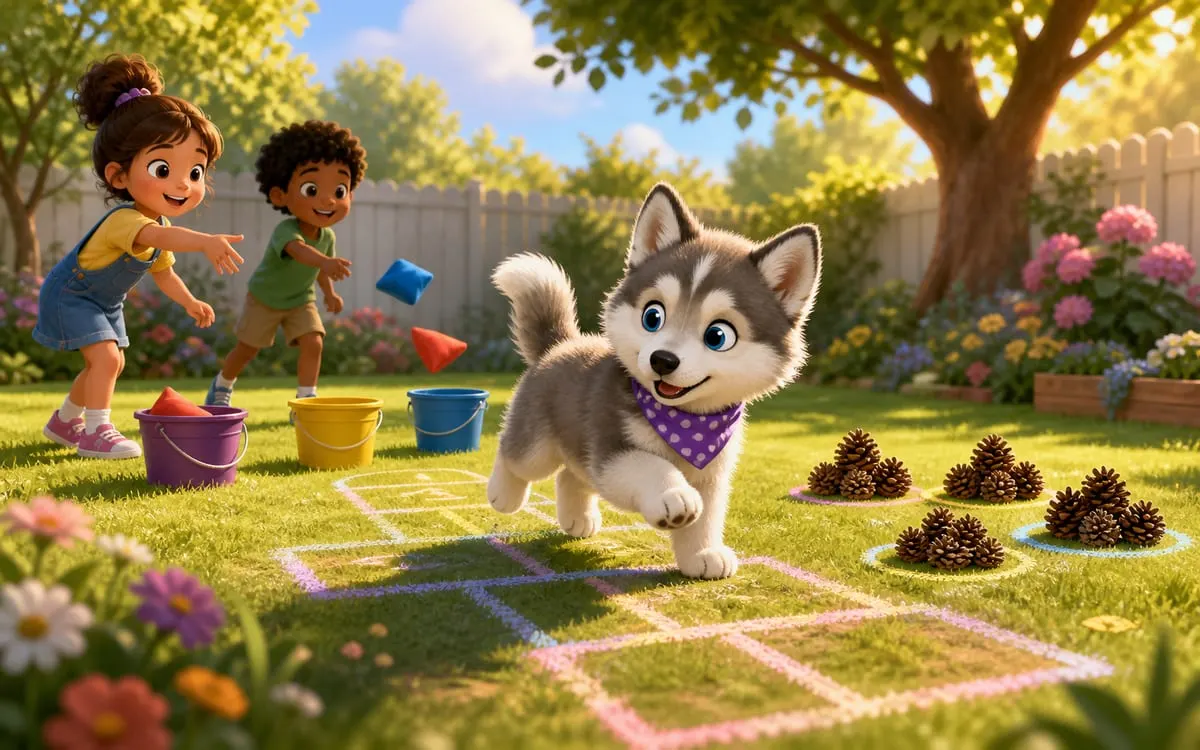
- Hopscotch with sums: write simple operations in the squares instead of numbers. You hop if you answer.
- Measuring treasure hunt: "take five giant steps, then three tiny ones." Afterward measure the difference with a tape measure or your own foot.
- Patterns with anything: blue cap, red cap, blue, red, and your child continues. Recognizing patterns is literally algebraic thinking.
- Sorting the sock drawer: by color, by size, by owner. Then re-sort a different way. Classification underpins all mathematical organization.