← Back to the blogThis blog comes from an illustrated children's bookMeet Dogavios →🇮🇸 Games & fun

10 Funny Icelandic Words for Kids (With Fun Facts)

Posted on November 14, 2026 · by Lucas dos Reis Arieme

10 Funny Icelandic Words for Kids (With Fun Facts)
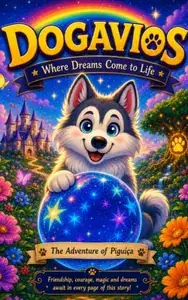
Dogavios: Where Dreams Come to Life

Your next adventure could be a moment together.

Now that you have met Pigúiça here, discover the story behind her world. See the illustrations, read the beginning and choose a book to share with your child, one page at a time.

Looking for funny Icelandic words for kids? Here are 10 of them, each with an easy way to say it out loud, its meaning and a true fun fact. On November 16, Iceland celebrates Icelandic Language Day, a date that honors the poet Jónas Hallgrímsson. It is a perfect excuse to play with a different language at home.

Kids love these words because they feel like little puzzles. Many are two words stuck together that tell a tiny story, like «light of the north» or «rain bow».

How to use these words with your child

You do not need a perfect accent. The goal is to laugh, repeat and get curious. Say the word slowly, let your child try, then share the fun fact. Children aged 3 to 5 usually enjoy repeating just the sound. Children aged 6 to 8 like discovering which pieces the word is built from.

The reading in parentheses is an English approximation. Real Icelandic has sounds that English does not, and that is perfectly fine.

The 10 Icelandic words

  1. Jólabókaflóð (say «YOH-la-boh-ka-flowth»): it means «Christmas book flood». Fun fact: in Iceland it is a tradition to give books as gifts on the evening of December 24 and spend the night reading, often with hot chocolate.
  2. Sundlaug (say «SUND-loig»): it means swimming pool. Fun fact: Icelanders love pools warmed by the earth itself, and many people go to them even when it is cold outside.
  3. Snjór (say «SNYOHR»): it means snow. Fun fact: it is a short word, but Iceland gets plenty of snow in winter, so people use it all the time.
  4. Jökull (say «YUH-kutl»): it means glacier. Fun fact: the biggest glacier in Iceland is called Vatnajökull, and jökull is also used as a first name.
  5. Eldfjall (say «ELD-fyatl»): it means volcano. Fun fact: the word joins eld, which is fire, with fjall, which is mountain. So a volcano is a «fire mountain».
  6. Hvolpur (say «KVOL-pur»): it means puppy. Fun fact: in Icelandic, «hv» at the start of a word sounds like «kv». It fits Pigúiça, who is a little husky puppy!
  7. Norðurljós (say «NOR-thur-lyohs»): it means northern lights. Fun fact: norður is north and ljós is light, so the word means «lights of the north».
  8. Regnbogi (say «REGN-bo-yi»): it means rainbow. Fun fact: regn is rain and bogi is bow, so it is a «rain bow».
  9. Tungl (say «TUNGL»): it means moon. Fun fact: it has just one syllable and ends with a bunch of consonants in a row, which looks very different from English.
  10. Kex (say «KEKS»): it means cookie or biscuit. Fun fact: it looks a lot like the English word cakes, and it is one of the easiest to repeat for little ones.

Mini-challenge for your child

Now it is your child's turn. Try the 10-word challenge in three rounds.

Round 1: repeat each word after you, very slowly. Round 2: say only the meaning and ask your child to guess the Icelandic word. Round 3: pick one word and draw it together. A volcano, a moon or a hvolpur all work great, and you can print ready-made pictures on our coloring page.

If your child repeats all 10 words and remembers the meanings, they earn the title of «Iceland explorer». A round of applause, a hug or a bedtime story makes a fine prize.

Why is Icelandic so special?

Icelandic is a very old language. It has changed relatively little over the centuries, so Icelanders today can read medieval texts more easily than many people would guess. Young explorers love knowing they are speaking something close to the language of very old stories.

Here is another fun fact: instead of borrowing words from other languages, Icelandic often creates new words by joining old pieces. Computer, for example, is tölva. It is a creative way of keeping the language alive, and a great chat to have with curious kids about how words are born.

After learning the 10 words, why not invent a new word by joining two pieces, the way Icelanders do? «Rainlight» for a rainbow, or «happysnout» for a friendly dog. Anything goes, as long as your child explains what each piece means.

Everyday tips

Pick one word per day instead of trying to learn everything at once. At bath time, say sundlaug. At snack time, kex. At the window, tungl or regnbogi, if the weather helps. Repeating a word at the same moment each day helps memory.

If your child falls for Iceland, meet Pigúiça, the blue-eyed husky who lives in the Magic Garden and loves snow. She stars in the book Dogavios and in the free Pigúiça game, which runs in the browser with no sign-up and no ads.

Frequently asked questions

When is Icelandic Language Day?

It is celebrated on November 16, the birthday of the poet Jónas Hallgrímsson. The day honors the Icelandic language and culture.

Are these words suitable for young children?

Yes. For ages 3 to 5, use just the sound and the meaning. For ages 6 to 8, add the fun facts and how each word is split into pieces.

Do I need perfect pronunciation?

No. The English reading is only a guide. What matters most is playing, laughing together and sparking curiosity about the world.

🐾

Lucas dos Reis Arieme

Author of the Dogavios series

About the author →
Dogavios: Where Dreams Come to Life

Your next adventure could be a moment together.

Now that you have met Pigúiça here, discover the story behind her world. See the illustrations, read the beginning and choose a book to share with your child, one page at a time.

PrivacidadeTermos